

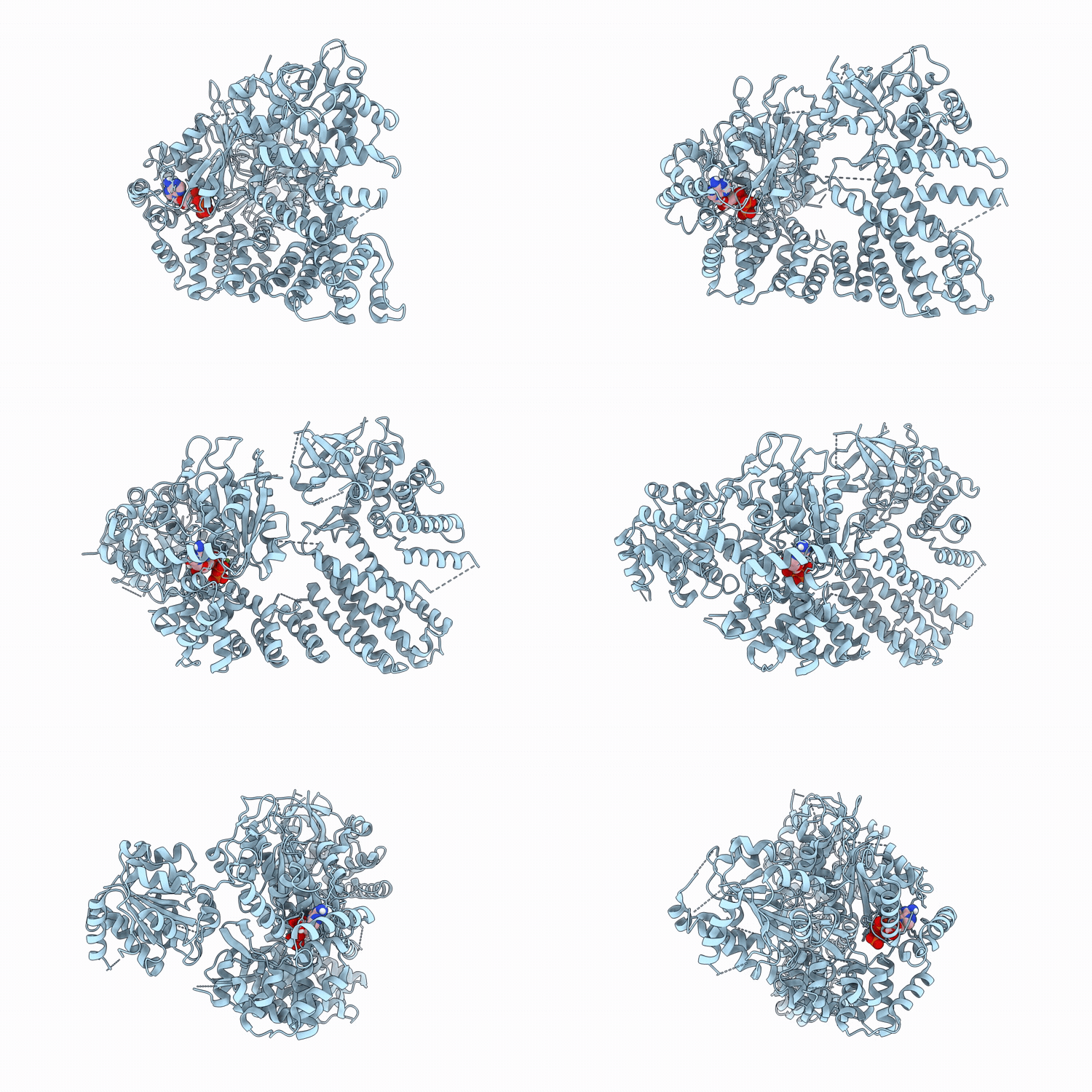
37ID image
Deposition Date 2026-07-21
Release Date 2026-08-12
Last Version Date 2026-10-07
Entry Detail
PDB ID:
37ID
Keywords:
Title:
Human sterile alpha motif domain-containing protein 9 (SAMD9), loss-of-function mutant Q514S/R515S/R522S/R553S/Q565S/R593S
Biological Source:
Source Organism(s):
Homo sapiens (Taxon ID: 9606)
Expression System(s):
Method Details:
Experimental Method:
Resolution:
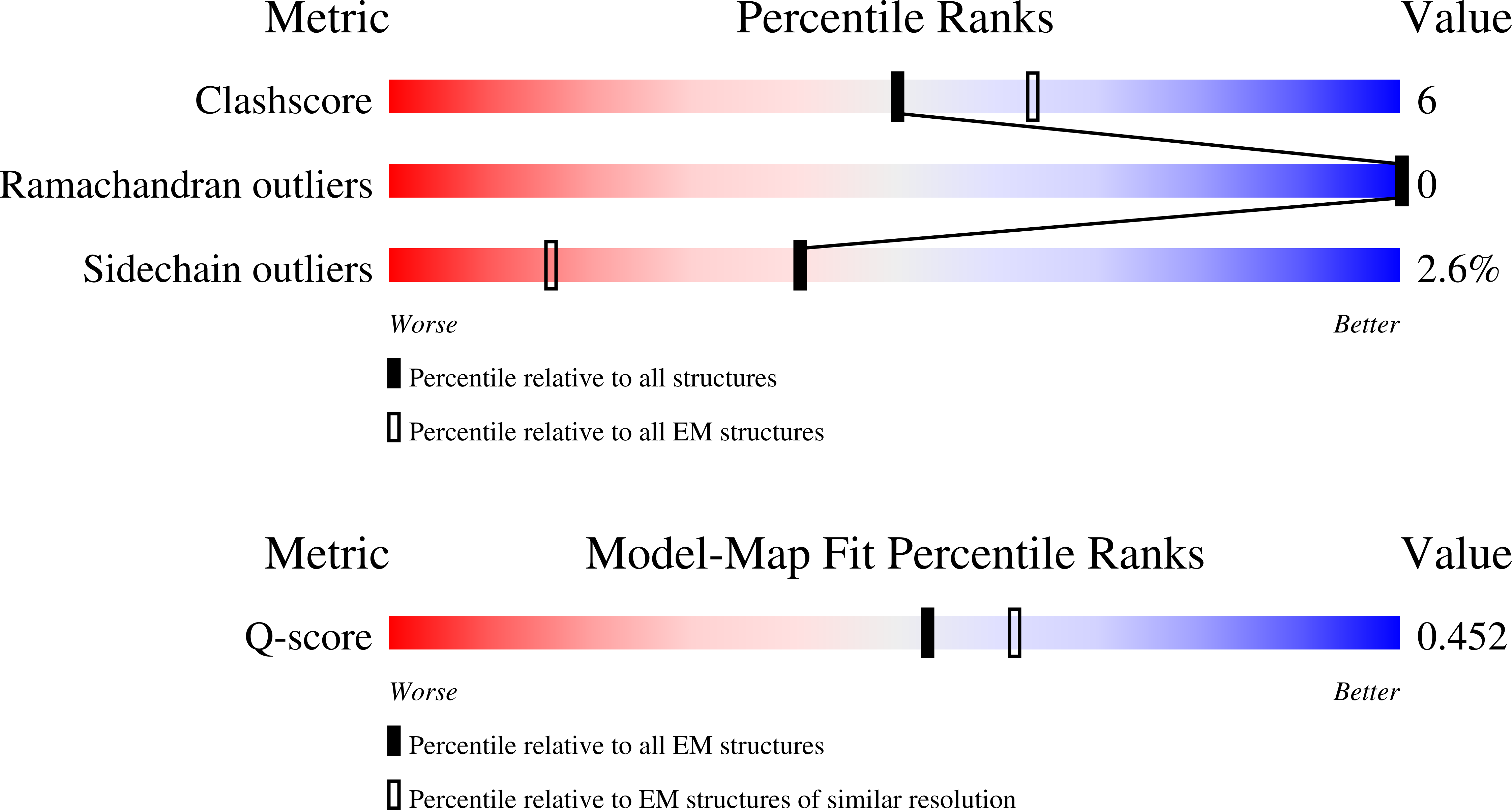
3.60 Å
Aggregation State:
PARTICLE
Reconstruction Method:
SINGLE PARTICLE
Macromolecular Entities
Polymer Type:polypeptide(L)
Molecule:Sterile alpha motif domain-co
Gene (Uniprot):SAMD9
Mutagens:Q514S,R515S,R522S,R553S,Q565S,R593S
Chain IDs:A
Chain Length:1434
Number of Molecules:1
Biological Source:Homo sapiens
Primary Citation
Structural mechanisms of SAMD9 autoinhibition and pathogenic dysregulation.
Sci Adv 12 eaeg3967 eaeg3967 (2026)
PMID: 42777028 DOI: 10.1126/sciadv.aeg3967

Abstact

SAMD9 and SAMD9L (SAMD9/9L) are large cytosolic proteins essential for hematopoietic homeostasis and antiviral defense (1-3). Germline gain-of-function (GoF) mutations in SAMD9/9L cause severe multisystem disorders and predispose to leukemia, but the mechanisms that regulate SAMD9/9L activity and how pathogenic mutations disrupt these processes remain poorly understood. Here, we report cryo-electron microscopy structures of human SAMD9 in multiple conformational and oligomeric states. SAMD9 predominantly adopts a closed, autoinhibited conformation stabilized by a central ATP-bound nucleotide-binding oligomerization domain (NOD) and an extensive network of intramolecular interactions. Recurrent patient-derived GoF mutations localize to and destabilize these intramolecular interfaces, whereas structure-guided compensatory mutations that restabilize these interfaces restore autoinhibition. We further identify low-abundance asymmetric SAMD9 dimers in which one protomer undergoes large conformational changes and establishes intermolecular interactions that are essential for SAMD9 activation. Together, these findings define the structural basis of SAMD9 autoinhibition and reveal how human GoF mutations disrupt this regulatory mechanism to drive disease.

Legend

Protein

Chemical

Disease

Primary Citation of related structures
Feedback Form
Name
Email
Institute
Feedback