

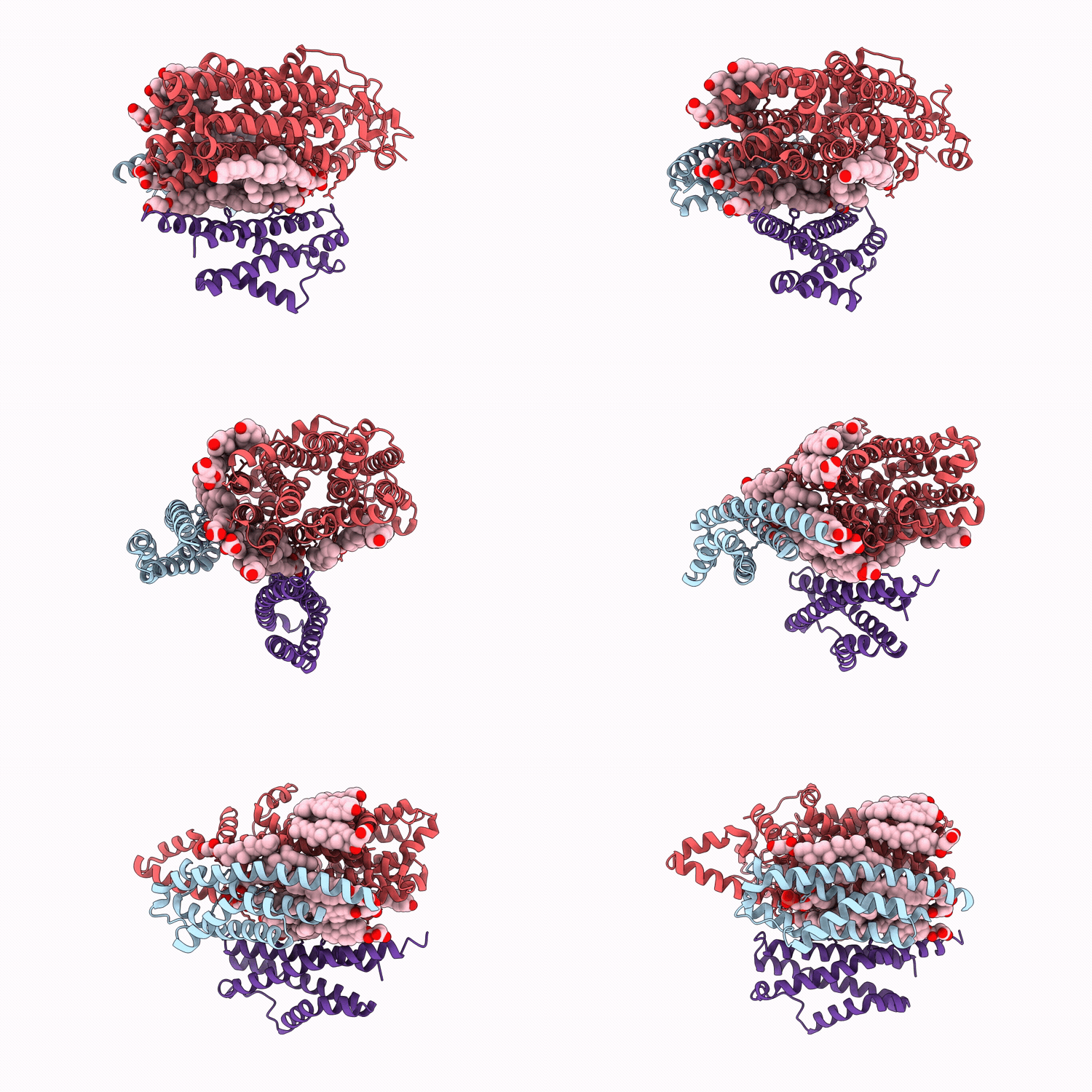
32QA image
Deposition Date 2026-07-20
Release Date 2026-08-19
Last Version Date 2026-10-21
Entry Detail
PDB ID:
32QA
Title:
Cryo-EM structure of Saccharomyces cerevisiae Erv14-Qdr2 complex in lipid nanodiscs (double Erv14 assembly)
Biological Source:
Source Organism(s):
Expression System(s):
Method Details:
Experimental Method:
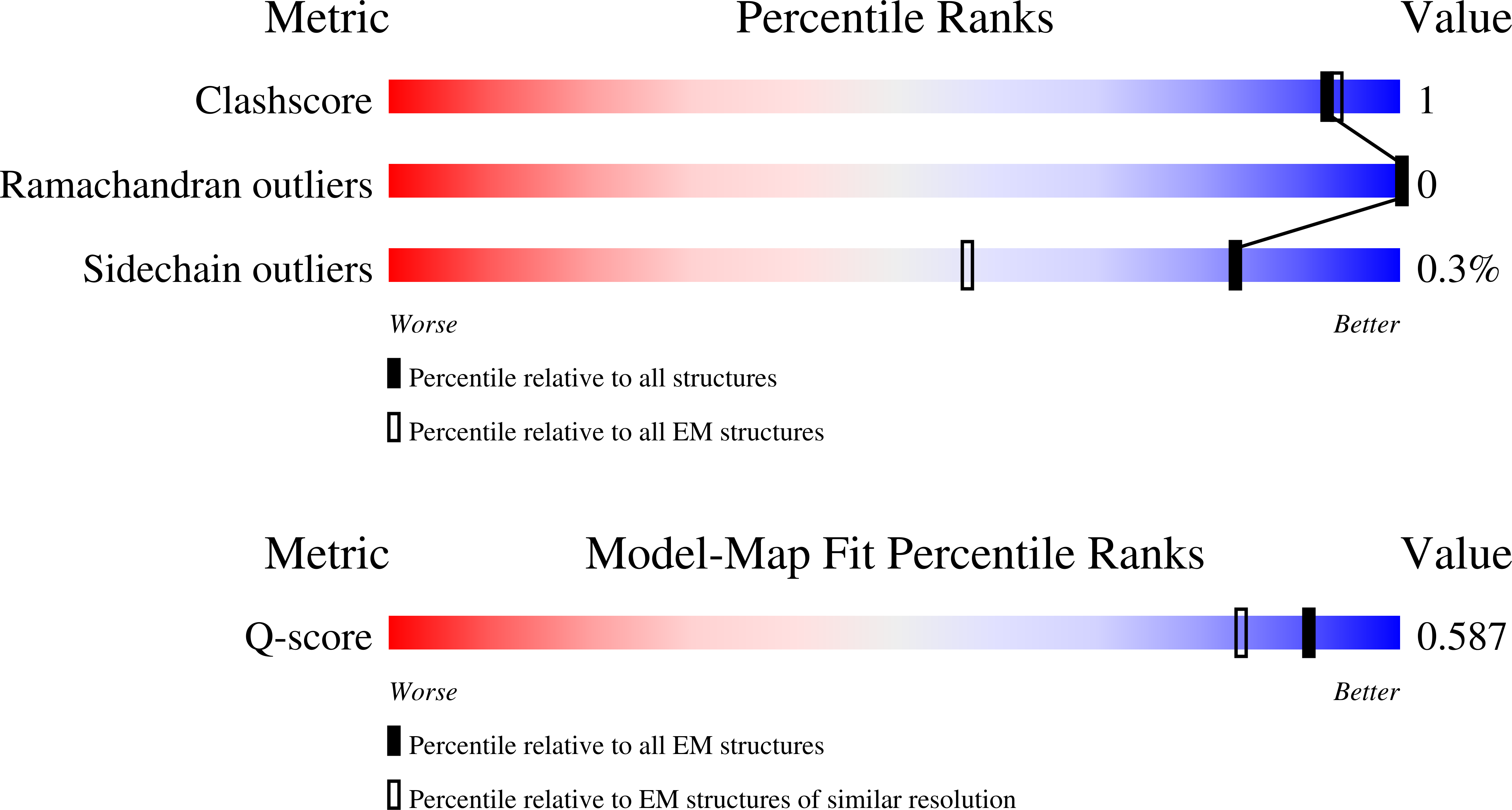
Resolution:
2.76 Å
Aggregation State:
PARTICLE
Reconstruction Method:
SINGLE PARTICLE
Macromolecular Entities
Polymer Type:polypeptide(L)
Molecule:ER-derived vesicles protein E
Gene (Uniprot):ERV14
Chain IDs:A, C
Chain Length:146
Number of Molecules:2
Biological Source:Saccharomyces cerevisiae
Polymer Type:polypeptide(L)
Molecule:Quinidine resistance protein
Gene (Uniprot):QDR2
Chain IDs:B
Chain Length:549
Number of Molecules:1
Biological Source:Saccharomyces cerevisiae
Primary Citation
Cornichon receptors couple membrane adaptation to cargo selection during ER export.
Biorxiv ? ? ? (2026)
PMID: 42845395 DOI: 10.64898/2026.08.07.743479

Abstact

Selective export of membrane proteins from the endoplasmic reticulum (ER) is fundamental for eukaryotic cell biology, yet how trafficking receptors coordinate cargo recognition with membrane adaptation and COPII recruitment remains unknown. Cornichon homolog (CNIH) proteins comprise a conserved family of trafficking receptors that mediate ER export of ion channels, G protein-coupled receptors (GPCRs), ATP-binding cassette (ABC) and solute carrier (SLC) transporters. Here, we determine cryo-electron microscopy structures of the prototypical cornichon receptor Erv14 bound to an SLC transporter in detergent and lipid nanodiscs. We show that cargo recognition is mediated by a dynamic network of interactions, in which structural lipids stabilize the receptor-cargo interface. Nanodisc structures reveal the assembly of a second Erv14 receptor that remodels the receptor-cargo interface in response to membrane architecture, thereby reducing local membrane thickness and providing direct structural evidence that cornichon receptors buffer hydrophobic mismatch during membrane protein biogenesis. Structural and trafficking analyses further show that the second receptor recruits the COPII adaptor Sec24, coupling membrane remodelling to cargo export. Together, our findings establish that cornichon receptors couple lipid-mediated membrane adaptation with cargo selection through sequential receptor assembly, linking membrane protein folding to selective COPII-mediated ER export. ONE SENTENCE SUMMARY: Cornichon receptors integrate membrane adaptation with cargo recognition to coordinate membrane protein quality control and selective ER export.

Legend

Protein

Chemical

Disease

Primary Citation of related structures
Feedback Form
Name
Email
Institute
Feedback