

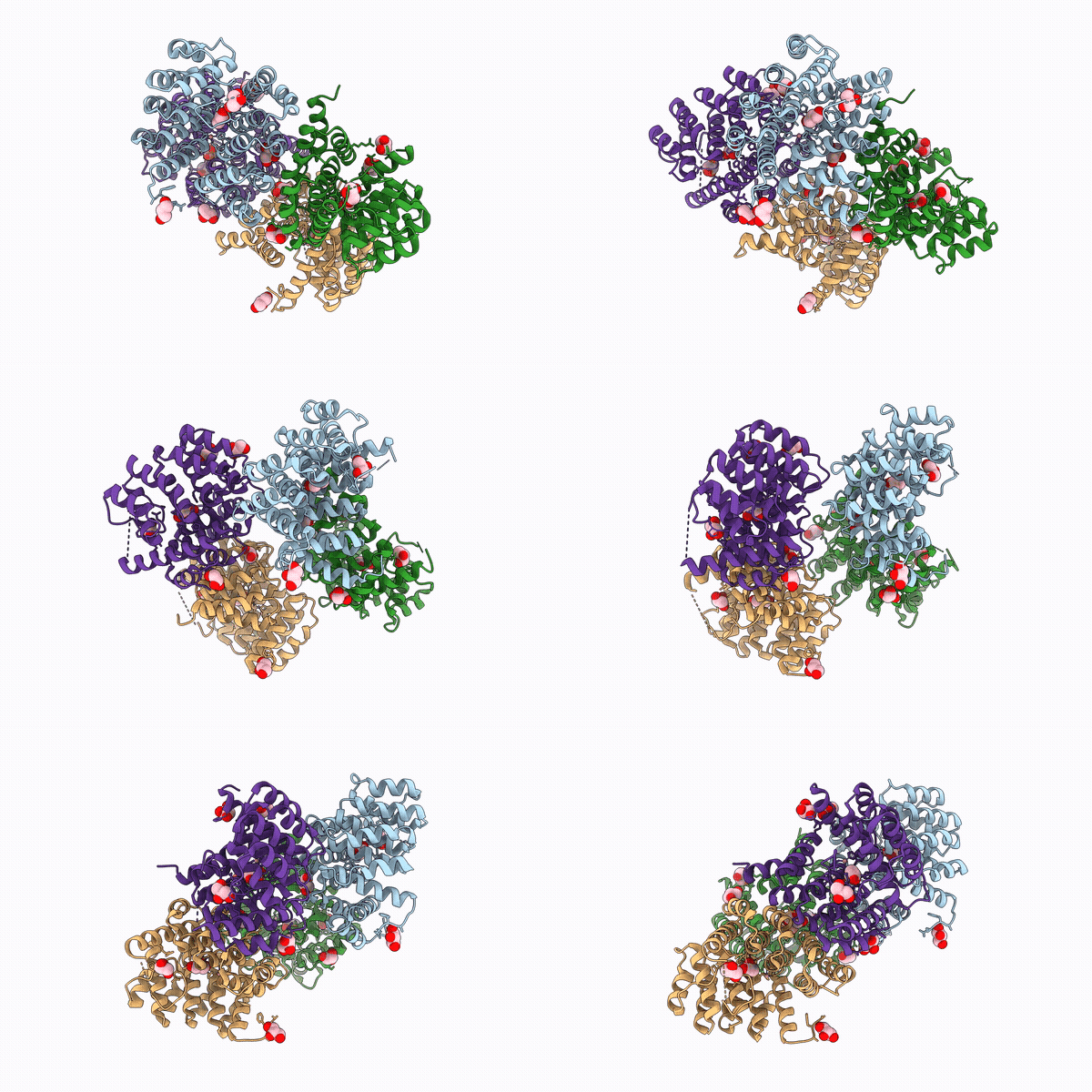
31NS image
Deposition Date 2026-06-15
Release Date 2026-10-21
Last Version Date 2026-10-21
Entry Detail
PDB ID:
31NS
Keywords:
Title:
Crystal structure of cobalt-bound deoxyhypusine hydroxylase
Biological Source:
Source Organism(s):
Homo sapiens (Taxon ID: 9606)
Expression System(s):
Method Details:
Experimental Method:
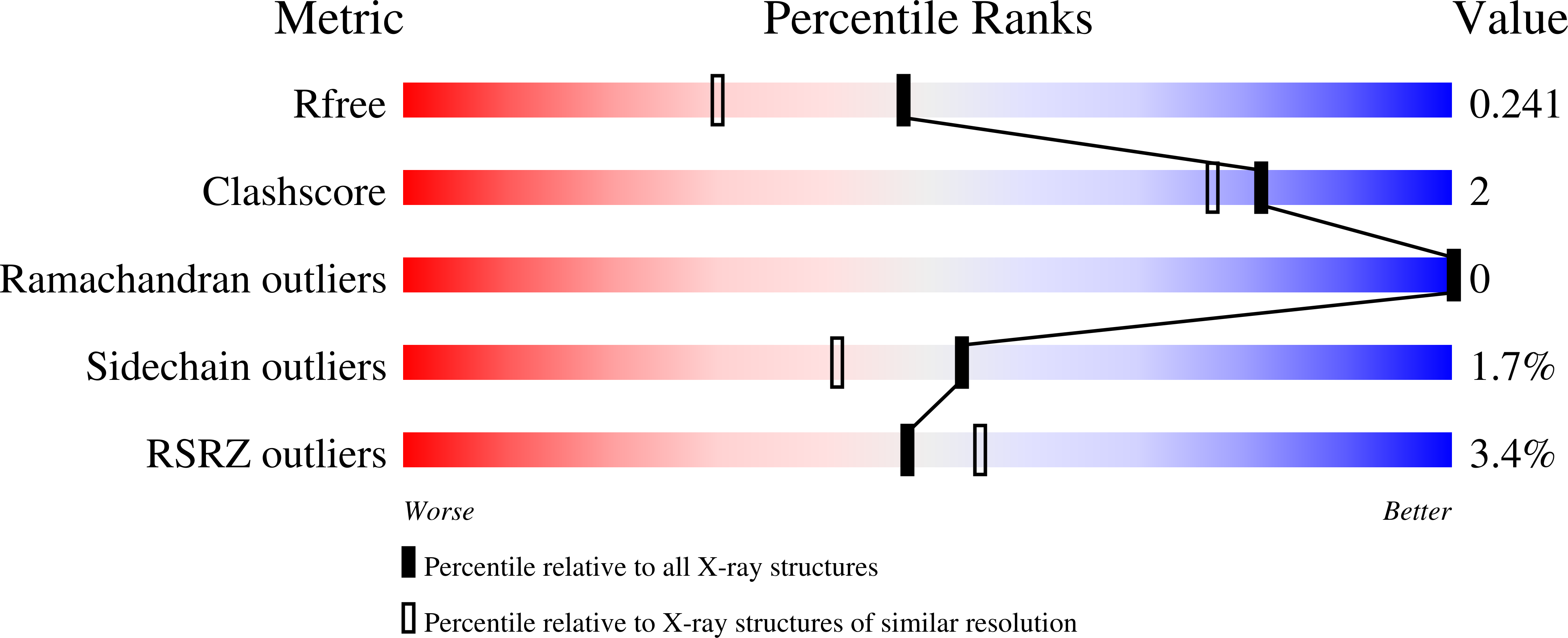
Resolution:
1.81 Å
R-Value Free:
0.24
R-Value Work:
0.19
R-Value Observed:
0.19
Space Group:
P 1
Macromolecular Entities
Polymer Type:polypeptide(L)
Molecule:Deoxyhypusine hydroxylase
Gene (Uniprot):DOHH
Chain IDs:A, B, C, D
Chain Length:291
Number of Molecules:4
Biological Source:Homo sapiens
Primary Citation
Mismetallation reveals metal tolerance and enhanced stability of human deoxyhypusine hydroxylase.
Int.J.Biol.Macromol. 384 154732 154732 (2026)
PMID: 42829144 DOI: 10.1016/j.ijbiomac.2026.154732

Abstact

Hypusination is a unique post-translational modification found exclusively in eukaryotic translation factor 5A (eIF5A). In this reaction, a specific lysine residue in eIF5A is converted into hypusine residue. The modification comprises two enzymatic steps: a NAD-dependent deoxyhypusine synthase (DHS) transfers the 4-aminobutyl moiety from spermidine to form a deoxyhypusine residue, and an iron-dependent deoxyhypusine hydroxylase (DOHH) hydroxylates this intermediate to generate a hypusine residue and fully functional eIF5A. Although DOHH is a key enzyme concluding the hypusination pathway, obtaining stable, well-diffracting crystals has remained challenging, limiting mechanistic studies and inhibitor screening. We therefore explored whether replacing the native iron ions with those of alternative metals could yield a more thermostable and structurally robust analogue suitable for crystallography. We show that several non-native metals markedly increase DOHH thermal stability and support our observation by crystal structures of human DOHH with either nickel or cobalt ions substituted for native iron ions (at 2.16 and 1.81 A resolution, respectively), providing the first structural characterization of mismetallated human DOHH analogues. X-ray fluorescence and anomalous scattering confirmed direct incorporation of metal ions into the active site. While adopting a distinct metal coordination environment, the mismetallated enzymes retain the overall fold of the native Fe-bound form. Their enhanced stability highlights their value as reliable surrogates for structural and mechanistic studies.

Legend

Protein

Chemical

Disease

Primary Citation of related structures
Feedback Form
Name
Email
Institute
Feedback