

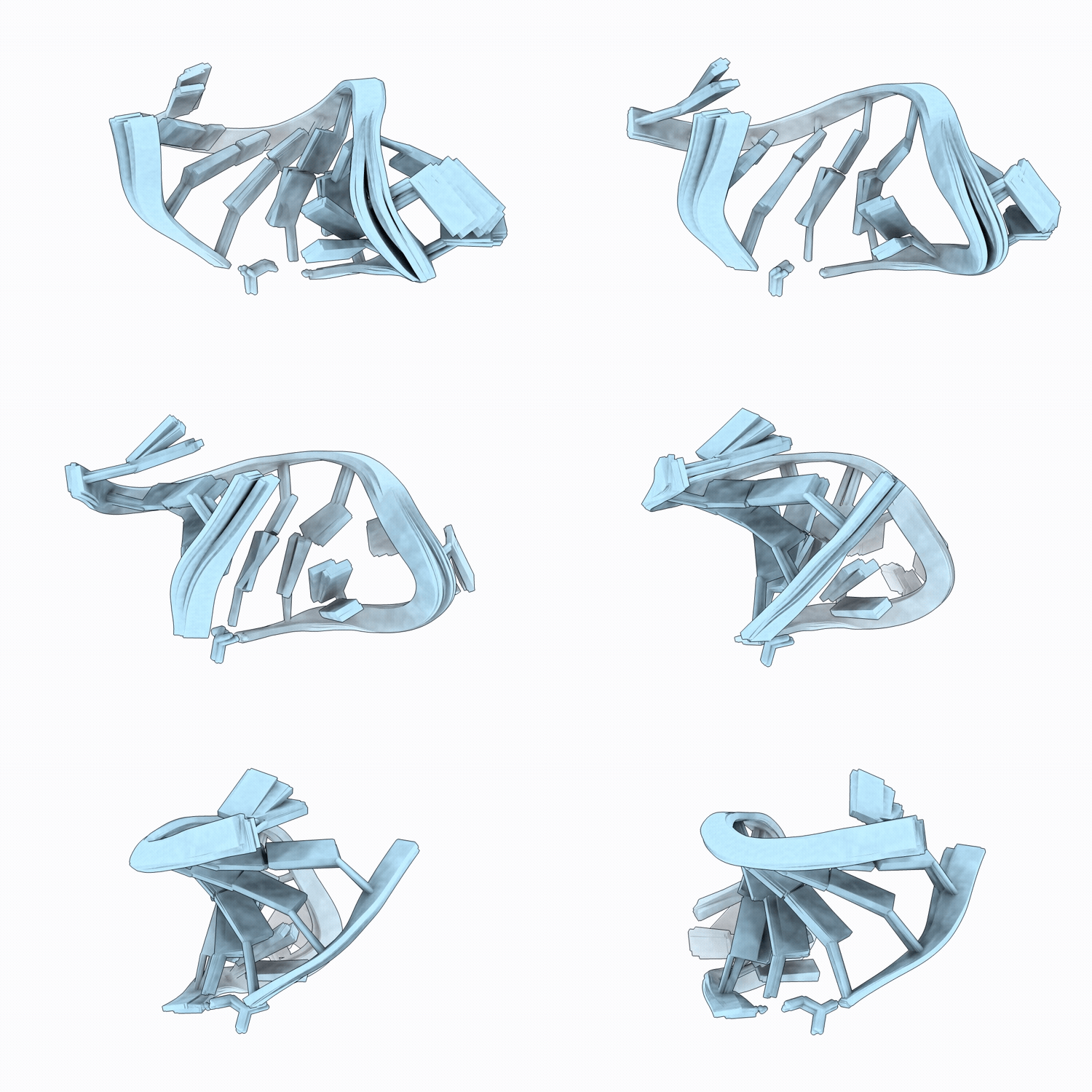
30SC image
Deposition Date 2026-05-11
Release Date 2026-07-22
Last Version Date 2026-08-05
Entry Detail
PDB ID:
30SC
Keywords:
Title:
Hairpin Inosine GCAA tetraloop
Biological Source:
Source Organism(s):
Method Details:
Experimental Method:
Conformers Calculated:
100
Conformers Submitted:
10
Selection Criteria:
structures with the lowest energy

Macromolecular Entities
Polymer Type:polyribonucleotide
Molecule:RNA (5'-R(*GP*AP*AP*IP*GP*GP*
Chain IDs:A
Chain Length:15
Number of Molecules:1
Biological Source:synthetic construct
Ligand Molecules
Primary Citation
1-Deazainosine-impact on RNA structure and role in exploring ribozyme catalysis.
Chem Sci 17 13874 13883 (2026)
PMID: 42266902 DOI: 10.1039/d6sc04009h

Abstact

Synthetic RNAs bearing deazapurine nucleobases are powerful probes for dissecting RNA-catalyzed reactions by atomic mutagenesis. Here we systematically characterize RNA containing 1-deazainosine (c(1)I) and compare it with inosine (I). We first report the synthesis of a suitably protected c(1)I phosphoramidite and its incorporation into RNA by solid-phase synthesis. We then provide a comprehensive thermodynamic analysis of base-pair stability from UV-melting experiments, showing that c(1)I-C pairs are less stable than the corresponding I-C pairs. Although a two-hydrogen-bond Hoogsteen interaction between c(1)I and protonated C is conceivable, NMR spectroscopy indicates that c(1)I-C predominantly adopts a Watson-Crick-like geometry with a single hydrogen bond. These pairs are accommodated within RNA duplexes without disrupting neighboring base pairing. We also use c(1)I to probe poly(I:C) motifs that mimic viral double-stranded RNA, assessing how strand length governs duplex versus hairpin formation. Finally, atomic mutagenesis of the twister ribozyme with c(1)I supports the hypothesis that an active-site guanine participates directly in phosphodiester-bond cleavage. Together, these results clarify how deazapurines modulate nucleic-acid properties and provide guidance for their use in atomic mutagenesis to interrogate RNA catalysis.

Legend

Protein

Chemical

Disease

Primary Citation of related structures
Feedback Form
Name
Email
Institute
Feedback