

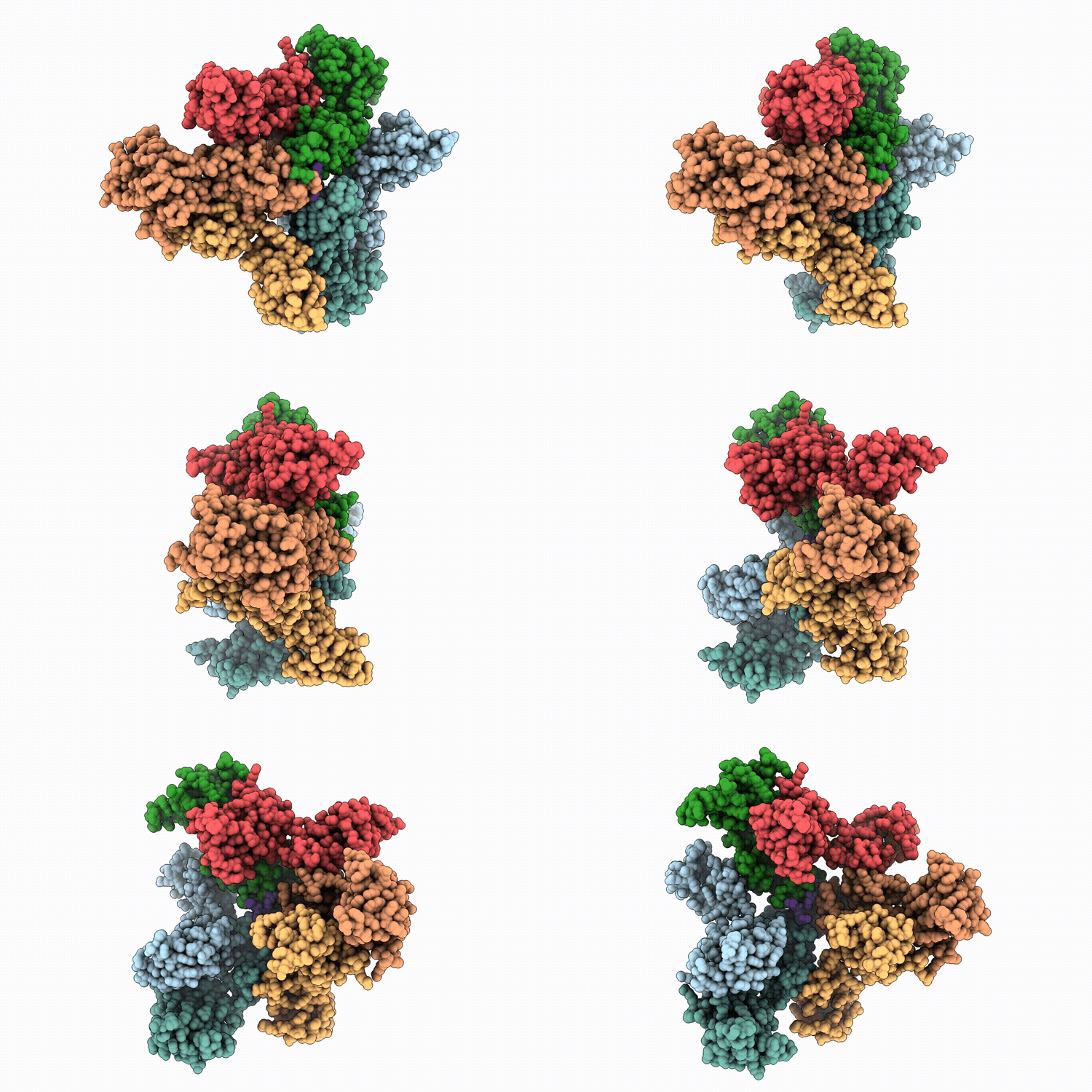
30OF image
Deposition Date 2026-05-05
Release Date 2026-06-24
Last Version Date 2026-06-24
Entry Detail
PDB ID:
30OF
Title:
HIV-1 capsid tri-hexamer bound to MX2
Biological Source:
Source Organism(s):
Expression System(s):
Method Details:
Experimental Method:
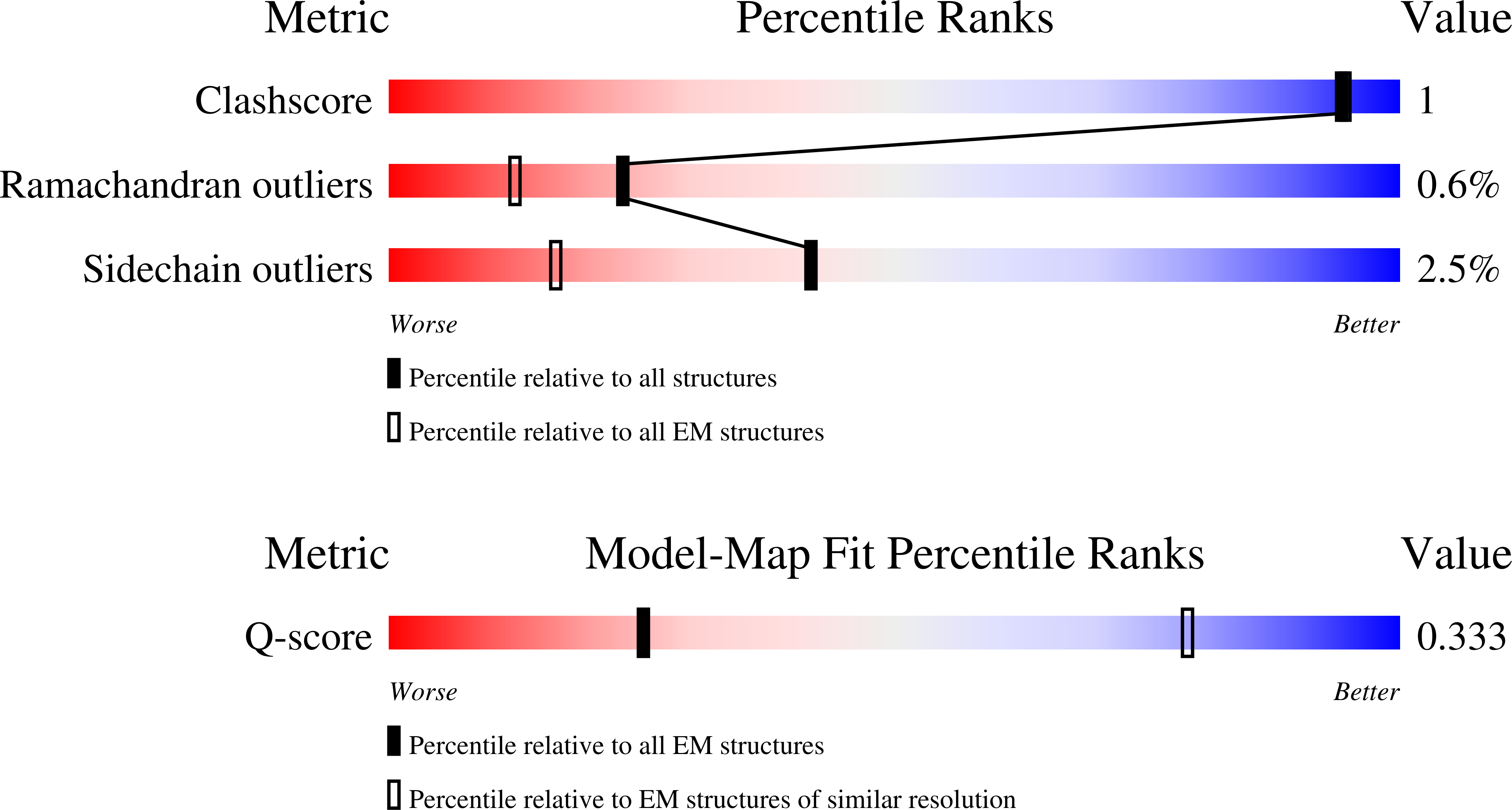
Resolution:
4.64 Å
Aggregation State:
HELICAL ARRAY
Reconstruction Method:
SINGLE PARTICLE
Macromolecular Entities
Protein Blast
Polymer Type:polypeptide(L)
Molecule:HIV-1 capsid
Chain IDs:B (auth: D), C (auth: E), D (auth: G), E (auth: L), F (auth: N), G (auth: O)
Chain Length:232
Number of Molecules:6
Biological Source:HIV-1 group M
Structures with similar UniProt ID
Protein Blast
Polymer Type:polypeptide(L)
Molecule:Interferon-induced GTP-bindin
Gene (Uniprot):MX2
Mutagens:S28D
Chain IDs:A (auth: S)
Chain Length:270
Number of Molecules:1
Biological Source:Homo sapiens, synthetic construct
Ligand Molecules
Primary Citation

Abstact

The HIV-1 capsid core encapsulates the viral genome and mediates its delivery into the host cell's nucleus. It is composed of multiple copies of the Capsid (CA, p24(Gag)) protein, assembled into hexamers and pentamers to create a lattice that forms a fullerene-like cone. Myxovirus resistance 2 (MX2) is an HIV-1 restriction factor that binds to the capsid core and blocks nuclear import of the viral genome. Here, we define a minimal region of MX2 required for HIV-1 restriction and produce a corresponding functional recombinant protein. We have used cryo-electron microscopy to determine the structure of this MX2 fragment bound to the tri-hexamer interface of the capsid lattice, revealing a large, buried interface combining electrostatic and hydrophobic interactions. This structure, together with assays that measure capsid core destabilisation, shows that MX2 binding induces conformational rearrangements in the capsid lattice that culminate in a loss of integrity. These results support a model whereby MX2 exerts its antiviral activity by disrupting the capsid lattice, inducing premature fragmentation and preventing HIV-1 nuclear import. By revealing the structural basis for MX2-mediated restriction, this work also provides the framework for the development of anti-HIV molecules that mimic MX2 restriction.

Legend

Protein

Chemical

Disease

Primary Citation of related structures
Feedback Form
Name
Email
Institute
Feedback