

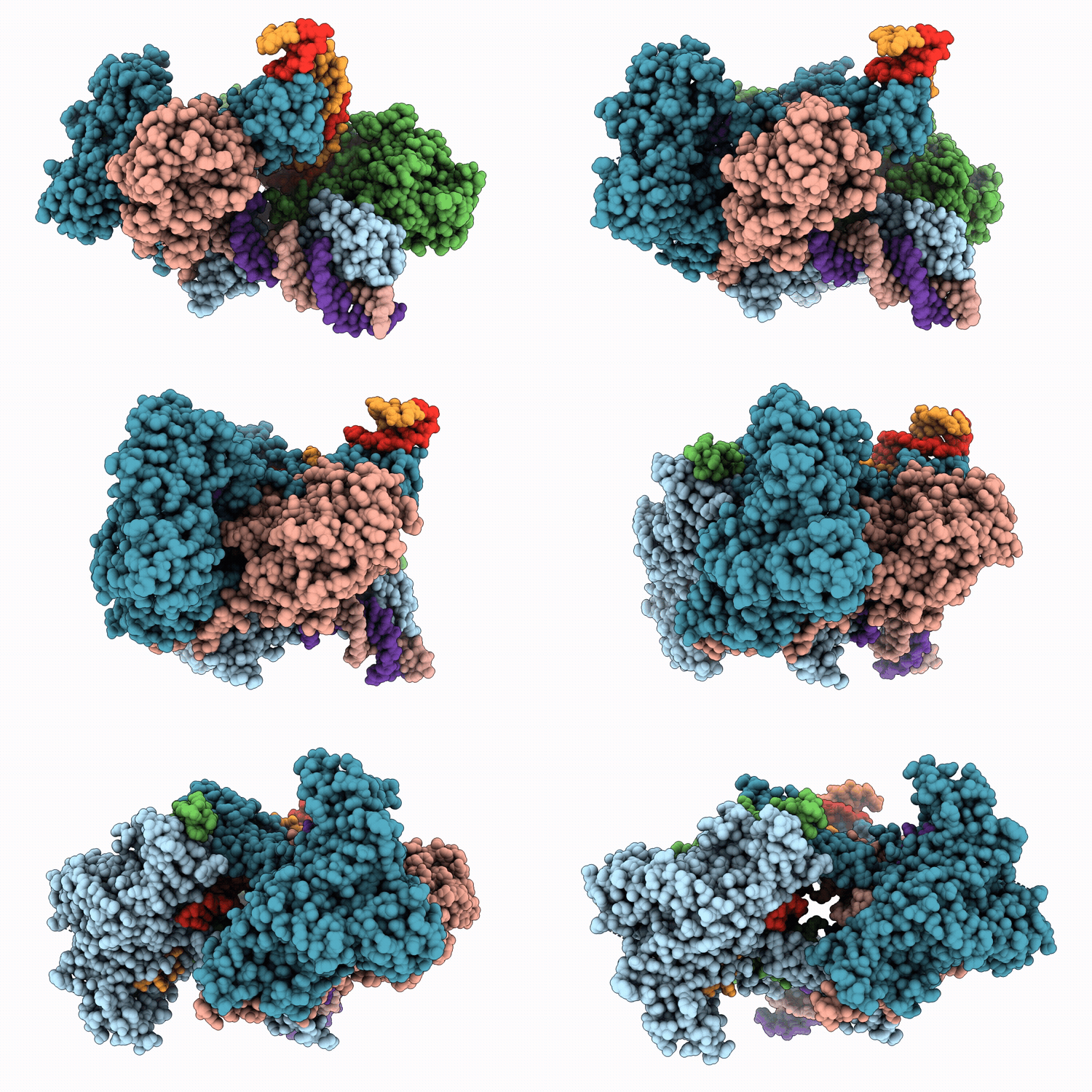
30JV image
Deposition Date 2026-04-29
Release Date 2026-06-03
Last Version Date 2026-06-03
Entry Detail
PDB ID:
30JV
Title:
Cryo-EM structure of the PseTnsAB paired-end complex (right end) in the presence of Mn
Biological Source:
Source Organism(s):
Expression System(s):
Method Details:
Experimental Method:
Resolution:
2.86 Å
Aggregation State:
PARTICLE
Reconstruction Method:
SINGLE PARTICLE
Macromolecular Entities
Structural Superimposition Protein Blast
Polymer Type:polypeptide(L)
Molecule:TnsA endonuclease N-terminal
Chain IDs:A, B, C, D
Chain Length:853
Number of Molecules:4
Biological Source:Pseudoalteromonas sp. S983
Polymer Type:polydeoxyribonucleotide
Molecule:Transposon right-end, transfe
Chain IDs:E, G
Chain Length:44
Number of Molecules:2
Biological Source:Pseudoalteromonas sp. S983
Polymer Type:polydeoxyribonucleotide
Molecule:Transposon right-end, non-tra
Chain IDs:F, H
Chain Length:48
Number of Molecules:2
Biological Source:Pseudoalteromonas sp. S983
Ligand Molecules
Primary Citation
Transposon end recognition and excision mechanisms of type I-F CRISPR-associated transposases.
Biorxiv ? ? ? (2026)
PMID: 42146515 DOI: 10.64898/2026.05.05.722991

Abstact

CRISPR-associated transposons (CASTs) are Tn7-like elements that have co-opted RNA-guided CRISPR effectors for targeted DNA insertion. CASTs have been adapted as genome editing tools for programmable, site-specific integration. Among them, the type I-F system from Ps e udoalteromonas ( Pse CAST) shows uniquely robust activity in human cells, yet its mechanistic basis remains poorly understood. Here, we present structural and biochemical analysis of the Pse CAST transposase TnsAB. Biochemical reconstitution of transposon DNA excision defines key characteristics of the transposition mechanism. Cryogenic electron microscopy (cryo-EM) structures of Pse TnsAB paired-end complexes reveal molecular determinants of transpososome assembly, transposon end recognition and cleavage. We validate these findings using biochemical and in vivo assays of structure-based transposase mutants, and provide mechanistic insights into the enhanced activity of a laboratory-evolved TnsAB variant. Together, our studies highlight molecular features underlying the efficiency of natural and engineered type I-F transposases and establish a mechanistic framework for their continued rational optimization.

Legend

Protein

Chemical

Disease

Primary Citation of related structures
Feedback Form
Name
Email
Institute
Feedback