

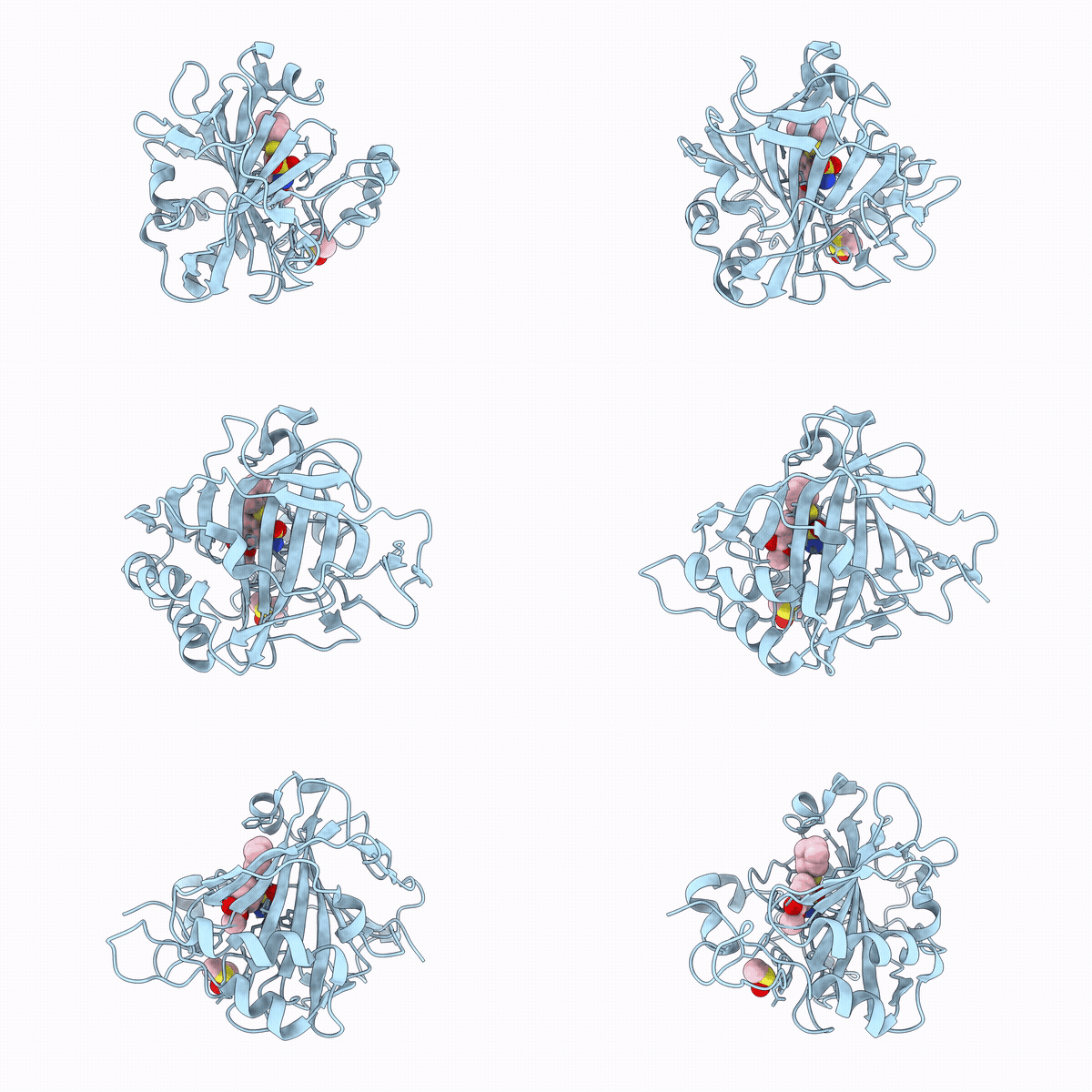
30EO image
Deposition Date 2026-04-22
Release Date 2026-10-21
Last Version Date 2026-10-21
Entry Detail
PDB ID:
30EO
Keywords:
Title:
Crystal structure of carbonic anhydrase II with methyl 4-cyclohexylsulfanyl-3-sulfamoyl-benzoate
Biological Source:
Source Organism(s):
Homo sapiens (Taxon ID: 9606)
Expression System(s):
Method Details:
Experimental Method:
Resolution:
1.59 Å
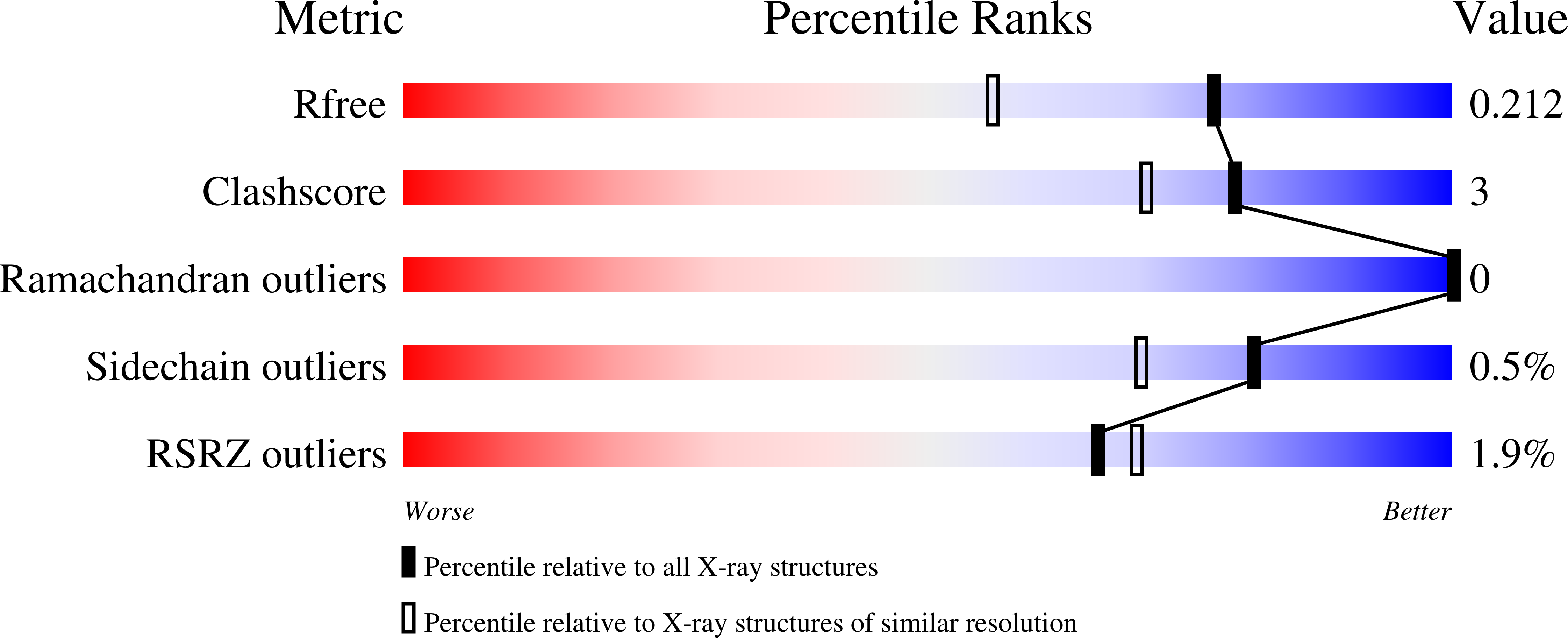
R-Value Free:
0.21
R-Value Work:
0.16
R-Value Observed:
0.17
Space Group:
P 1 21 1
Macromolecular Entities
Polymer Type:polypeptide(L)
Molecule:Carbonic anhydrase 2
Gene (Uniprot):CA2
Chain IDs:A
Chain Length:260
Number of Molecules:1
Biological Source:Homo sapiens
Primary Citation
Enthalpy-Entropy Compensation in Inhibitor Binding to Carbonic Anhydrase Isozymes.
Biophys.J. ? ? ? (2026)
PMID: 42802557 DOI: 10.1016/j.bpj.2026.09.032

Abstact

Enthalpy-entropy compensation is a widely observed feature of protein-ligand recognition, yet its structural origins remain difficult to resolve. Here, we investigate a matched series of sulfonamide inhibitors binding to three closely related human carbonic anhydrase (CA) isozymes (CA II, CA XII, and CA XIII) using isothermal titration calorimetry, fluorescence thermal shift assays, and high-resolution X-ray crystallography. Although these isozymes share nearly identical overall folds and exhibit highly similar intrinsic Gibbs energies of binding, their enthalpic and entropic contributions diverge markedly. Correction of all observed thermodynamic quantities for proton-linked equilibria reveals that this divergence originates from subtle differences in the active-site microenvironment. In particular, single-residue variations-including the Thr/Thr/Val substitution at position 200, the Phe/Ala/Phe variation at position 131, and the Asn/Asn/Ser difference at position 62-modulate hydrogen-bond geometry, steric complementarity, and local solvation, thereby reshaping the balance between enthalpic and entropic driving forces. These results demonstrate how closely related proteins can achieve similar binding affinities through distinct energetic strategies and establish a coherent structure-thermodynamics framework for sulfonamide recognition.

Legend

Protein

Chemical

Disease

Primary Citation of related structures
Feedback Form
Name
Email
Institute
Feedback