

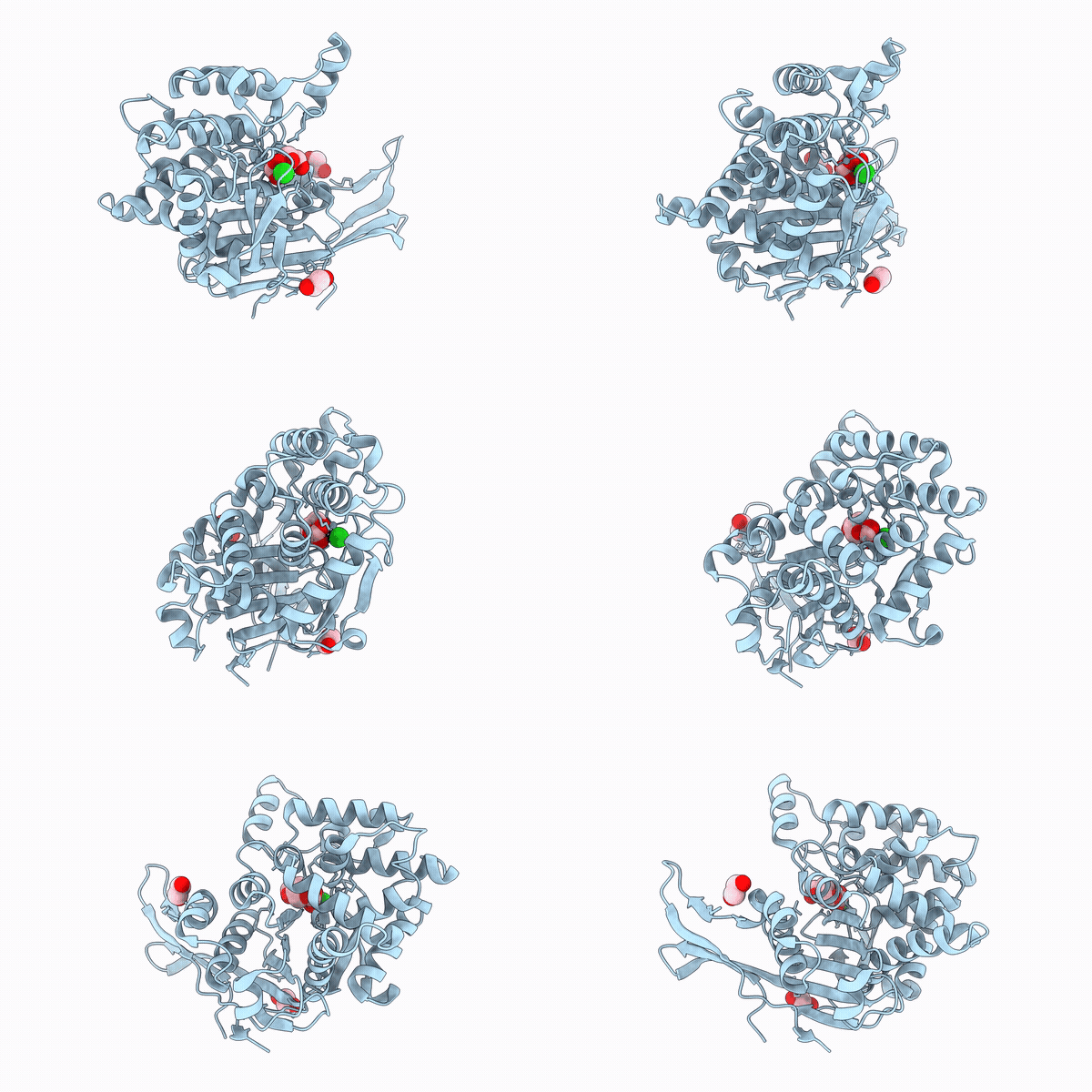
30CX image
Deposition Date 2026-04-21
Release Date 2026-10-21
Last Version Date 2026-10-21
Entry Detail
PDB ID:
30CX
Keywords:
Title:
Class 3 L-asparaginase from Botryosphaeria parva with the active site Ser51 modified with boric acid - glycerol ester
Biological Source:
Source Organism(s):
Expression System(s):
Method Details:
Experimental Method:
Resolution:
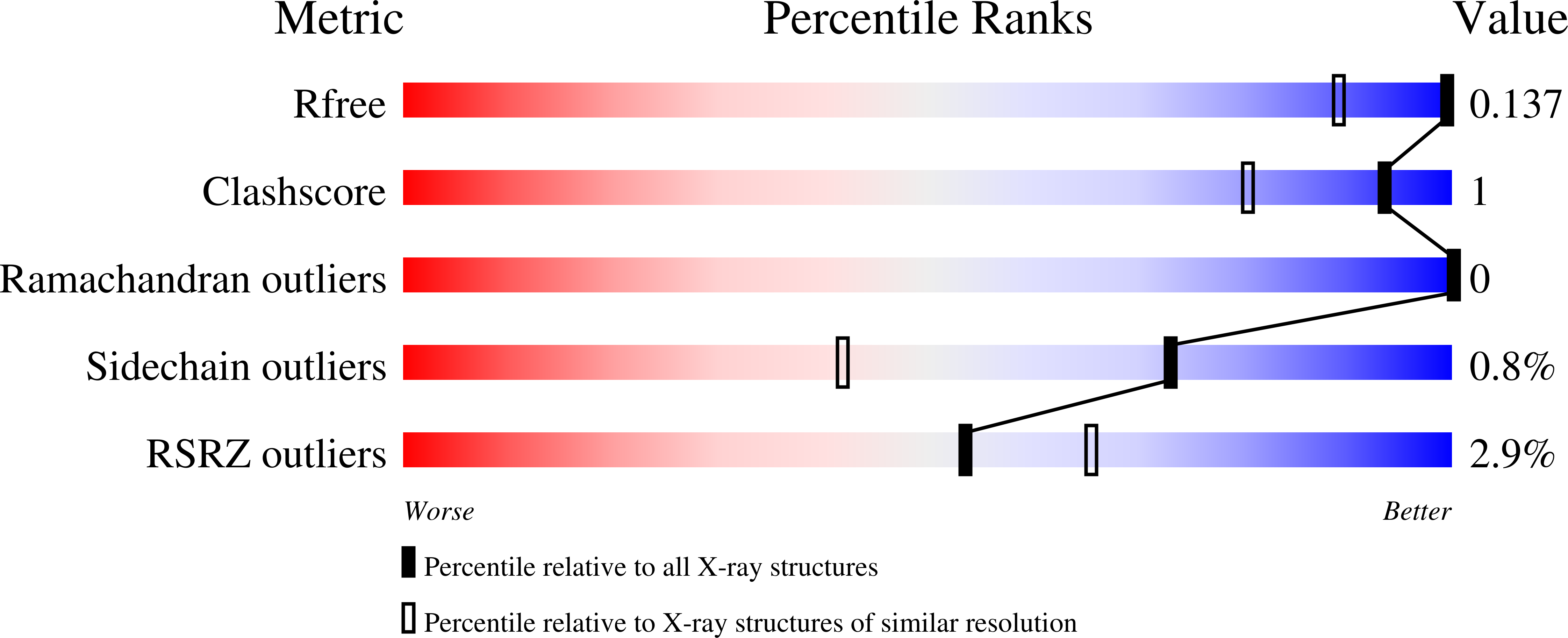
1.05 Å
R-Value Free:
0.12
R-Value Work:
0.11
R-Value Observed:
0.11
Space Group:
C 1 2 1
Macromolecular Entities
Structural Superimposition Protein Blast
Polymer Type:polypeptide(L)
Molecule:Putative l-asparaginase ii pr
Chain IDs:A
Chain Length:363
Number of Molecules:1
Biological Source:Neofusicoccum parvum
Modified Residue
Compound ID Chain ID Parent Comp ID Details 2D Image
CSD A CYS modified residue
Primary Citation
Comprehensive structural and functional characterization of class 3 L-asparaginases from selected pathogenic fungi.
Int.J.Biol.Macromol. 384 154669 154669 (2026)
PMID: 42822572 DOI: 10.1016/j.ijbiomac.2026.154669

Abstact

Fungal class 3 L-asparaginases were identified based on sequence similarity to the bacterial enzyme ReAV from Rhizobium etli. Here, we present an integrative functional and structural characterization of six class 3 L-asparaginases derived from pathogenic fungi. Kinetic analyses revealed distinct catalytic profiles, including differences in substrate affinity and turnover rates. For three enzymes, a total of six high-resolution crystal structures were determined, capturing multiple active site states. Structural comparisons confirm the conserved fold characteristic of class 3 L-asparaginases and reveal unexpected modifications at the catalytic Ser51 nucleophile. In all three structurally characterized enzymes, Ser51 is esterified by orthoborate, which bears a secondary esterification by glycerol or ethylene glycol, as observed under the crystallization conditions used in this study. The physiological relevance of this modification remains unknown, but it provides new insight into the chemical reactivity of the active site and suggest a previously unrecognized mechanism. To explore the susceptibility of fungal L-asparaginases to small-molecule inhibition, we performed docking-based virtual screening using an atomic resolution (~1 A) crystal structure of the Botryosphaeria parva enzyme (BpA). Screening of over two million compounds yielded candidate molecules predicted to bind within the catalytic pocket. Experimental evaluation of five compounds identified one preliminary hit, L0911, displaying measurable inhibition of BpA, with IC(50) of ~800 muM. Together, these results expand our understanding of class 3 L-asparaginase structure and function, reveal unexpected active-site chemistry, and provide a starting point for the development of small-molecule inhibitors targeting the fungal enzymes as potential fungicides.

Legend

Protein

Chemical

Disease

Primary Citation of related structures
Feedback Form
Name
Email
Institute
Feedback