

2WT8 image
Deposition Date 2009-09-14
Release Date 2009-12-01
Last Version Date 2024-10-23
Entry Detail
PDB ID:
2WT8
Keywords:
Title:
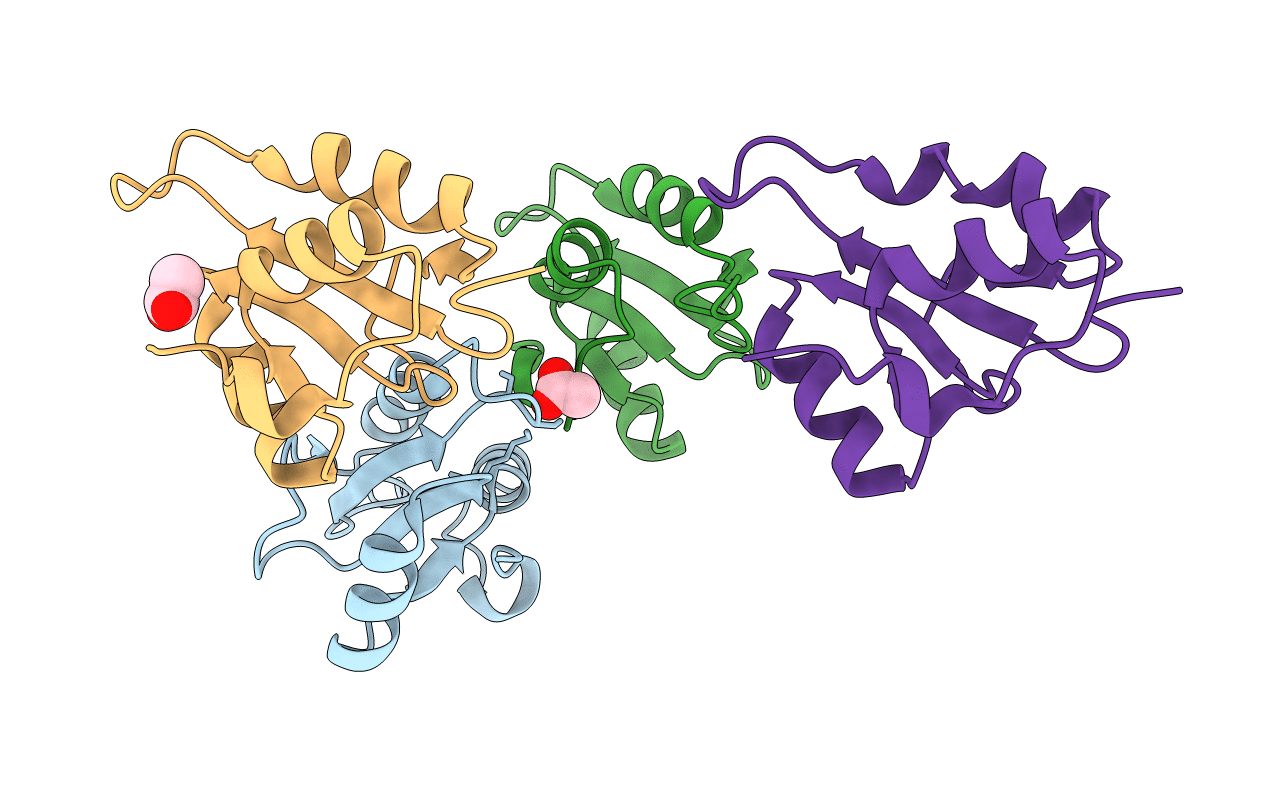
Structure of the N-terminal BRCT domain of human microcephalin (Mcph1)
Biological Source:
Source Organism(s):
HOMO SAPIENS (Taxon ID: 9606)
Expression System(s):
Method Details:
Experimental Method:
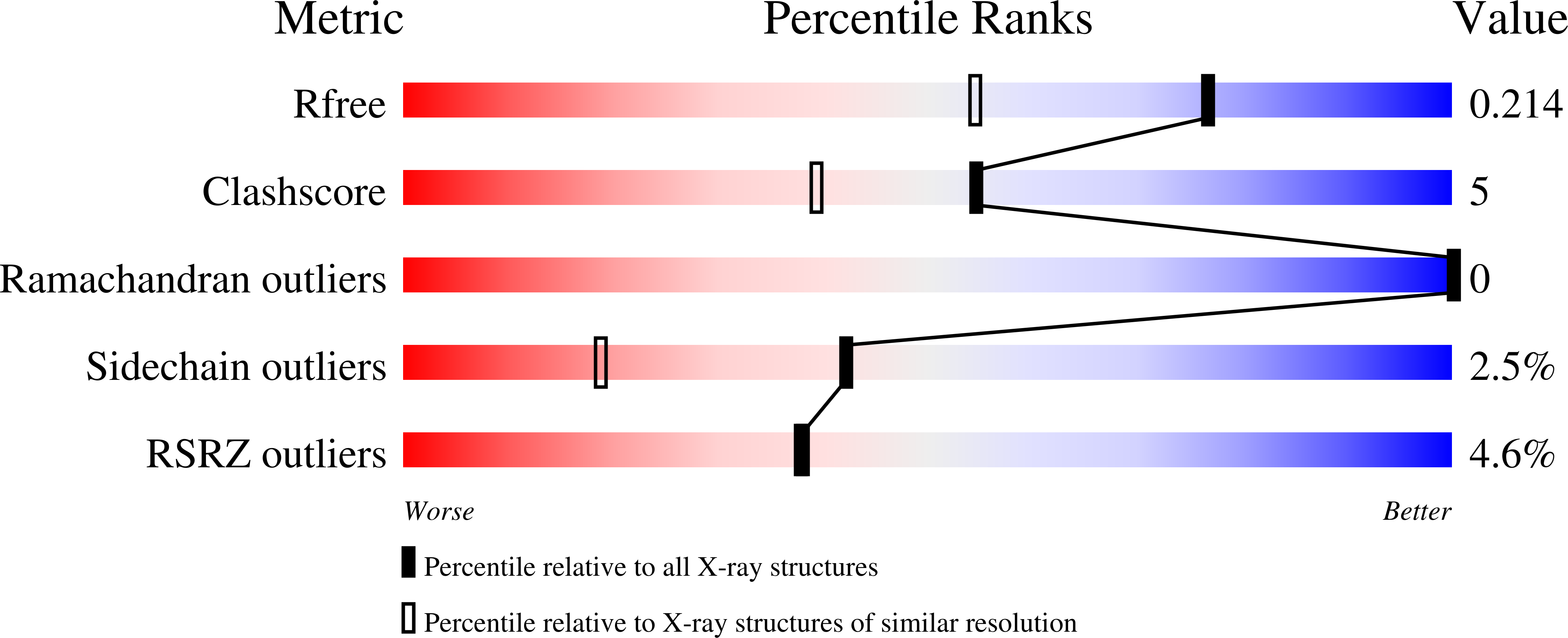
Resolution:
1.60 Å
R-Value Free:
0.22
R-Value Work:
0.19
R-Value Observed:
0.19
Space Group:
P 1 21 1
Macromolecular Entities
Structures with similar UniProt ID
Protein Blast
Polymer Type:polypeptide(L)
Molecule:MICROCEPHALIN
Gene (Uniprot):MCPH1
Chain IDs:A, B, C, D
Chain Length:97
Number of Molecules:4
Biological Source:HOMO SAPIENS
Modified Residue
Compound ID Chain ID Parent Comp ID Details 2D Image
MSE A MET SELENOMETHIONINE
Primary Citation
A Pocket on the Surface of the N-Terminal Brct Domain of Mcph1 is Required to Prevent Abnormal Chromosome Condensation.
J. Mol. Biol. 395 908 ? (2010)
PMID: 19925808 DOI: 10.1016/J.JMB.2009.11.029

Abstact

Mcph1 is mutated in autosomal recessive primary microcephaly and premature chromosome condensation (PCC) syndrome. Increased chromosome condensation is a common feature of cells isolated from patients afflicted with either disease. Normal cells depleted of Mcph1 also exhibit PCC phenotype. Human Mcph1 contains three BRCA1-carboxyl terminal (BRCT) domains, the first of which (Mcph1N) is necessary for the prevention of PCC. The only known disease-associated missense mutation in Mcph1 resides in this domain (T27R). We have determined the X-ray crystal structure of human Mcph1N to 1.6 A resolution. Compared with other BRCT domain structures, the most striking differences are an elongated, ordered beta1-alpha1 loop and an adjacent hydrophobic pocket. This pocket is in the equivalent structural position to the phosphate binding site of BRCT domains that recognize phospho-proteins, although the phosphate-binding residues are absent in Mcph1N. Mutations in the pocket abrogate the ability of full-length Mcph1 to rescue the PCC phenotype of Mcph1(-/-) mouse embryonic fibroblast cells, suggesting that it forms an essential part of a protein-protein interaction site necessary to prevent PCC.

Legend

Protein

Chemical

Disease

Primary Citation of related structures
Feedback Form
Name
Email
Institute
Feedback