

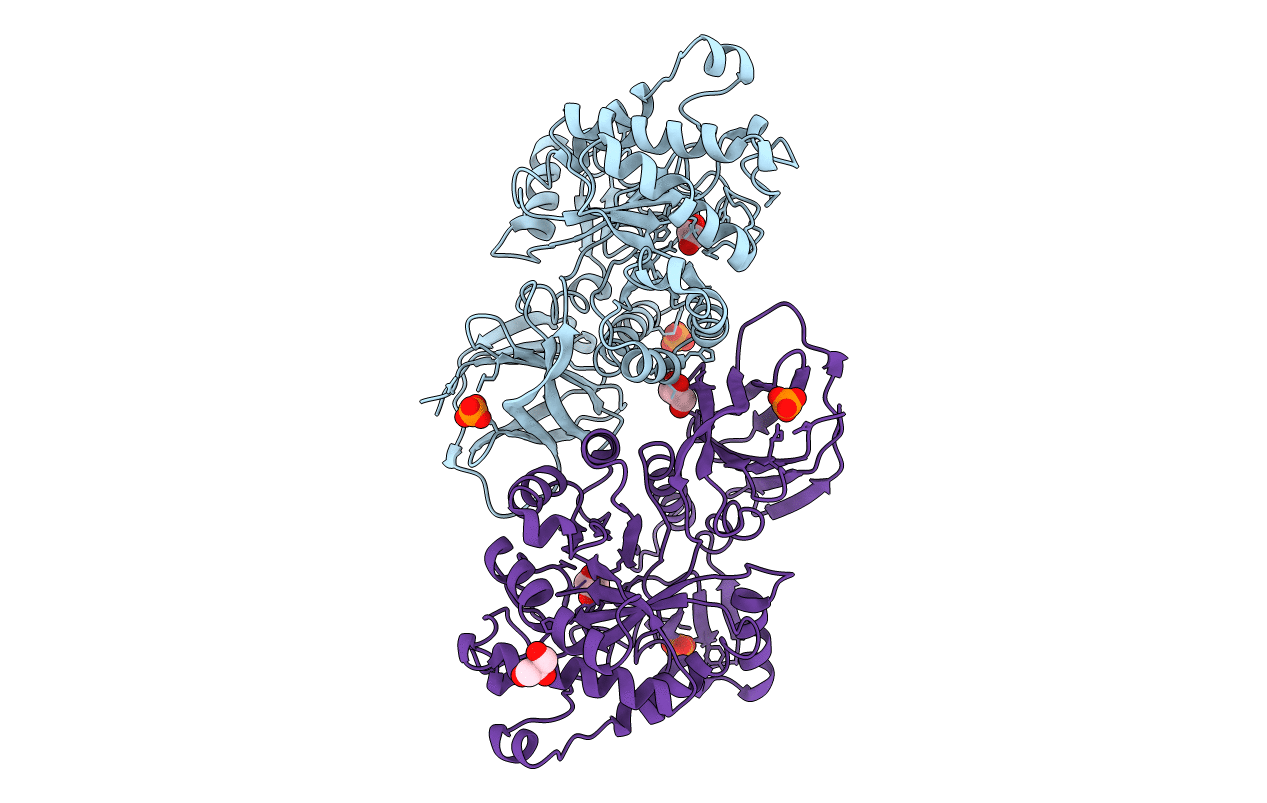
2WNW image
Deposition Date 2009-07-20
Release Date 2010-03-02
Last Version Date 2024-05-08
Entry Detail
PDB ID:
2WNW
Keywords:
Title:
The crystal structure of SrfJ from salmonella typhimurium
Biological Source:
Method Details:
Experimental Method:
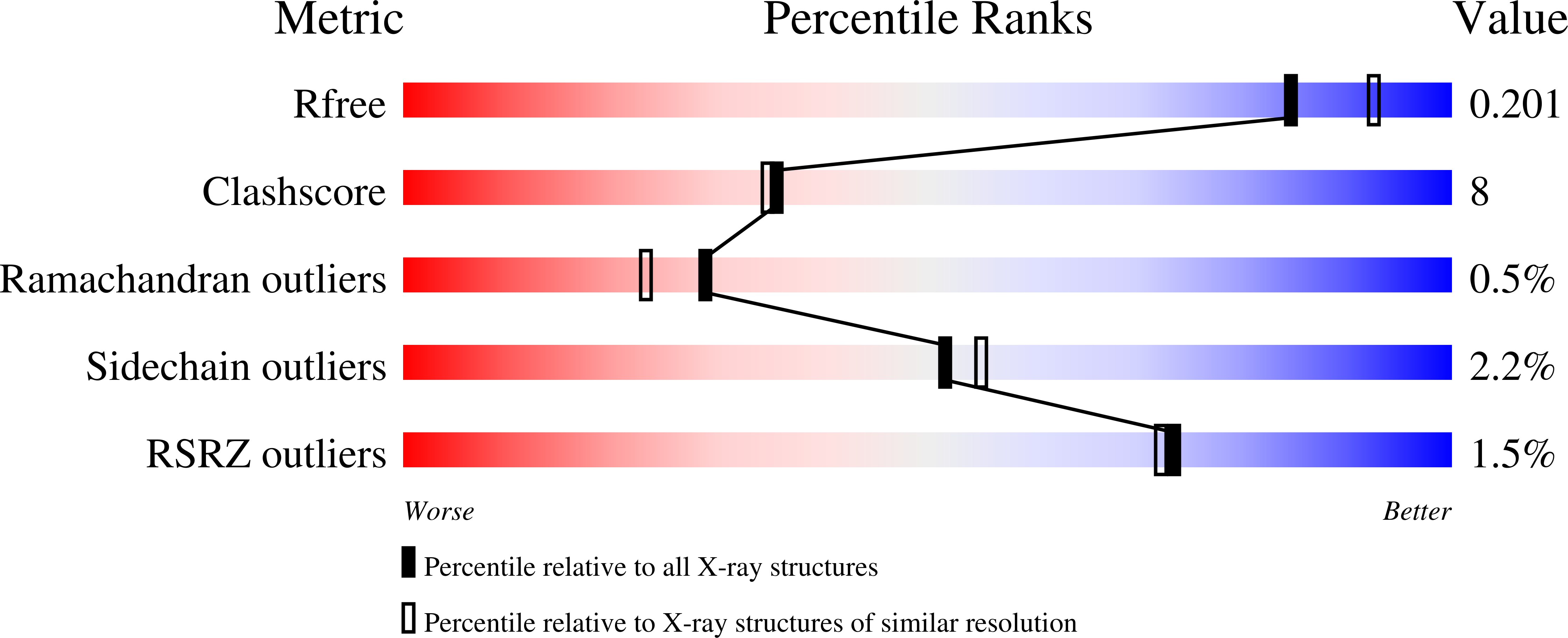
Resolution:
2.00 Å
R-Value Free:
0.21
R-Value Work:
0.19
R-Value Observed:
0.19
Space Group:
C 2 2 21
Macromolecular Entities
Polymer Type:polypeptide(L)
Molecule:ACTIVATED BY TRANSCRIPTION FA
Gene (Uniprot):srfJ
Chain IDs:A, B
Chain Length:447
Number of Molecules:2
Biological Source:SALMONELLA ENTERICA SUBSP. ENTERICA SEROVAR TYPHIMURIUM STR. LT2
Primary Citation
Crystal Structure of the Salmonella Enterica Serovar Typhimurium Virulence Factor Srfj, a Glycoside Hydrolase Family Enzyme.
J. Bacteriol. 191 6550 ? (2009)
PMID: 19717598 DOI: 10.1128/JB.00641-09

Abstact

To cause infection, Salmonella enterica serovar Typhimurium uses type III secretion systems, which are encoded on two Salmonella pathogenicity islands, SPI-1 and SPI-2, the latter of which is thought to play a crucial role in bacterial proliferation in Salmonella-containing vacuoles (SCVs) after invading cells. S. Typhimurium SrfJ, located outside SPI-2, is also known to be involved in Salmonella pathogenicity and has high amino acid sequence homology with human lysosomal glucosylceramidase (GlcCerase). We present the first crystal structure of SrfJ at a resolution of 1.8 A. The overall fold of SrfJ shares high structure similarities with that of human GlcCerase, comprising two distinctive domains: a (beta/alpha)(8)-barrel catalytic domain and a beta-sandwich domain. As in human GlcCerase, the pocket-shaped active site of SrfJ is located on the C-terminal side of the barrel, and two conserved glutamic acid residues are used for the enzyme catalysis. Moreover, a glycerol-bound form of SrfJ reveals that the glucose ring moiety of the substrate might similarly bind to the enzyme as to human GlcCerase, suggesting that SrfJ might function as a glycoside hydrolase. Although some structural differences are observed between SrfJ and human GlcCerase in the substrate entrance of the active site, we speculate that, based on the high structural similarities to human GlcCerase in the overall fold and the active-site environment, SrfJ might have a GlcCerase activity and use the activity to enhance Salmonella virulence by modifying SCV membrane lipids.

Legend

Protein

Chemical

Disease

Primary Citation of related structures
Feedback Form
Name
Email
Institute
Feedback