

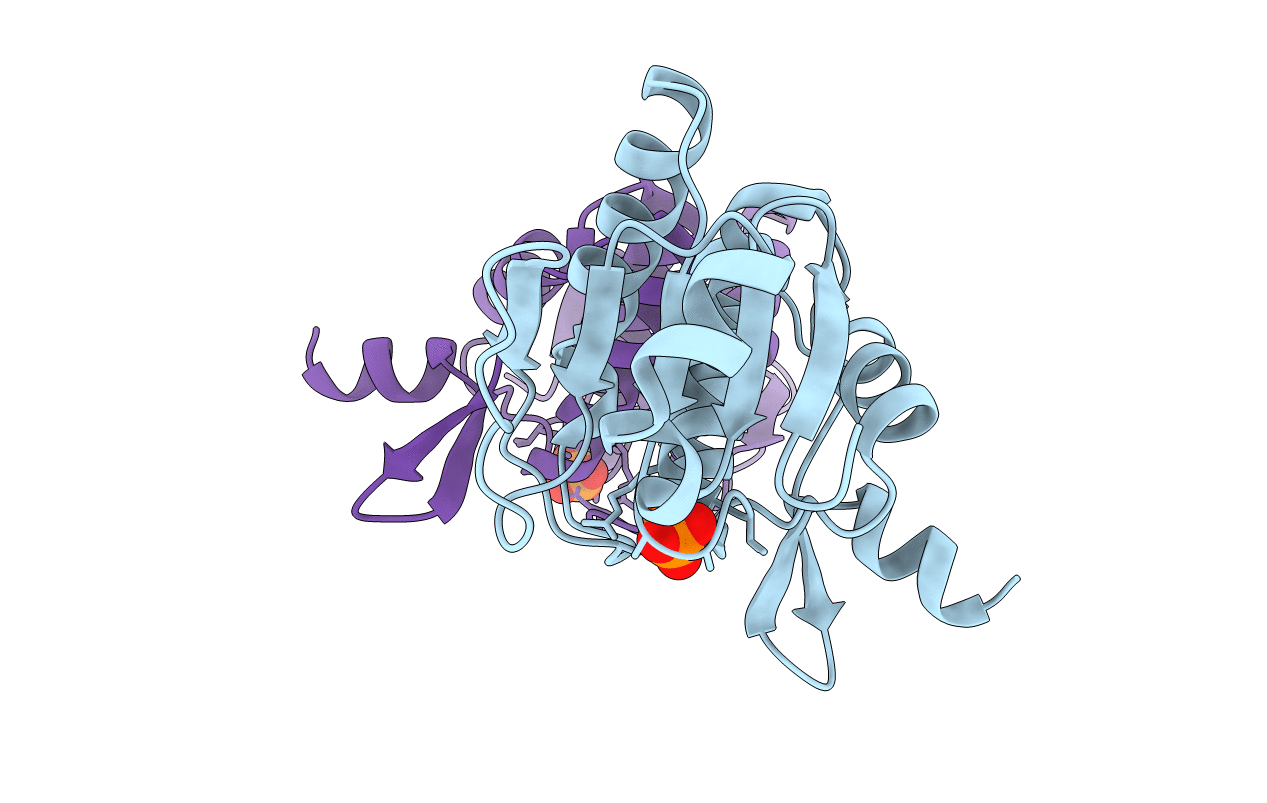
2WGP image
Deposition Date 2009-04-22
Release Date 2009-10-06
Last Version Date 2023-12-13
Entry Detail
PDB ID:
2WGP
Keywords:
Title:
Crystal structure of human dual specificity phosphatase 14
Biological Source:
Source Organism(s):
HOMO SAPIENS (Taxon ID: 9606)
Expression System(s):
Method Details:
Experimental Method:
Resolution:
1.88 Å
R-Value Free:
0.22
R-Value Work:
0.17
R-Value Observed:
0.17
Space Group:
I 4

Macromolecular Entities
Structures with similar UniProt ID
Protein Blast
Polymer Type:polypeptide(L)
Molecule:DUAL SPECIFICITY PROTEIN PHOS
Gene (Uniprot):DUSP14
Chain IDs:A, B
Chain Length:190
Number of Molecules:2
Biological Source:HOMO SAPIENS
Ligand Molecules
Primary Citation
Overproduction, Purification and Structure Determination of Human Dual-Specificity Phosphatase 14.
Acta Crystallogr. D Biol. Crystallogr. 65 1013 ? (2009)
PMID: 19770498 DOI: 10.1107/S0907444909023762

Abstact

Dual-specificity phosphatases (DUSPs) are enzymes that participate in the regulation of biological processes such as cell growth, differentiation, transcription and metabolism. A number of DUSPs are able to dephosphorylate phosphorylated serine, threonine and tyrosine residues on mitogen-activated protein kinases (MAPKs) and thus are also classified as MAPK phosphatases (MKPs). As an increasing number of DUSPs are being identified and characterized, there is a growing need to understand their biological activities at the molecular level. There is also significant interest in identifying DUSPs that could be potential targets for drugs that modulate MAPK-dependent signaling and immune responses, which have been implicated in a variety of maladies including cancer, infectious diseases and inflammatory disorders. Here, the overproduction, purification and crystal structure at 1.88 A resolution of human dual-specificity phosphatase 14, DUSP14 (MKP6), are reported. This structural information should accelerate the study of DUSP14 at the molecular level and may also accelerate the discovery and development of novel therapeutic agents.

Legend

Protein

Chemical

Disease

Primary Citation of related structures
Feedback Form
Name
Email
Institute
Feedback