

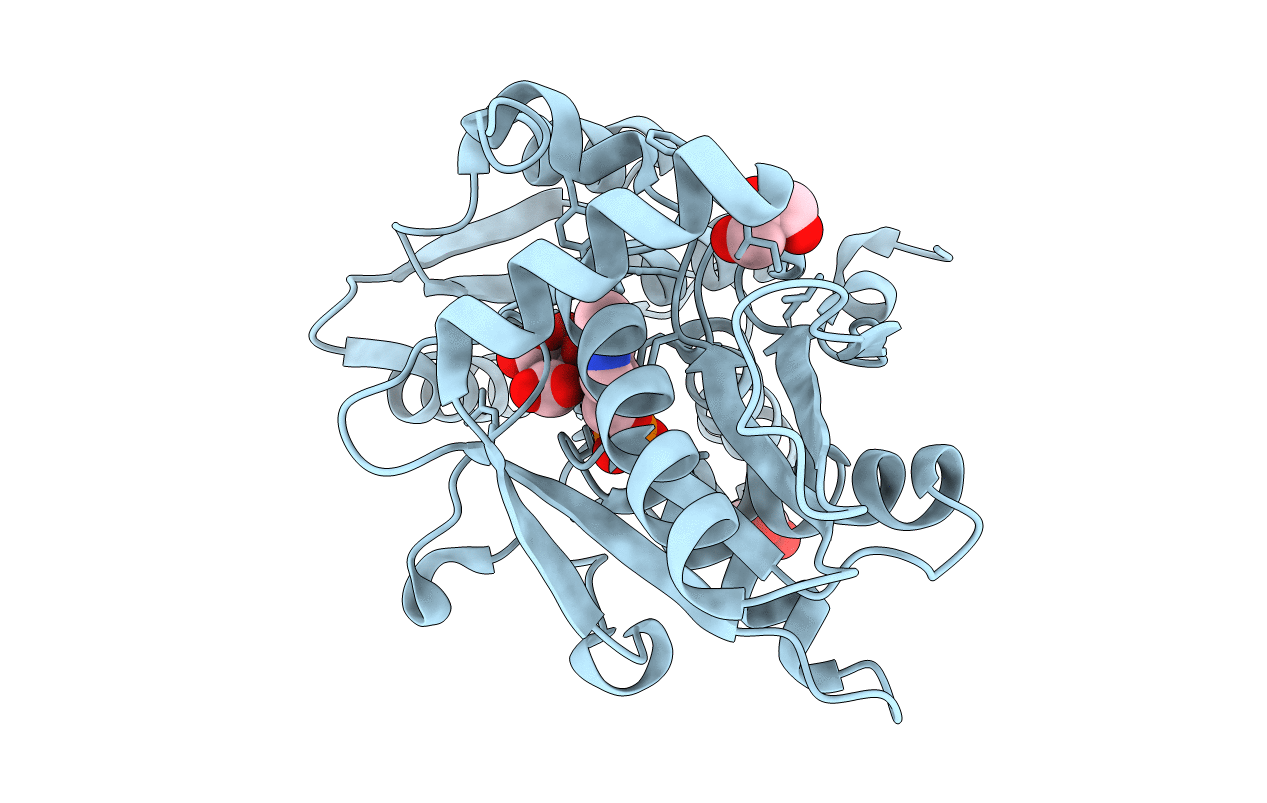
2V03 image
Deposition Date 2007-05-08
Release Date 2007-10-09
Last Version Date 2025-04-09
Entry Detail
PDB ID:
2V03
Keywords:
Title:
High resolution structure and catalysis of an O-acetylserine sulfhydrylase
Biological Source:
Source Organism(s):
Expression System(s):
Method Details:
Experimental Method:
Resolution:
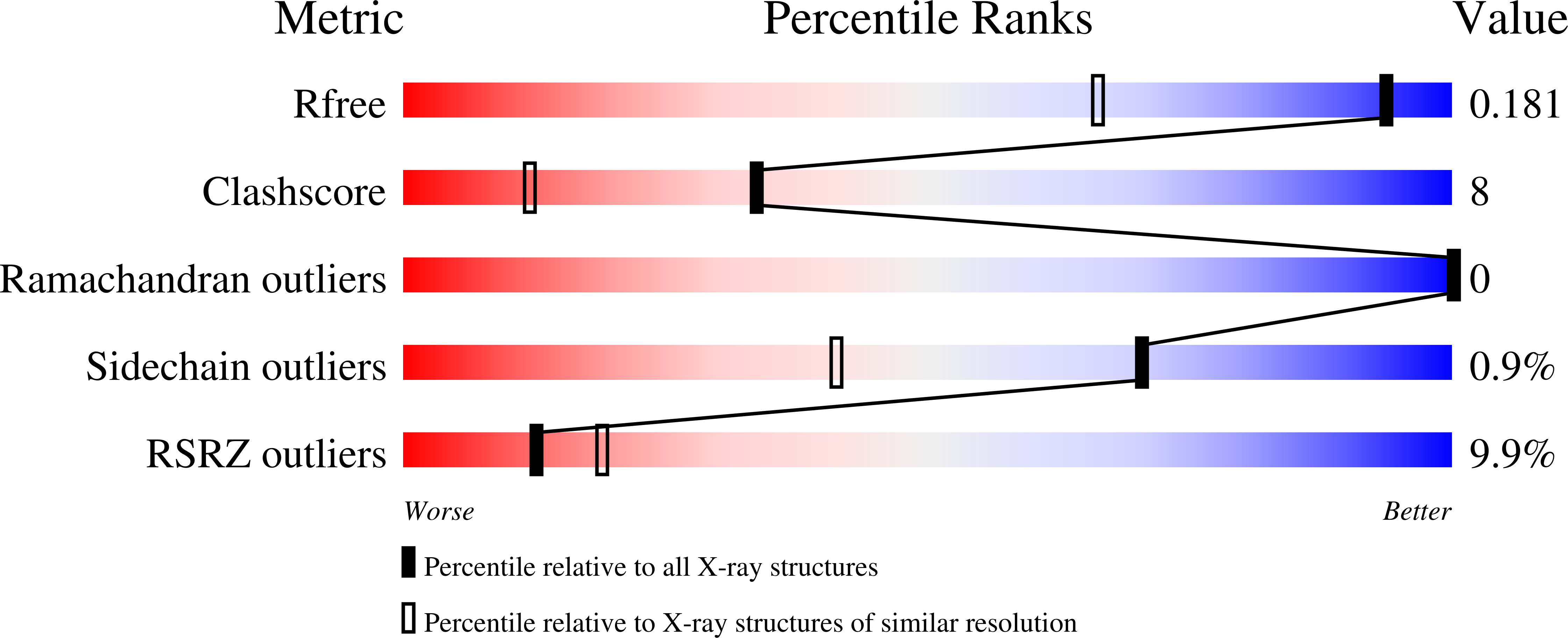
1.33 Å
R-Value Free:
0.17
R-Value Work:
0.15
R-Value Observed:
0.15
Space Group:
P 65 2 2
Macromolecular Entities
Polymer Type:polypeptide(L)
Molecule:Cysteine synthase B
Gene (Uniprot):cysM
Mutagens:K268A
Chain IDs:A
Chain Length:303
Number of Molecules:1
Biological Source:Escherichia coli (strain K12)
Primary Citation
High resolution structure and catalysis of O-acetylserine sulfhydrylase isozyme B from Escherichia coli.
FEBS J. 274 5382 5389 (2007)
PMID: 17894825 DOI: 10.1111/j.1742-4658.2007.06063.x

Abstact

The crystal structure of the dimeric O-acetylserine sulfhydrylase isozyme B from Escherichia coli (CysM), complexed with the substrate analog citrate, has been determined at 1.33 A resolution by X-ray diffraction analysis. The C1-carboxylate of citrate was bound at the carboxylate position of O-acetylserine, whereas the C6-carboxylate adopted two conformations. The activity of the enzyme and of several active center mutants was determined using an assay based on O-acetylserine and thio-nitrobenzoate (TNB). The unnatural substrate TNB was modeled into the reported structure. The substrate model and the observed mutant activities may facilitate future protein engineering attempts designed to broaden the substrate spectrum of the enzyme. A comparison of the reported structure with previously published CysM structures revealed large conformational changes. One of the crystal forms contained two dimers, each of which comprised one subunit in a closed and one in an open conformation. Although the homodimer asymmetry was most probably caused by crystal packing, it indicates that the enzyme can adopt such a state in solution, which may be relevant for the catalytic reaction.

Legend

Protein

Chemical

Disease

Primary Citation of related structures
Feedback Form
Name
Email
Institute
Feedback