

2UZH image
Deposition Date 2007-04-27
Release Date 2007-11-06
Last Version Date 2023-12-13
Entry Detail
PDB ID:
2UZH
Keywords:
Title:
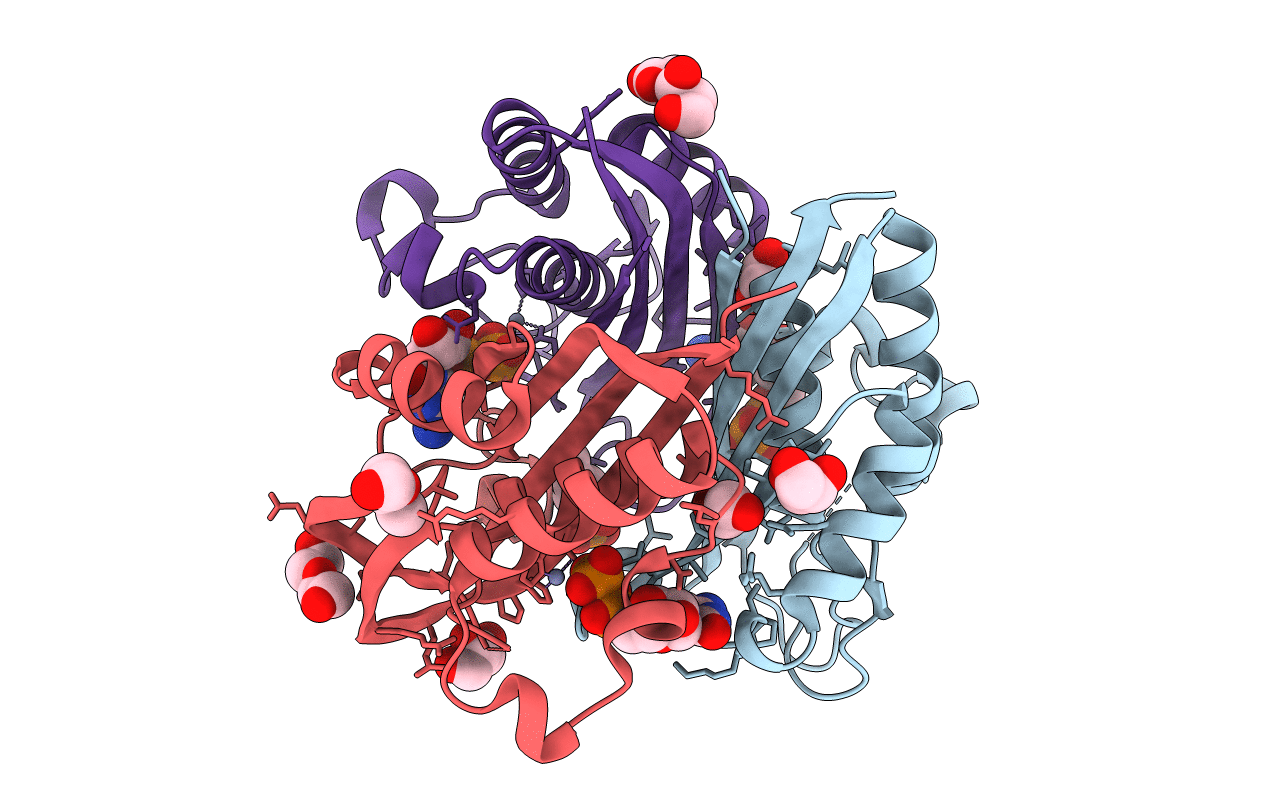
Mycobacterium smegmatis 2C-methyl-D-erythritol-2,4-cyclodiphosphate synthase (IspF)
Biological Source:
Source Organism(s):
Expression System(s):
Method Details:
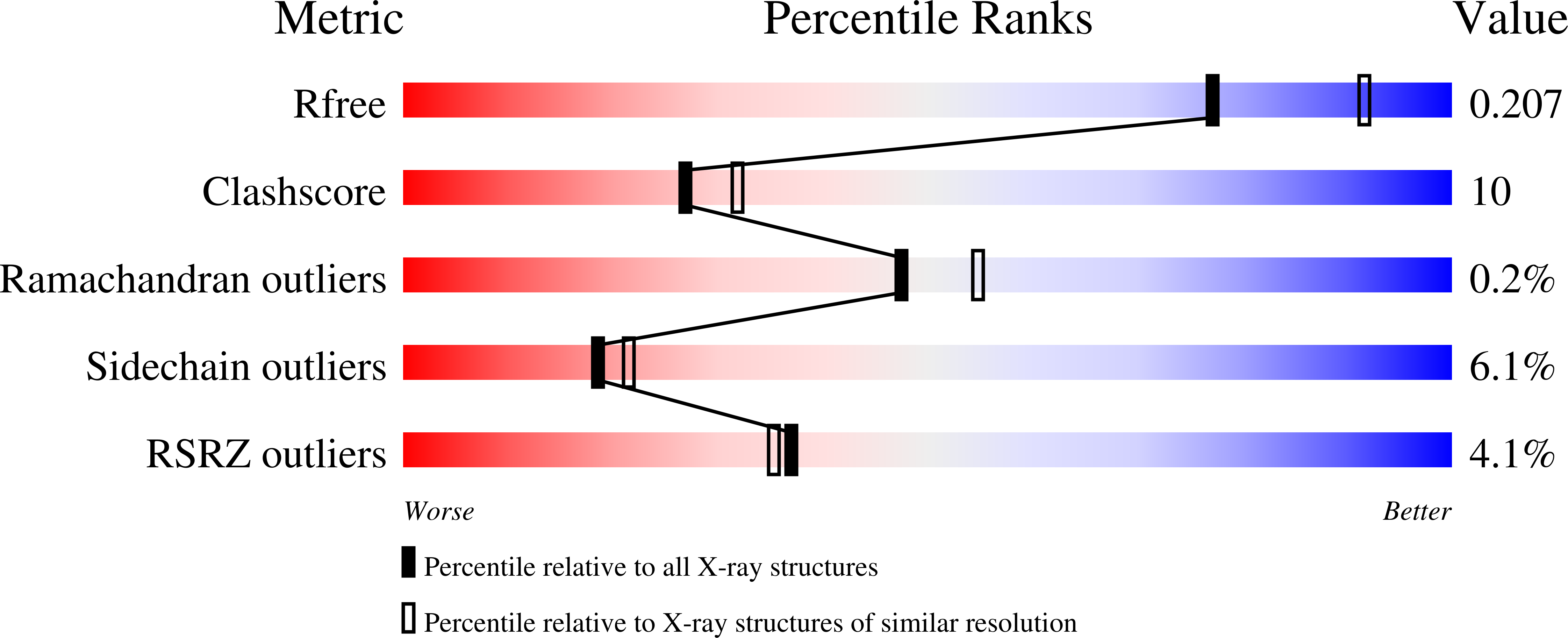
Experimental Method:
Resolution:
2.20 Å
R-Value Free:
0.20
R-Value Work:
0.16
R-Value Observed:
0.16
Space Group:
I 4
Macromolecular Entities
Polymer Type:polypeptide(L)
Molecule:2C-METHYL-D-ERYTHRITOL 2,4-CY
Gene (Uniprot):ispF
Chain IDs:A, B, C
Chain Length:165
Number of Molecules:3
Biological Source:MYCOBACTERIUM SMEGMATIS
Primary Citation
The Structure of Mycobacteria 2C-Methyl-D-Erythritol-2,4-Cyclodiphosphate Synthase, an Essential Enzyme, Provides a Platform for Drug Discovery.
BMC Struct. Biol. 7 68 ? (2007)
PMID: 17956607 DOI: 10.1186/1472-6807-7-68

Abstact

BACKGROUND The prevalence of tuberculosis, the prolonged and expensive treatment that this disease requires and an increase in drug resistance indicate an urgent need for new treatments. The 1-deoxy-D-xylulose 5-phosphate pathway of isoprenoid precursor biosynthesis is an attractive chemotherapeutic target because it occurs in many pathogens, including Mycobacterium tuberculosis, and is absent from humans. To underpin future drug development it is important to assess which enzymes in this biosynthetic pathway are essential in the actual pathogens and to characterize them. RESULTS The fifth enzyme of this pathway, encoded by ispF, is 2C-methyl-D-erythritol-2,4-cyclodiphosphate synthase (IspF). A two-step recombination strategy was used to construct ispF deletion mutants in M. tuberculosis but only wild-type double crossover strains were isolated. The chromosomal copy could be deleted when a second functional copy was provided on an integrating plasmid, demonstrating that ispF is an essential gene under the conditions tested thereby confirming its potential as a drug target. We attempted structure determination of the M. tuberculosis enzyme (MtIspF), but failed to obtain crystals. We instead analyzed the orthologue M. smegmatis IspF (MsIspF), sharing 73% amino acid sequence identity, at 2.2 A resolution. The high level of sequence conservation is particularly pronounced in and around the active site. MsIspF is a trimer with a hydrophobic cavity at its center that contains density consistent with diphosphate-containing isoprenoids. The active site, created by two subunits, comprises a rigid CDP-Zn2+ binding pocket with a flexible loop to position the 2C-methyl-D-erythritol moiety of substrate. Sequence-structure comparisons indicate that the active site and interactions with ligands are highly conserved. CONCLUSION Our study genetically validates MtIspF as a therapeutic target and provides a model system for structure-based ligand design.

Legend

Protein

Chemical

Disease

Primary Citation of related structures
Feedback Form
Name
Email
Institute
Feedback