

2R8J image
Deposition Date 2007-09-11
Release Date 2007-12-11
Last Version Date 2023-08-30
Entry Detail
PDB ID:
2R8J
Title:
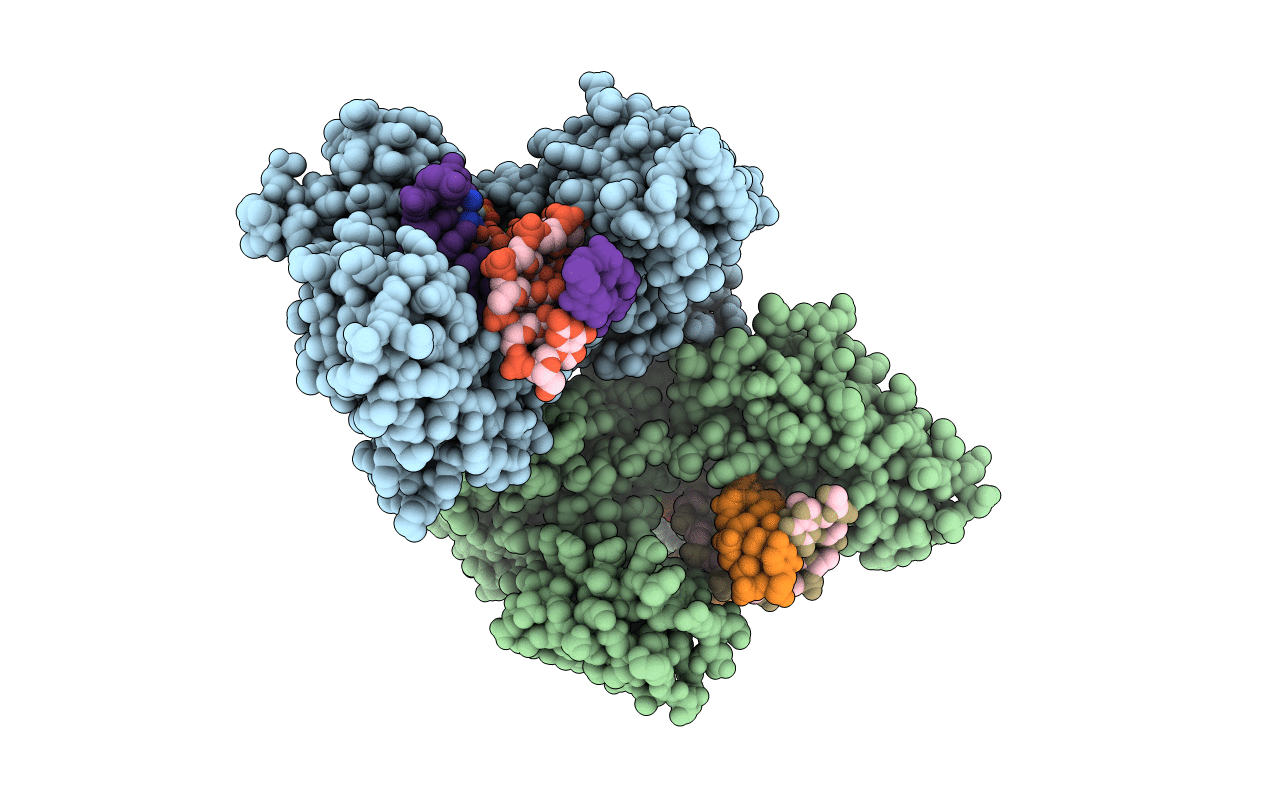
Structure of the Eukaryotic DNA Polymerase eta in complex with 1,2-d(GpG)-cisplatin containing DNA
Biological Source:
Source Organism(s):
Expression System(s):
Method Details:
Experimental Method:
Resolution:
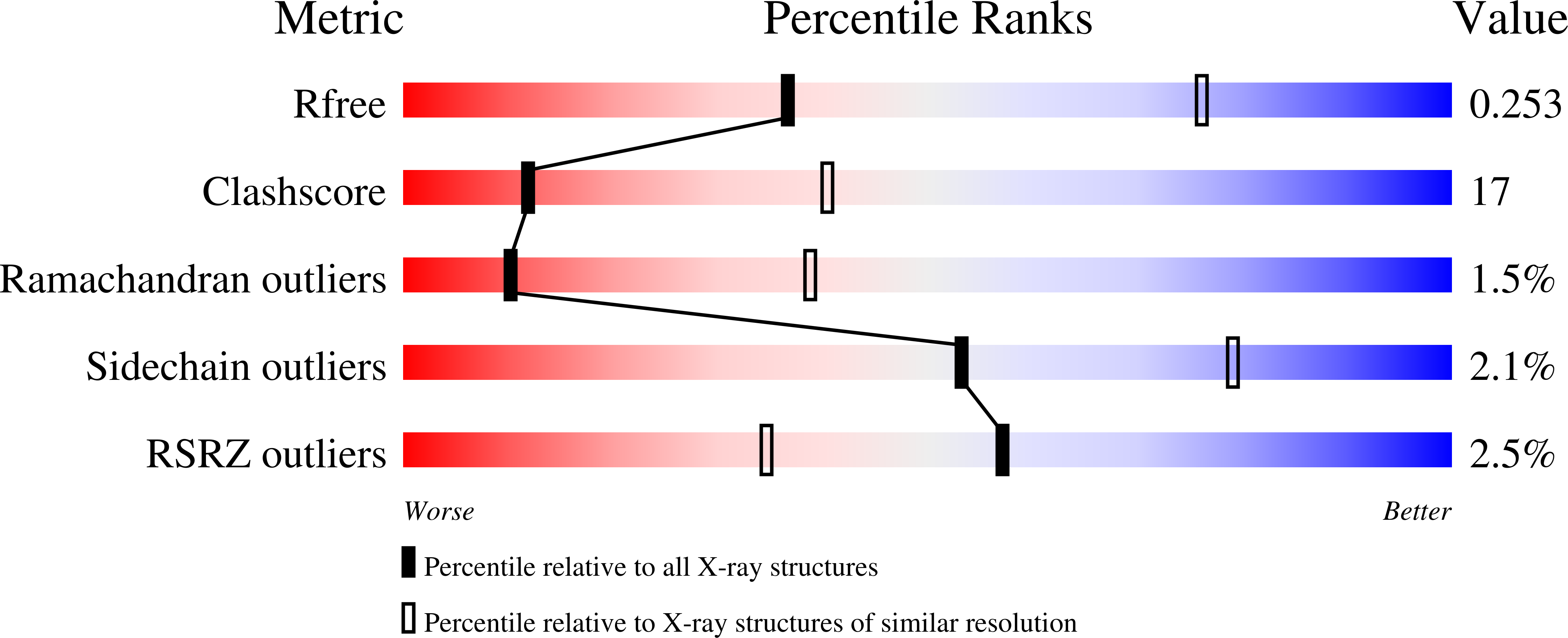
3.10 Å
R-Value Free:
0.25
R-Value Work:
0.20
Space Group:
P 41 21 2
Macromolecular Entities
Structures with similar UniProt ID
Protein Blast
Polymer Type:polypeptide(L)
Molecule:DNA polymerase eta
Gene (Uniprot):RAD30
Chain IDs:E (auth: A), F (auth: B)
Chain Length:554
Number of Molecules:2
Biological Source:Saccharomyces cerevisiae
Primary Citation
Bypass of DNA lesions generated during anticancer treatment with cisplatin by DNA polymerase eta
Science 318 967 970 (2007)
PMID: 17991862 DOI: 10.1126/science.1148242

Abstact

DNA polymerase eta (Pol eta) is a eukaryotic lesion bypass polymerase that helps organisms to survive exposure to ultraviolet (UV) radiation, and tumor cells to gain resistance against cisplatin-based chemotherapy. It allows cells to replicate across cross-link lesions such as 1,2-d(GpG) cisplatin adducts (Pt-GG) and UV-induced cis-syn thymine dimers. We present structural and biochemical analysis of how Pol eta copies Pt-GG-containing DNA. The damaged DNA is bound in an open DNA binding rim. Nucleotidyl transfer requires the DNA to rotate into an active conformation, driven by hydrogen bonding of the templating base to the dNTP. For the 3'dG of the Pt-GG, this step is accomplished by a Watson-Crick base pair to dCTP and is biochemically efficient and accurate. In contrast, bypass of the 5'dG of the Pt-GG is less efficient and promiscuous for dCTP and dATP as a result of the presence of the rigid Pt cross-link. Our analysis reveals the set of structural features that enable Pol eta to replicate across strongly distorting DNA lesions.

Legend

Protein

Chemical

Disease

Primary Citation of related structures
Feedback Form
Name
Email
Institute
Feedback