

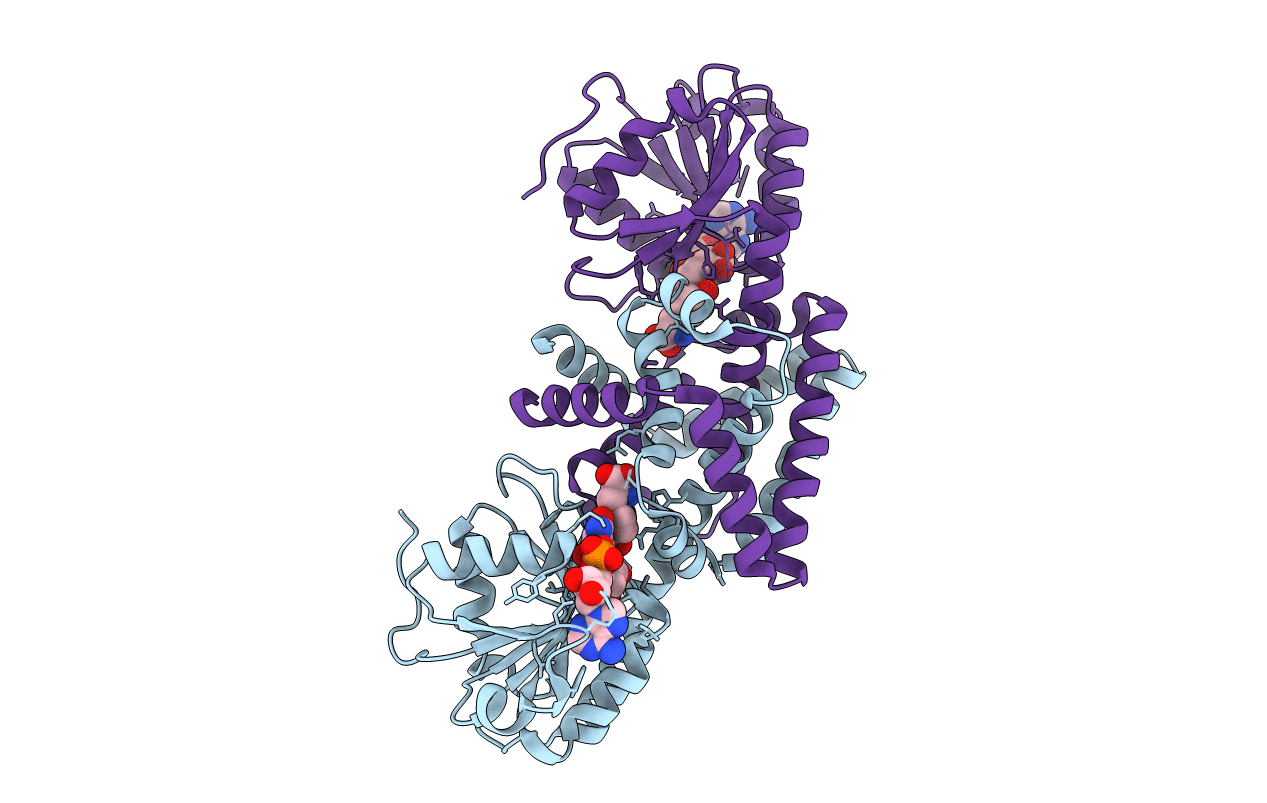
2PV7 image
Deposition Date 2007-05-09
Release Date 2007-05-22
Last Version Date 2024-11-20
Entry Detail
PDB ID:
2PV7
Title:
Crystal structure of chorismate mutase / prephenate dehydrogenase (tyrA) (1574749) from Haemophilus influenzae RD at 2.00 A resolution
Biological Source:
Source Organism(s):
Expression System(s):
Method Details:
Experimental Method:
Resolution:
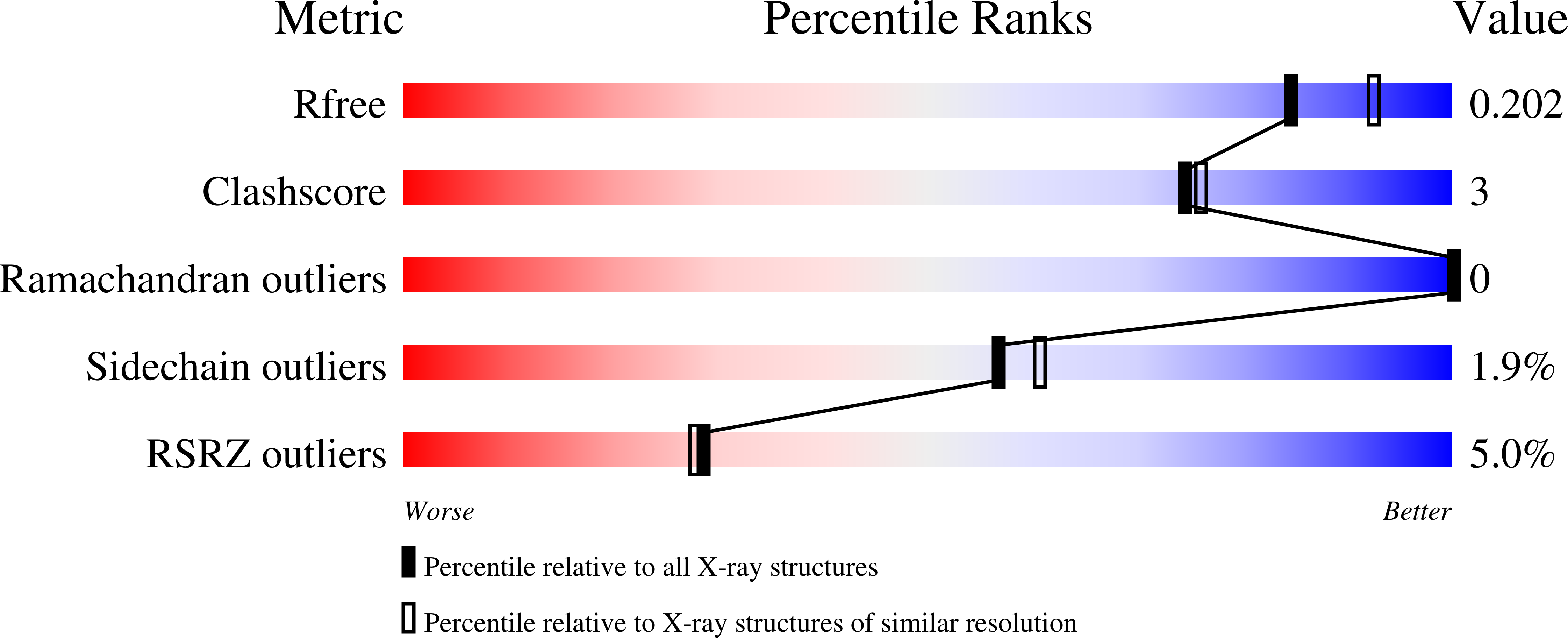
2.00 Å
R-Value Free:
0.19
R-Value Work:
0.16
R-Value Observed:
0.16
Space Group:
P 41 21 2
Macromolecular Entities
Structures with similar UniProt ID
Protein Blast
Polymer Type:polypeptide(L)
Molecule:T-protein [Includes: Chorisma
Gene (Uniprot):tyrA
Chain IDs:A, B
Chain Length:298
Number of Molecules:2
Biological Source:Haemophilus influenzae
Modified Residue
Compound ID Chain ID Parent Comp ID Details 2D Image
MSE A MET SELENOMETHIONINE
Primary Citation
The structure of Haemophilus influenzae prephenate dehydrogenase suggests unique features of bifunctional TyrA enzymes.
Acta Crystallogr. Sect. F Struct. Biol. Cryst. Commun. 66 1317 1325 (2010)
PMID: 20944228 DOI: 10.1107/S1744309110021688

Abstact

Chorismate mutase/prephenate dehydrogenase from Haemophilus influenzae Rd KW20 is a bifunctional enzyme that catalyzes the rearrangement of chorismate to prephenate and the NAD(P)(+)-dependent oxidative decarboxylation of prephenate to 4-hydroxyphenylpyruvate in tyrosine biosynthesis. The crystal structure of the prephenate dehydrogenase component (HinfPDH) of the TyrA protein from H. influenzae Rd KW20 in complex with the inhibitor tyrosine and cofactor NAD(+) has been determined to 2.0 Å resolution. HinfPDH is a dimeric enzyme, with each monomer consisting of an N-terminal α/β dinucleotide-binding domain and a C-terminal α-helical dimerization domain. The structure reveals key active-site residues at the domain interface, including His200, Arg297 and Ser179 that are involved in catalysis and/or ligand binding and are highly conserved in TyrA proteins from all three kingdoms of life. Tyrosine is bound directly at the catalytic site, suggesting that it is a competitive inhibitor of HinfPDH. Comparisons with its structural homologues reveal important differences around the active site, including the absence of an α-β motif in HinfPDH that is present in other TyrA proteins, such as Synechocystis sp. arogenate dehydrogenase. Residues from this motif are involved in discrimination between NADP(+) and NAD(+). The loop between β5 and β6 in the N-terminal domain is much shorter in HinfPDH and an extra helix is present at the C-terminus. Furthermore, HinfPDH adopts a more closed conformation compared with TyrA proteins that do not have tyrosine bound. This conformational change brings the substrate, cofactor and active-site residues into close proximity for catalysis. An ionic network consisting of Arg297 (a key residue for tyrosine binding), a water molecule, Asp206 (from the loop between β5 and β6) and Arg365' (from the additional C-terminal helix of the adjacent monomer) is observed that might be involved in gating the active site.

Legend

Protein

Chemical

Disease

Primary Citation of related structures
Feedback Form
Name
Email
Institute
Feedback