

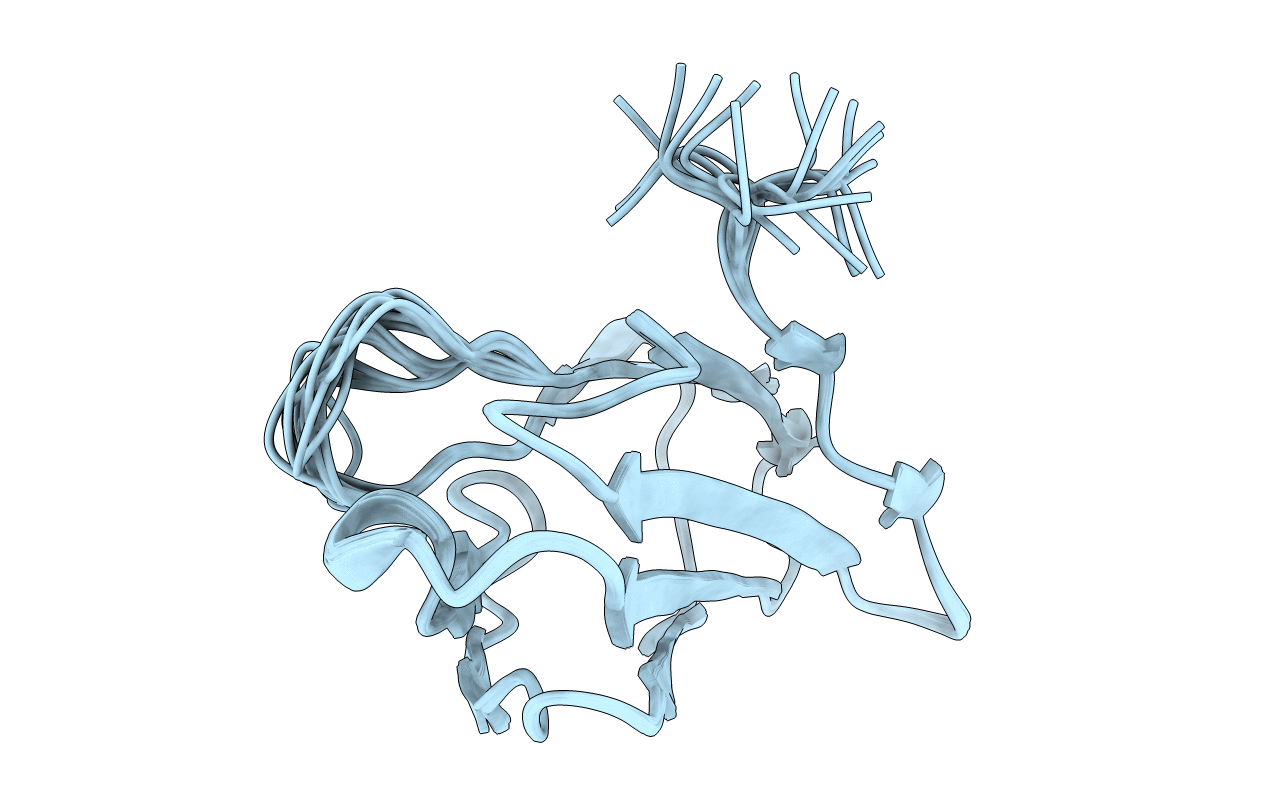
2MRY image
Deposition Date 2014-07-17
Release Date 2015-07-29
Last Version Date 2024-05-15
Entry Detail
PDB ID:
2MRY
Title:
NMR solution structure of copper binding protein in the apo form
Biological Source:
Source Organism(s):
Expression System(s):
Method Details:
Experimental Method:
Conformers Calculated:
100
Conformers Submitted:
18
Selection Criteria:
structures with the least restraint violations

Macromolecular Entities
Structures with similar UniProt ID
Protein Blast
Polymer Type:polypeptide(L)
Molecule:Uncharacterized protein
Chain IDs:A
Chain Length:98
Number of Molecules:1
Biological Source:Streptococcus pneumoniae
Ligand Molecules
Primary Citation
The S2 Cu(i) site in CupA from Streptococcus pneumoniae is required for cellular copper resistance.
Metallomics 8 61 70 (2016)
PMID: 26346139 DOI: 10.1039/c5mt00221d

Abstact

Pathogenic bacteria have evolved copper homeostasis and resistance systems for fighting copper toxicity imposed by the human immune system. Streptococcus pneumoniae is a respiratory pathogen that encodes an obligatorily membrane-anchored Cu(i) binding protein, CupA, and a P1B-type ATPase efflux transporter, CopA. The soluble, cytoplasmic domain of CupA (sCupA) contains a binuclear Cu(i) cluster consisting of S1 and S2 Cu(i) ions. The NMR solution structure of apo-sCupA reveals the same cupredoxin fold of Cu2-sCupA, except that the Cu(i) binding loop (residues 112-116, harboring S2 Cu ligands M113 and M115) is highly dynamic as documented by both backbone and side chain methionine methyl order parameters. In contrast to the more solvent exposed, lower affinity S2 Cu site, the high affinity S1 Cu-coordinating cysteines (C74, C111) are pre-organized in the apo-sCupA structure. Biological experiments reveal that the S1 site is largely dispensable for cellular Cu resistance and may be involved in buffering low cytoplasmic Cu(i). In contrast, the S2 site is essential for Cu resistance. Expression of a chimeric CopZ chaperone fused to the CupA transmembrane helix does not protect S. pneumoniae from copper toxicity and substitution of a predicted cytoplasm-facing Cu(i) entry metal-binding site (MBS) on CopA also gives rise to a Cu-sensitivity phenotype. These findings suggest that CupA and CopA may interact and filling of the CupA S2 site with Cu(i) results in stimulation of cellular copper efflux by CopA.

Legend

Protein

Chemical

Disease

Primary Citation of related structures
Feedback Form
Name
Email
Institute
Feedback