

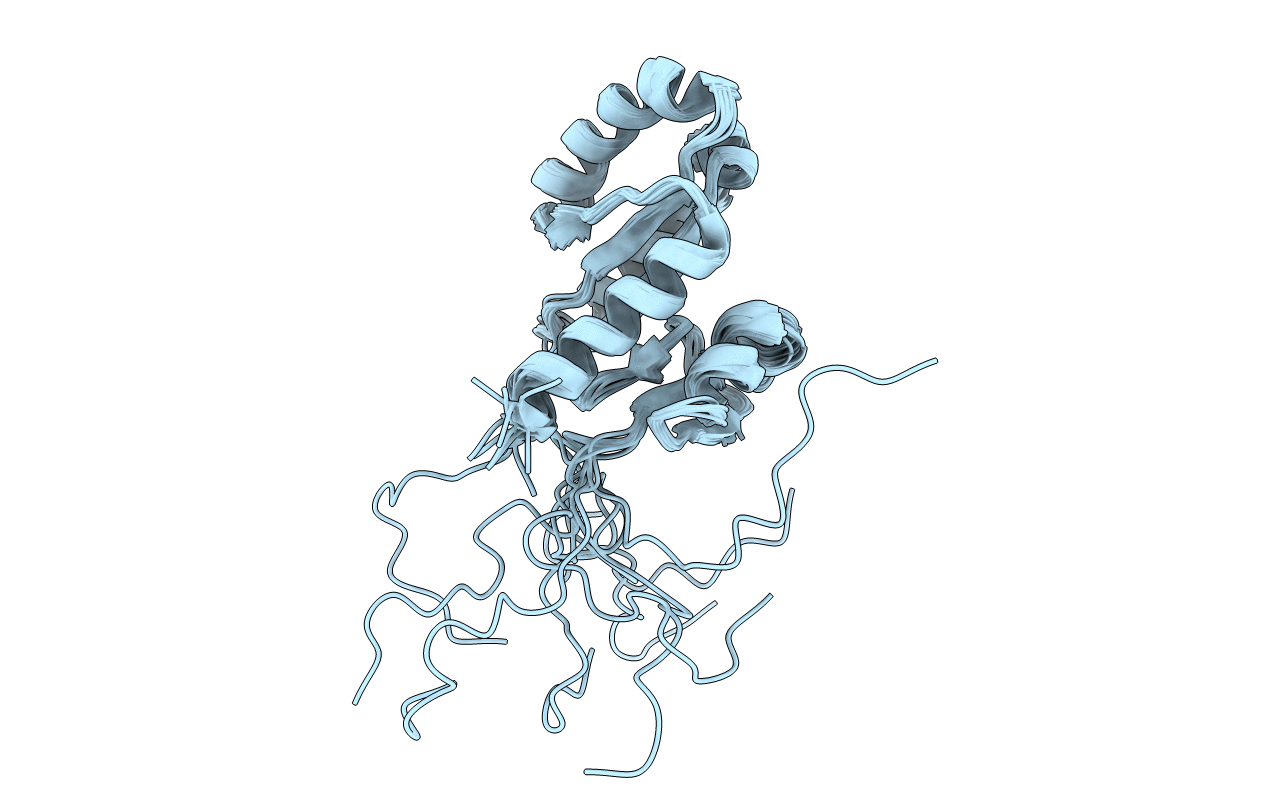
2M9M image
Deposition Date 2013-06-18
Release Date 2013-09-18
Last Version Date 2024-05-15
Entry Detail
PDB ID:
2M9M
Title:
Solution Structure of ERCC4 domain of human FAAP24
Biological Source:
Source Organism(s):
Homo sapiens (Taxon ID: 9606)
Expression System(s):
Method Details:
Experimental Method:
Conformers Calculated:
100
Conformers Submitted:
10
Selection Criteria:
structures with the lowest energy
Macromolecular Entities
Structures with similar UniProt ID
Protein Blast
Polymer Type:polypeptide(L)
Molecule:Fanconi anemia-associated pro
Gene (Uniprot):FAAP24
Chain IDs:A
Chain Length:147
Number of Molecules:1
Biological Source:Homo sapiens
Ligand Molecules
Primary Citation
Structure analysis of FAAP24 reveals single-stranded DNA-binding activity and domain functions in DNA damage response.
Cell Res. 23 1215 1228 (2013)
PMID: 23999858 DOI: 10.1038/cr.2013.124

Abstact

The FANCM/FAAP24 heterodimer has distinct functions in protecting cells from complex DNA lesions such as interstrand crosslinks. These functions rely on the biochemical activity of FANCM/FAAP24 to recognize and bind to damaged DNA or stalled replication forks. However, the DNA-binding activity of this complex was not clearly defined. We investigated how FAAP24 contributes to the DNA-interacting functions of the FANCM/FAAP24 complex by acquiring the N-terminal and C-terminal solution structures of human FAAP24. Modeling of the FAAP24 structure indicates that FAAP24 may possess a high affinity toward single-stranded DNA (ssDNA). Testing of various FAAP24 mutations in vitro and in vivo validated this prediction derived from structural analyses. We found that the DNA-binding and FANCM-interacting functions of FAAP24, although both require the C-terminal (HhH)2 domain, can be distinguished by segregation-of-function mutations. These results demonstrate dual roles of FAAP24 in DNA damage response against crosslinking lesions, one through the formation of FANCM/FAAP24 heterodimer and the other via its ssDNA-binding activity required in optimized checkpoint activation.

Legend

Protein

Chemical

Disease

Primary Citation of related structures
Feedback Form
Name
Email
Institute
Feedback