

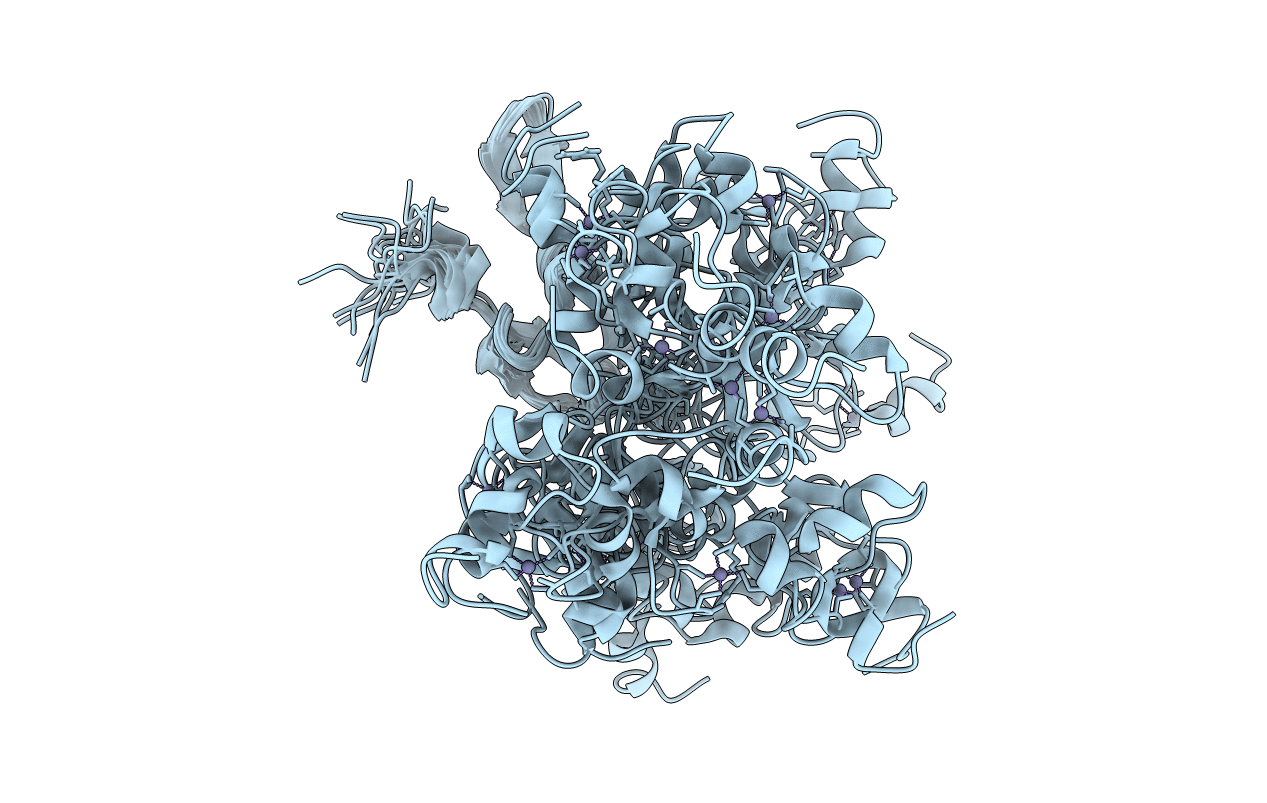
2LUY image
Deposition Date 2012-06-22
Release Date 2013-05-08
Last Version Date 2024-05-01
Entry Detail
PDB ID:
2LUY
Title:
Solution structure of the tandem zinc finger domain of fission yeast Stc1
Biological Source:
Source Organism(s):
Expression System(s):
Method Details:
Experimental Method:
Conformers Calculated:
200
Conformers Submitted:
20
Selection Criteria:
structures with the lowest energy

Macromolecular Entities
Polymer Type:polypeptide(L)
Molecule:Meiotic chromosome segregatio
Gene (Uniprot):SPBP8B7.28c
Mutagens:C38A
Chain IDs:A
Chain Length:97
Number of Molecules:1
Biological Source:Schizosaccharomyces pombe
Ligand Molecules
Primary Citation
Structural analysis of Stc1 provides insights into the coupling of RNAi and chromatin modification.
Proc. Natl. Acad. Sci. U.S.A. 110 E1879 E1888 (2013)
PMID: 23613586 DOI: 10.1073/pnas.1212155110

Abstact

Noncoding RNAs can modulate gene expression by directing modifications to histones that alter chromatin structure. In fission yeast, siRNAs produced via the RNAi pathway direct modifications associated with heterochromatin formation. siRNAs associate with the RNAi effector protein Argonaute 1 (Ago1), targeting the Ago1-containing RNA-induced transcriptional silencing (RITS) complex to homologous nascent transcripts. This promotes recruitment of the Clr4 complex (CLRC), which mediates methylation of histone H3 on lysine 9 (H3K9me) in cognate chromatin. A key question is how the RNAi and chromatin modification machineries are connected. Stc1 is a small protein recently shown to associate with both Ago1 and CLRC and to play a pivotal role in mediating the RNAi-dependent recruitment of CLRC to chromatin. To understand its mode of action, we have performed a detailed structural and functional analysis of the Stc1 protein. Our analyses reveal that the conserved N-terminal region of Stc1 represents an unusual tandem zinc finger domain, with similarities to common LIM domains but distinguished by a lack of preferred relative orientation of the two zinc fingers. We demonstrate that this tandem zinc finger domain is involved in binding Ago1, whereas the nonconserved C-terminal region mediates association with CLRC. These findings elucidate the molecular basis for the coupling of RNAi to chromatin modification in fission yeast.

Legend

Protein

Chemical

Disease

Primary Citation of related structures
Feedback Form
Name
Email
Institute
Feedback