

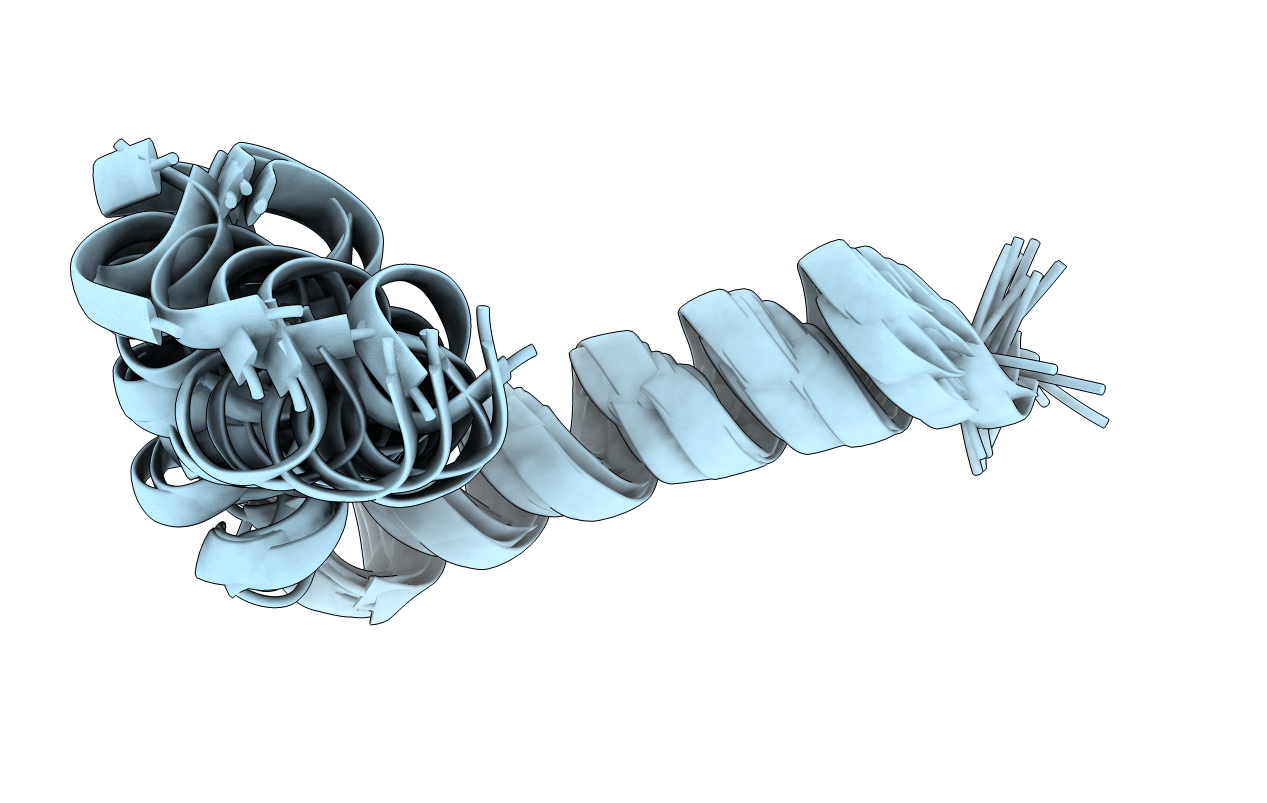
2LA2 image
Deposition Date 2011-03-01
Release Date 2011-09-28
Last Version Date 2024-11-20
Entry Detail
PDB ID:
2LA2
Title:
Solution structure of papiliocin isolated from the swallowtail butterfly, Papilio xuthus
Biological Source:
Source Organism(s):
Papilio xuthus (Taxon ID: 66420)
Method Details:
Experimental Method:
Conformers Calculated:
500
Conformers Submitted:
20
Selection Criteria:
target function

Macromolecular Entities
Structures with similar UniProt ID
Protein Blast
Polymer Type:polypeptide(L)
Molecule:Cecropin
Chain IDs:A
Chain Length:38
Number of Molecules:1
Biological Source:Papilio xuthus
Ligand Molecules
Primary Citation
Structure and function of papiliocin with antimicrobial and anti-inflammatory activities isolated from the swallowtail butterfly, Papilio xuthus.
J Biol Chem 286 41296 ? (2011)
PMID: 21965682 DOI: .

Abstact

Papiliocin is a novel 37-residue cecropin-like peptide isolated recently from the swallowtail butterfly, Papilio xuthus. With the aim of identifying a potent antimicrobial peptide, we tested papiliocin in a variety of biological and biophysical assays, demonstrating that the peptide possesses very low cytotoxicity against mammalian cells and high bacterial cell selectivity, particularly against Gram-negative bacteria as well as high anti-inflammatory activity. Using LPS-stimulated macrophage RAW264.7 cells, we found that papiliocin exerted its anti-inflammatory activities by inhibiting nitric oxide (NO) production and secretion of tumor necrosis factor (TNF)-α and macrophage inflammatory protein (MIP)-2, producing effects comparable with those of the antimicrobial peptide LL-37. We also showed that the innate defense response mechanisms engaged by papiliocin involve Toll-like receptor pathways that culminate in the nuclear translocation of NF-κB. Fluorescent dye leakage experiments showed that papiliocin targets the bacterial cell membrane. To understand structure-activity relationships, we determined the three-dimensional structure of papiliocin in 300 mm dodecylphosphocholine micelles by NMR spectroscopy, showing that papiliocin has an α-helical structure from Lys(3) to Lys(21) and from Ala(25) to Val(36), linked by a hinge region. Interactions between the papiliocin and LPS studied using tryptophan blue-shift data, and saturation transfer difference-NMR experiments revealed that Trp(2) and Phe(5) at the N-terminal helix play an important role in attracting papiliocin to the cell membrane of Gram-negative bacteria. In conclusion, we have demonstrated that papiliocin is a potent peptide antibiotic with both anti-inflammatory and antibacterial activities, and we have laid the groundwork for future studies of its mechanism of action.

Legend

Protein

Chemical

Disease

Primary Citation of related structures
Feedback Form
Name
Email
Institute
Feedback