

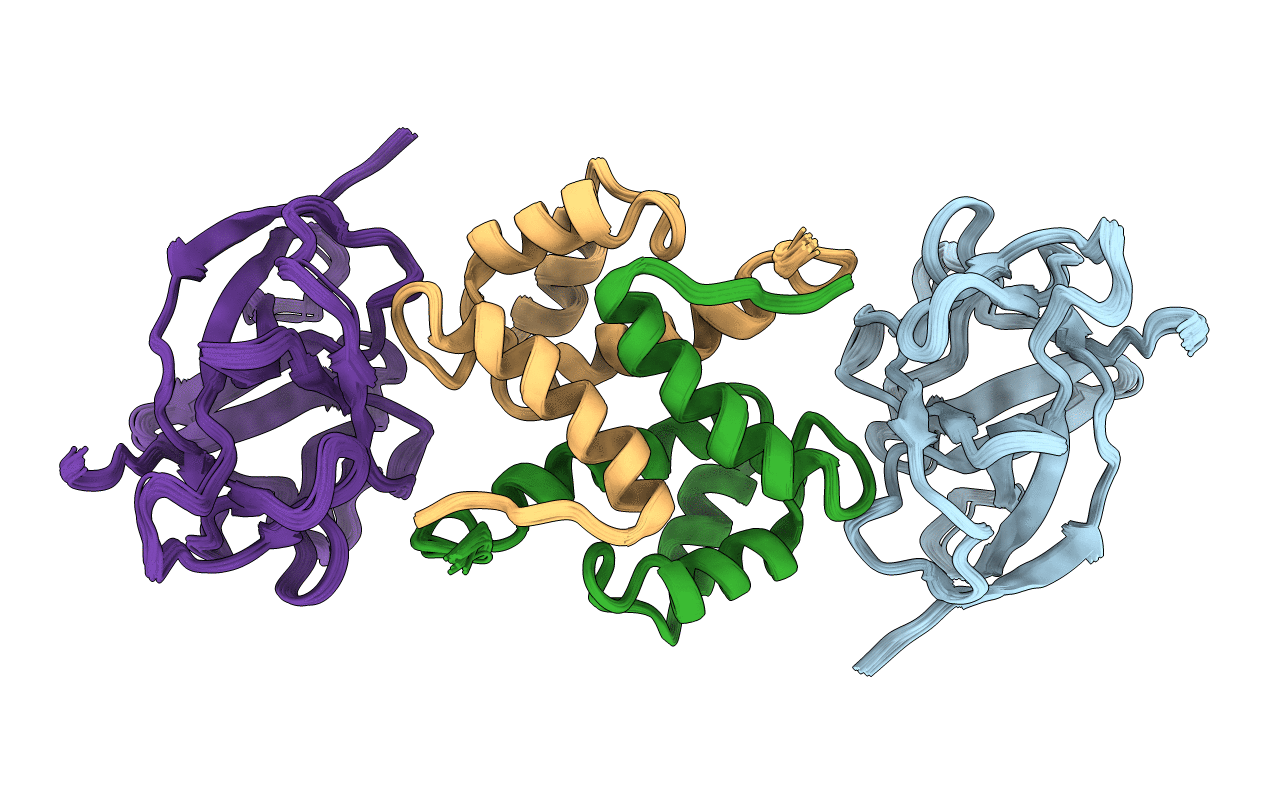
2L5X image
Deposition Date 2010-11-09
Release Date 2011-01-26
Last Version Date 2024-05-01
Entry Detail
PDB ID:
2L5X
Title:
Solution structure of IL1A-S100A13 complex
Biological Source:
Source Organism(s):
Homo sapiens (Taxon ID: 9606)
Expression System(s):
Method Details:
Experimental Method:
Conformers Calculated:
200
Conformers Submitted:
20
Selection Criteria:
structures with the least restraint violations

Macromolecular Entities
Structures with similar UniProt ID
Protein Blast
Polymer Type:polypeptide(L)
Molecule:Interleukin-1 alpha
Gene (Uniprot):IL1A
Chain IDs:A, D
Chain Length:151
Number of Molecules:2
Biological Source:Homo sapiens
Structures with similar UniProt ID
Protein Blast
Polymer Type:polypeptide(L)
Molecule:Protein S100-A13
Gene (Uniprot):S100A13
Chain IDs:B, C
Chain Length:98
Number of Molecules:2
Biological Source:Homo sapiens
Ligand Molecules
Primary Citation
The IL1alpha-S100A13 heterotetrameric complex structure: a component in the non-classical pathway for interleukin 1alpha secretion
J. Biol. Chem. 286 14608 14617 (2011)
PMID: 21270123 DOI: 10.1074/jbc.M110.201954

Abstact

Interleukin 1α (IL1α) plays an important role in several key biological functions, such as angiogenesis, cell proliferation, and tumor growth in several types of cancer. IL1α is a potent cytokine that induces a wide spectrum of immunological and inflammatory activities. The biological effects of IL1α are mediated through the activation of transmembrane receptors (IL1Rs) and therefore require the release of the protein into the extracellular space. IL1α is exported through a non-classical release pathway involving the formation of a specific multiprotein complex, which includes IL1α and S100A13. Because IL1α plays an important role in cell proliferation and angiogenesis, inhibiting the formation of the IL1α-S100A13 complex would be an effective strategy to inhibit a wide range of cancers. To understand the molecular events in the IL1α release pathway, we studied the structure of the IL1α-S100A13 tetrameric complex, which is the key complex formed during the non-classical pathway of IL1α release.

Legend

Protein

Chemical

Disease

Primary Citation of related structures
Feedback Form
Name
Email
Institute
Feedback