

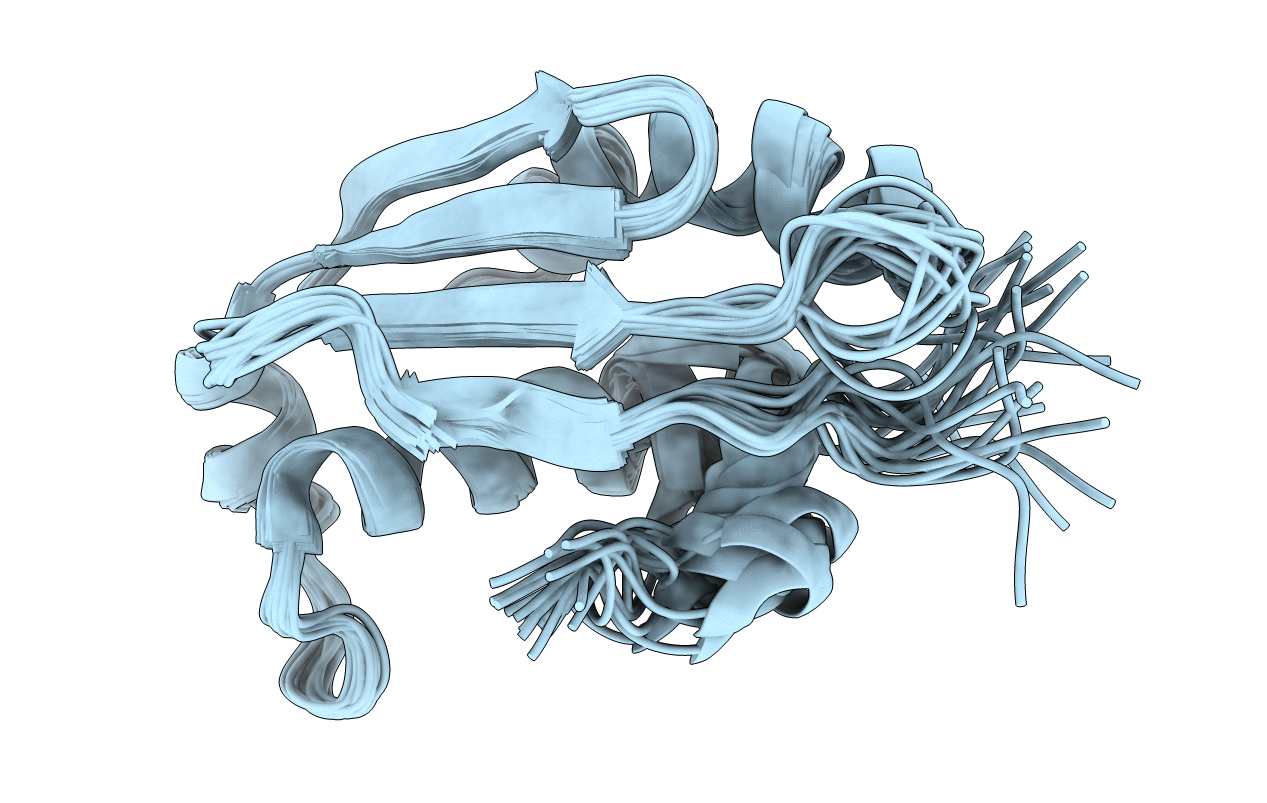
2KWA image
Deposition Date 2010-03-31
Release Date 2010-11-24
Last Version Date 2024-05-01
Entry Detail
PDB ID:
2KWA
Title:
1H, 13C and 15N backbone and side chain resonance assignments of the N-terminal domain of the histidine kinase inhibitor KipI from Bacillus subtilis
Biological Source:
Source Organism(s):
Expression System(s):
Method Details:
Experimental Method:
Conformers Calculated:
500
Conformers Submitted:
20
Selection Criteria:
structures with the lowest energy
Macromolecular Entities
Polymer Type:polypeptide(L)
Molecule:Kinase A inhibitor
Gene (Uniprot):pxpB
Chain IDs:A
Chain Length:101
Number of Molecules:1
Biological Source:Bacillus subtilis
Ligand Molecules
Primary Citation
A Novel Structure of an Antikinase and its Inhibitor
J. Mol. Biol. ? ? ? (2010)
PMID: 21050859 DOI: 10.1016/j.jmb.2010.10.047

Abstact

In Bacillus subtilis, the KipI protein is a regulator of the phosphorelay governing the onset of sporulation. KipI binds the relevant sensor histidine kinase, KinA, and inhibits the autophosphorylation reaction. Gene homologues of kipI are found almost ubiquitously throughout the bacterial kingdom and are usually located adjacent to, and often fused with, kipA gene homologues. In B. subtilis, the KipA protein inhibits the antikinase activity of KipI thereby permitting sporulation. We have used a combination of biophysical techniques in order to understand the domain structure and shape of the KipI-KipA complex and probe the nature of the interaction. We also have solved the crystal structure of TTHA0988, a Thermus thermophilus protein of unknown function that is homologous to a KipI-KipA fusion. This structure, which is the first to be described for this class of proteins, provides unique insight into the nature of the KipI-KipA complex. The structure confirms that KipI and KipA are proteins with two domains, and the C-terminal domains belong to the cyclophilin family. These cyclophilin domains are positioned in the complex such that their conserved surfaces face each other to form a large "bicyclophilin" cleft. We discuss the sequence conservation and possible roles across species of this near-ubiquitous protein family, which is poorly understood in terms of function.

Legend

Protein

Chemical

Disease

Primary Citation of related structures
Feedback Form
Name
Email
Institute
Feedback