

2I65 image
Deposition Date 2006-08-28
Release Date 2006-09-05
Last Version Date 2024-11-20
Entry Detail
PDB ID:
2I65
Keywords:
Title:
Structural Basis for the Mechanistic Understanding Human CD38 Controlled Multiple Catalysis
Biological Source:
Source Organism(s):
Homo sapiens (Taxon ID: 9606)
Expression System(s):
Method Details:
Experimental Method:
Resolution:
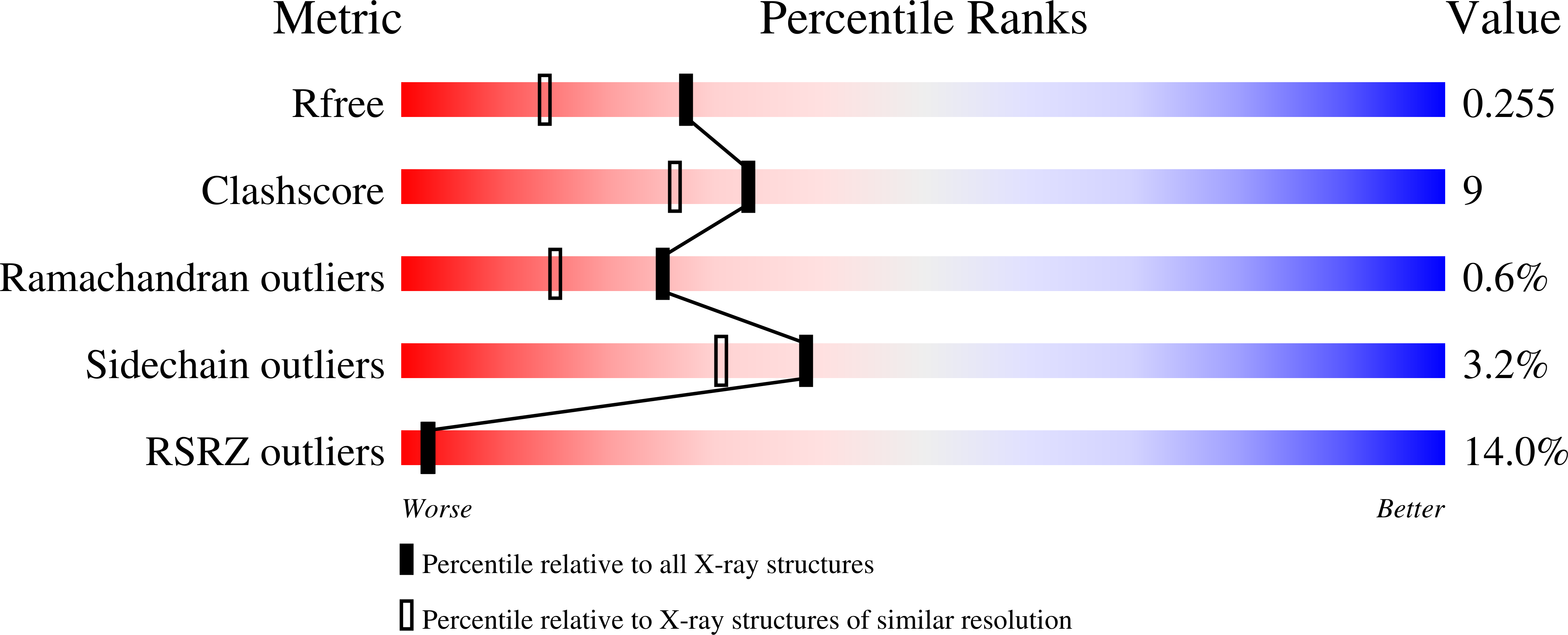
1.90 Å
R-Value Free:
0.22
R-Value Work:
0.19
R-Value Observed:
0.19
Space Group:
P 1
Macromolecular Entities
Structures with similar UniProt ID
Protein Blast
Polymer Type:polypeptide(L)
Molecule:ADP-ribosyl cyclase 1
Gene (Uniprot):CD38
Mutagens:Q49T, N100D, N164D, N209D, N219D,E226Q
Chain IDs:A, B
Chain Length:262
Number of Molecules:2
Biological Source:Homo sapiens
Ligand Molecules
Primary Citation
Structural basis for the mechanistic understanding of human CD38-controlled multiple catalysis.
J. Biol. Chem. 281 32861 32869 (2006)
PMID: 16951430 DOI: 10.1074/jbc.M606365200

Abstact

The enzymatic cleavage of the nicotinamide-glycosidic bond on nicotinamide adenine dinucleotide (NAD(+)) has been proposed to go through an oxocarbenium ion-like transition state. Because of the instability of the ionic intermediate, there has been no structural report on such a transient reactive species. Human CD38 is an ectoenzyme that can use NAD(+) to synthesize two calcium-mobilizing molecules. By using NAD(+) and a surrogate substrate, NGD(+), we captured and determined crystal structures of the enzyme complexed with an intermediate, a substrate, and a product along the reaction pathway. Our results showed that the intermediate is stabilized by polar interactions with the catalytic residue Glu(226) rather than by a covalent linkage. The polar interactions between Glu(226) and the substrate 2',3'-OH groups are essential for initiating catalysis. Ser(193) was demonstrated to have a regulative role during catalysis and is likely to be involved in intermediate stabilization. In addition, a product inhibition effect by ADP-ribose (through the reorientation of the product) or GDP-ribose (through the formation of a covalently linked GDP-ribose dimer) was observed. These structural data provide insights into the understanding of multiple catalysis and clues for drug design.

Legend

Protein

Chemical

Disease

Primary Citation of related structures
Feedback Form
Name
Email
Institute
Feedback