

2GED image
Deposition Date 2006-03-19
Release Date 2006-04-18
Last Version Date 2023-08-30
Entry Detail
PDB ID:
2GED
Title:
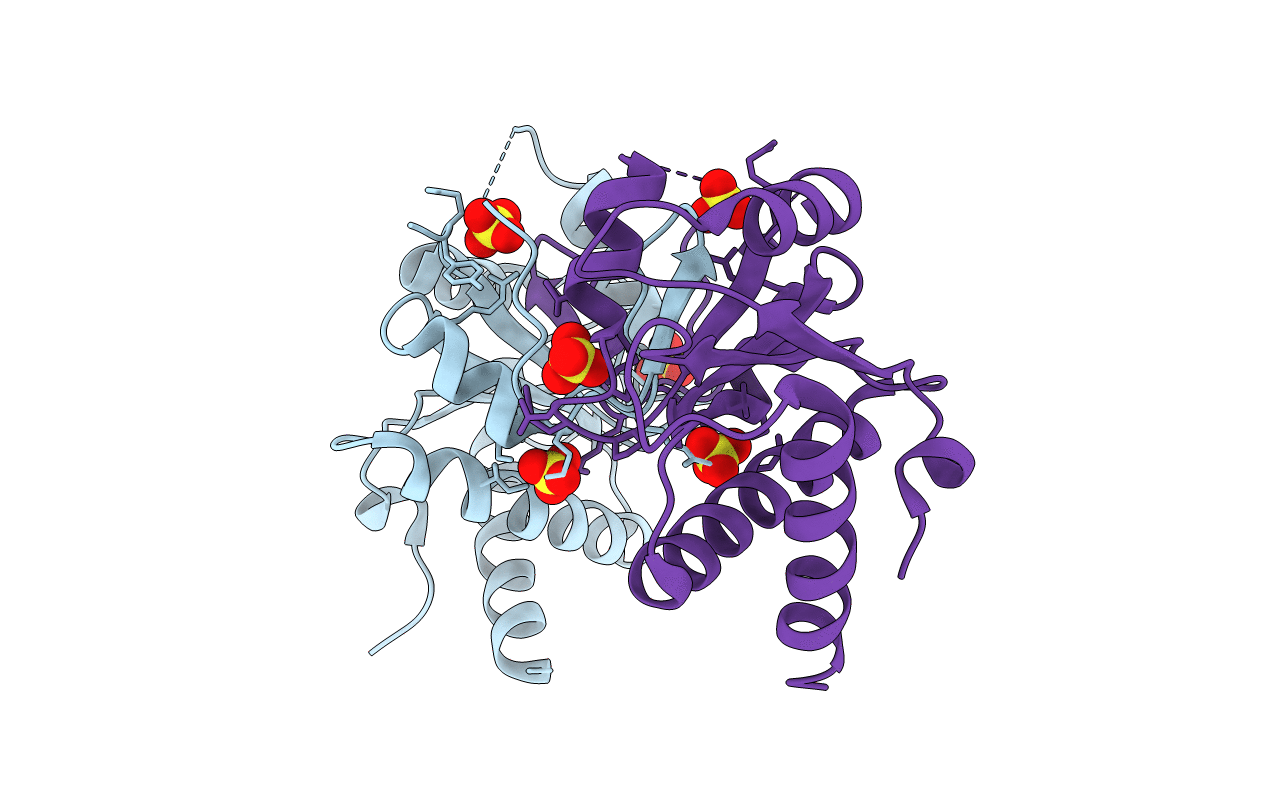
Signal Recognition Particle Receptor Beta-Subunit in nucleotide-free dimerized form
Biological Source:
Source Organism(s):
Expression System(s):
Method Details:
Experimental Method:
Resolution:
2.20 Å
R-Value Free:
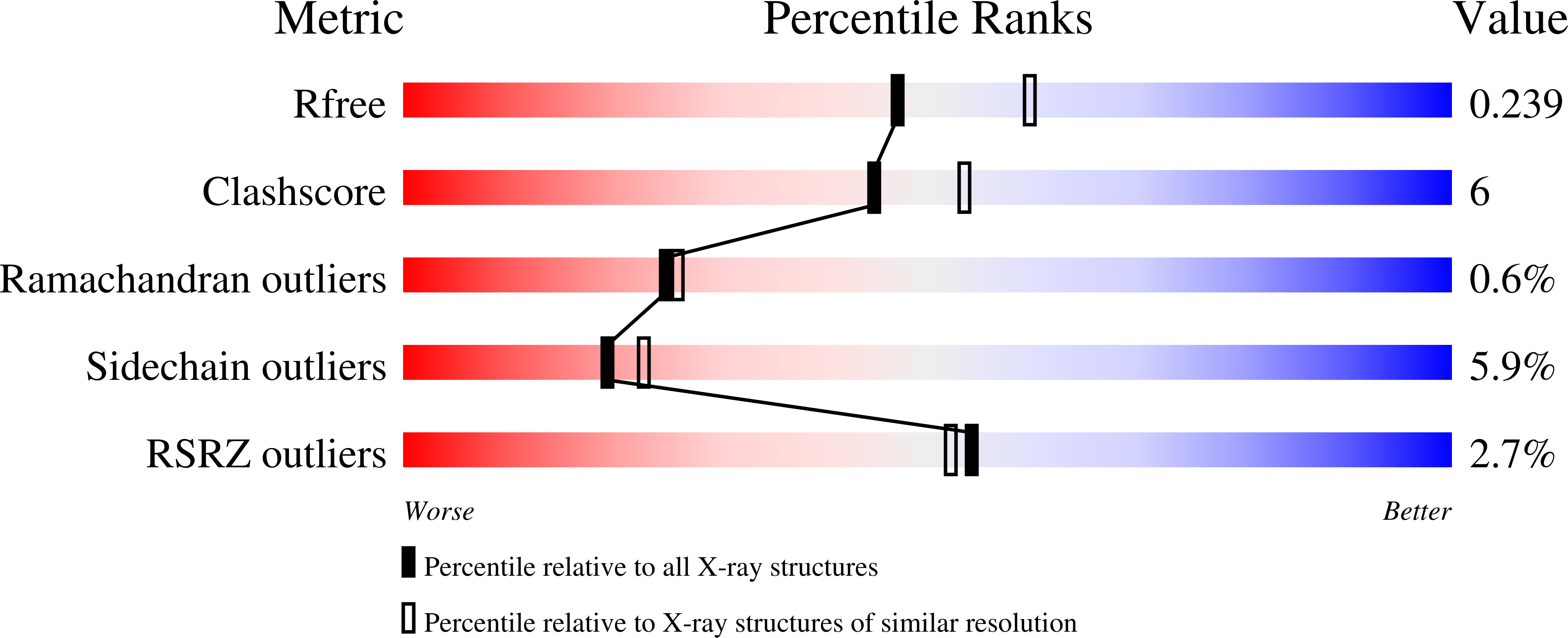
0.23
R-Value Work:
0.18
R-Value Observed:
0.18
Space Group:
P 61
Macromolecular Entities
Structures with similar UniProt ID
Protein Blast
Polymer Type:polypeptide(L)
Molecule:Signal recognition particle r
Gene (Uniprot):SRP102
Mutagens:deletion residues 184-209
Chain IDs:A, B
Chain Length:193
Number of Molecules:2
Biological Source:Saccharomyces cerevisiae
Ligand Molecules
Primary Citation
Homodimerization of the G protein SR{beta} in the nucleotide-free state involves proline cis/trans isomerization in the switch II region.
Proc. Natl. Acad. Sci. U.S.A. 103 6823 6828 (2006)
PMID: 16627619 DOI: 10.1073/pnas.0602083103

Abstact

Protein translocation across and insertion into membranes is essential to all life forms. Signal peptide-bearing nascent polypeptide chains emerging from the ribosome are first sampled by the signal-recognition particle (SRP), then targeted to the membrane via the SRP receptor (SR), and, finally, transferred to the protein-conducting channel. In eukaryotes, this process is tightly controlled by the concerted action of three G proteins, the 54-kD subunit of SRP and the alpha- and beta-subunits of SR. We have determined the 2.2-A crystal structure of the nucleotide-free SRbeta domain. Unexpectedly, the structure is a homodimer with a highly intertwined interface made up of residues from the switch regions of the G domain. The remodeling of the switch regions does not resemble any of the known G protein switch mechanisms. Biochemical analysis confirms homodimerization in vitro, which is incompatible with SRalpha binding. The switch mechanism involves cis/trans isomerization of a strictly conserved proline, potentially implying a new layer of regulation of cotranslational transport.

Legend

Protein

Chemical

Disease

Primary Citation of related structures
Feedback Form
Name
Email
Institute
Feedback