

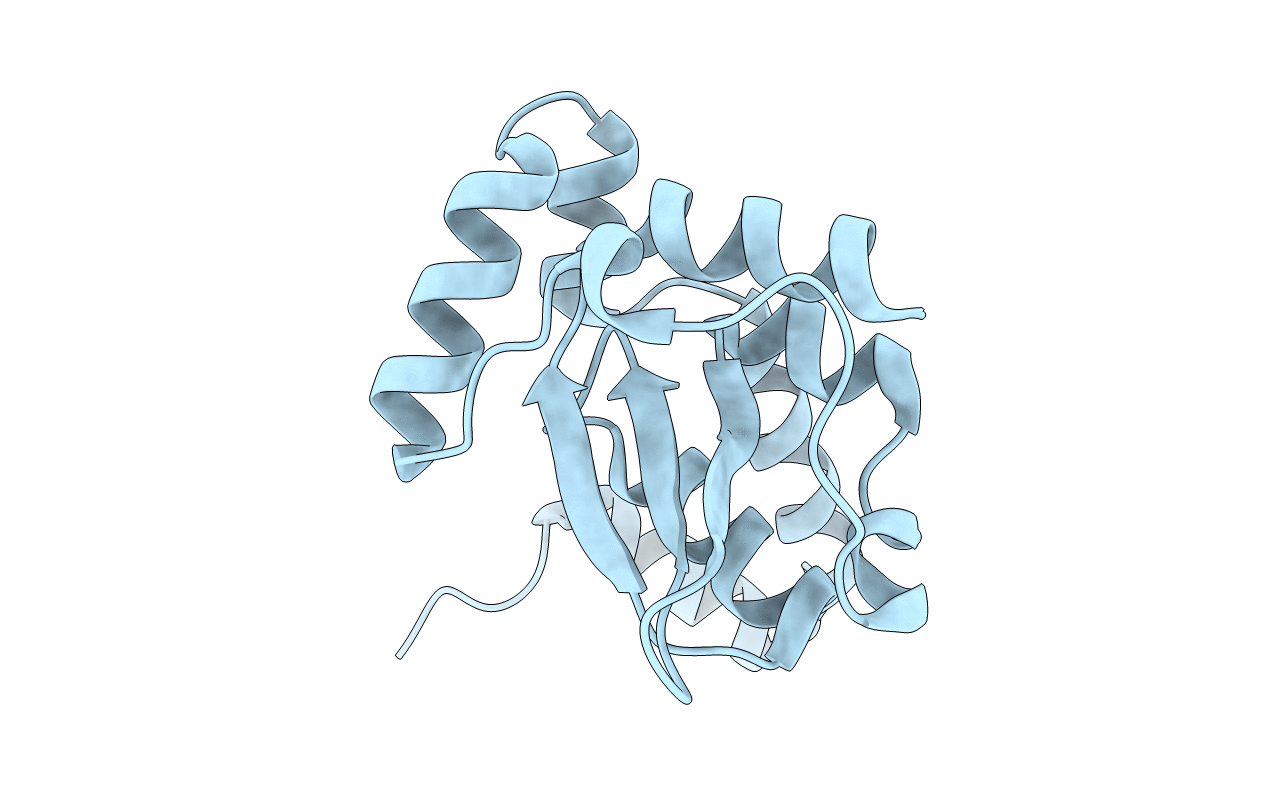
2D27 image
Deposition Date 2005-09-03
Release Date 2005-09-20
Last Version Date 2024-11-06
Entry Detail
PDB ID:
2D27
Title:
Structure of the N-terminal domain of XpsE (crystal form I4122)
Biological Source:
Source Organism(s):
Expression System(s):
Method Details:
Experimental Method:
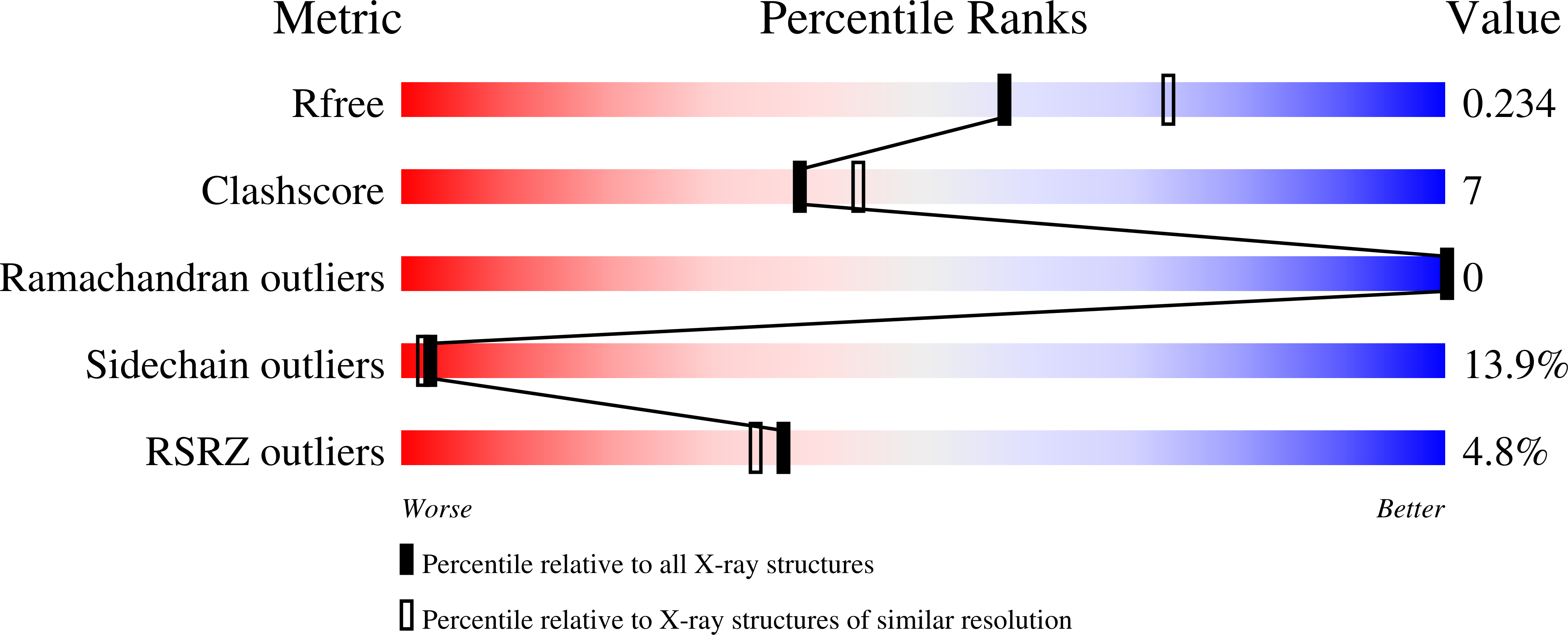
Resolution:
2.21 Å
R-Value Free:
0.23
R-Value Work:
0.19
R-Value Observed:
0.19
Space Group:
I 41 2 2
Macromolecular Entities
Structures with similar UniProt ID
Protein Blast
Polymer Type:polypeptide(L)
Molecule:type II secretion ATPase XpsE
Gene (Uniprot):xpsE
Chain IDs:A
Chain Length:149
Number of Molecules:1
Biological Source:Xanthomonas campestris
Modified Residue
Compound ID Chain ID Parent Comp ID Details 2D Image
MSE A MET SELENOMETHIONINE
Primary Citation
Structure and Function of the XpsE N-Terminal Domain, an Essential Component of the Xanthomonas campestris Type II Secretion System
J. Biol. Chem. 280 42356 42363 (2005)
PMID: 16162504 DOI: 10.1074/jbc.M506843200

Abstact

Secretion of fully folded extracellular proteins across the outer membrane of Gram-negative bacteria is mainly assisted by the ATP-dependent type II secretion system (T2SS). Depending on species, 12-15 proteins are usually required for the function of T2SS by forming a trans-envelope multiprotein secretion complex. Here we report crystal structures of an essential component of the Xanthomonas campestris T2SS, the 21-kDa N-terminal domain of cytosolic secretion ATPase XpsE (XpsEN), in two conformational states. By mediating interaction between XpsE and the cytoplasmic membrane protein XpsL, XpsEN anchors XpsE to the membrane-associated secretion complex to allow the coupling between ATP utilization and exoprotein secretion. The structure of XpsEN observed in crystal form P4(3)2(1)2 is composed of a 90-residue alpha/beta sandwich core domain capped by a 62-residue N-terminal helical region. The core domain exhibits structural similarity with the NifU-like domain, suggesting that XpsE(N) may be involved in the regulation of XpsE ATPase activity. Surprisingly, although a similar core domain structure was observed in crystal form I4(1)22, the N-terminal 36 residues of the helical region undergo a large structural rearrangement. Deletion analysis indicates that these residues are required for exoprotein secretion by mediating the XpsE/XpsL interaction. Site-directed mutagenesis study further suggests the more compact conformation observed in the P4(3)2(1)2 crystal likely represents the XpsL binding-competent state. Based on these findings, we speculate that XpsE might function in T2SS by cycling between two conformational states. As a closely related protein to XpsE, secretion ATPase PilB may function similarly in the type IV pilus assembly.

Legend

Protein

Chemical

Disease

Primary Citation of related structures
Feedback Form
Name
Email
Institute
Feedback