

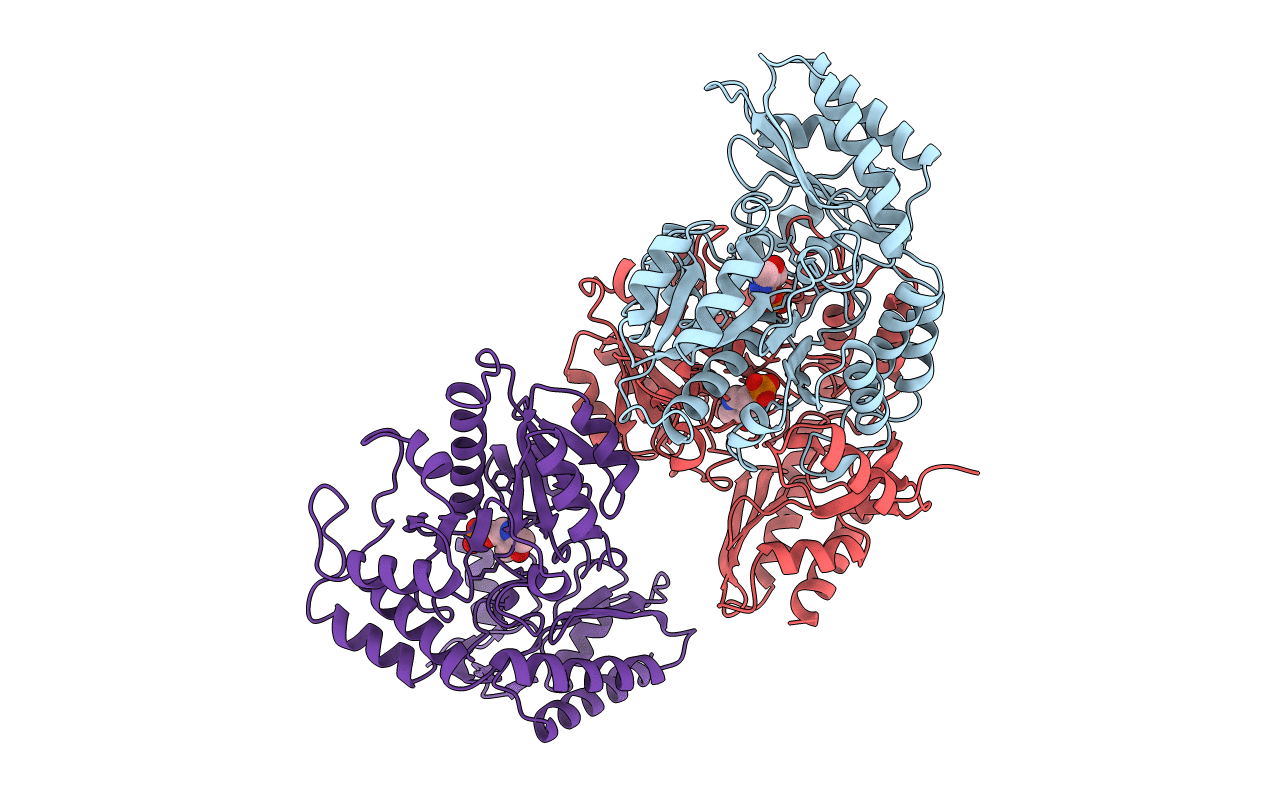
2BYJ image
Deposition Date 2005-08-02
Release Date 2005-09-07
Last Version Date 2023-12-13
Entry Detail
PDB ID:
2BYJ
Keywords:
Title:
Ornithine aminotransferase mutant Y85I
Biological Source:
Source Organism(s):
HOMO SAPIENS (Taxon ID: 9606)
Expression System(s):
Method Details:
Experimental Method:
Resolution:
3.02 Å
R-Value Free:
0.22
R-Value Work:
0.20
R-Value Observed:
0.20
Space Group:
P 32 2 1

Macromolecular Entities
Structures with similar UniProt ID
Protein Blast
Polymer Type:polypeptide(L)
Molecule:ORNITHINE AMINOTRANSFERASE
Gene (Uniprot):OAT
Mutagens:YES
Chain IDs:A, B, C
Chain Length:439
Number of Molecules:3
Biological Source:HOMO SAPIENS
Ligand Molecules
Primary Citation
Determinants of Substrate Specificity in Omega-Aminotransferases.
J. Biol. Chem. 280 36409 ? (2005)
PMID: 16096275 DOI: 10.1074/JBC.M506977200

Abstact

Ornithine aminotransferase and 4-aminobutyrate aminotransferase are related pyridoxal phosphate-dependent enzymes having different substrate specificities. The atomic structures of these enzymes have shown (i) that active site differences are limited to the steric positions occupied by two tyrosine residues in ornithine aminotransferase and (ii) that, uniquely among related, structurally characterized aminotransferases, the conserved arginine that binds the alpha-carboxylate of alpha-amino acids interacts tightly with a glutamate residue. To determine the contribution of these residues to the specificities of the enzymes, we analyzed site-directed mutants of ornithine aminotransferase by rapid reaction kinetics, x-ray crystallography, and 13C NMR spectroscopy. Mutation of one tyrosine (Tyr-85) to isoleucine, as found in aminobutyrate aminotransferase, decreased the rate of the reaction of the enzyme with ornithine 1000-fold and increased that with 4-aminobutyrate 16-fold, indicating that Tyr-85 is a major determinant of specificity toward ornithine. Unexpectedly, the limiting rate of the second half of the reaction, conversion of ketoglutarate to glutamate, was greatly increased, although the kinetics of the reverse reaction were unaffected. A mutant in which the glutamate (Glu-235) that interacts with the conserved arginine was replaced by alanine retained its regiospecificity for the delta-amino group of ornithine, but the glutamate reaction was enhanced 650-fold, whereas only a 5-fold enhancement of the ketoglutarate reaction rate resulted. A model is proposed in which conversion of the enzyme to its pyridoxamine phosphate form disrupts the internal glutamate-arginine interaction, thus enabling ketoglutarate but not glutamate to be a good substrate.

Legend

Protein

Chemical

Disease

Primary Citation of related structures
Feedback Form
Name
Email
Institute
Feedback