

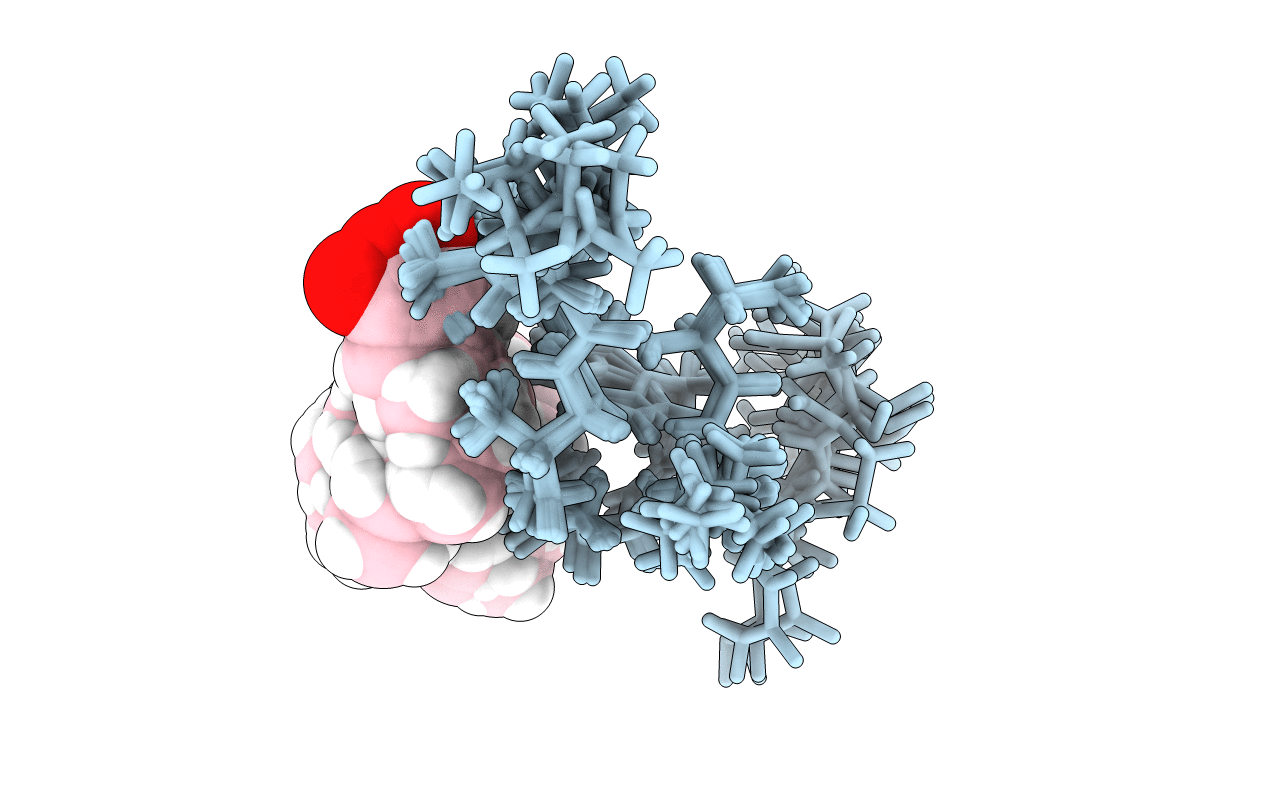
2BAO image
Deposition Date 2005-10-14
Release Date 2006-07-25
Last Version Date 2024-11-06
Entry Detail
PDB ID:
2BAO
Title:
Solution NMR structure of the myristoylated N-terminal fragment of Arf6
Method Details:
Experimental Method:
Conformers Calculated:
50
Conformers Submitted:
12
Selection Criteria:
structures with the lowest energy
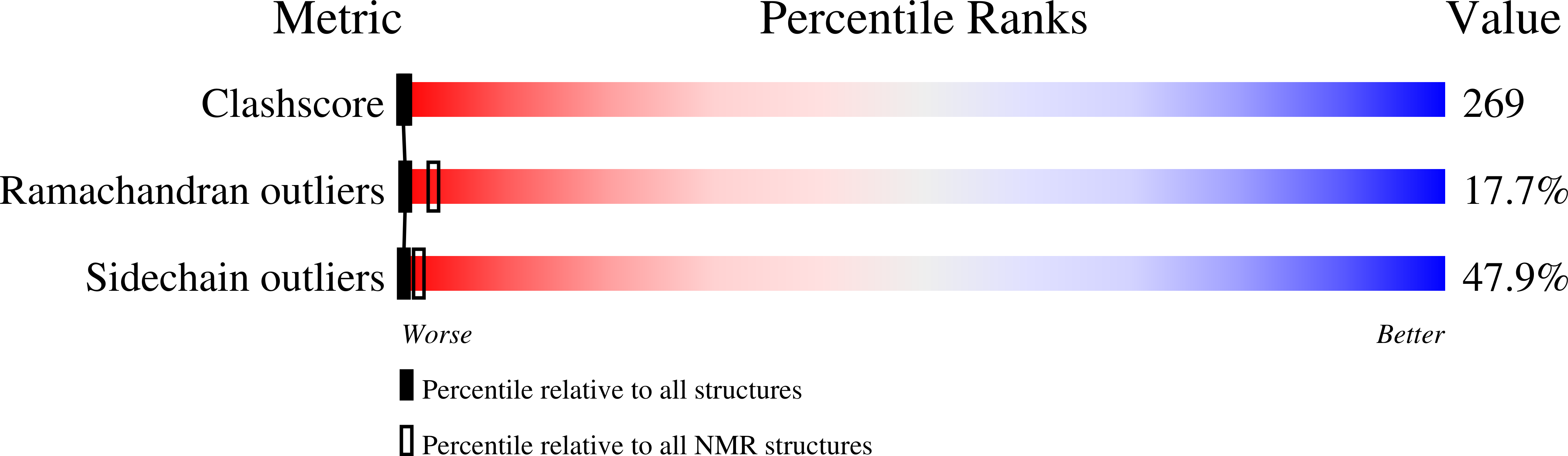
Macromolecular Entities
Polymer Type:polypeptide(L)
Molecule:ADP-ribosylation factor 6
Gene (Uniprot):ARF6
Chain IDs:A
Chain Length:10
Number of Molecules:1
Biological Source:
Ligand Molecules
Primary Citation
NMR structural studies of the myristoylated N-terminus of ADP ribosylation factor 6 (Arf6).
FEBS Lett. 580 4296 4301 (2006)
PMID: 16839550 DOI: 10.1016/j.febslet.2006.06.086

Abstact

Arf proteins are guanine nucleotide binding proteins that are implicated in endocytotic pathways and vesicle trafficking. The two widely studied isoforms of Arf proteins (Arf1 and Arf6) have different cellular functions and localizations but similar structures. Arf proteins have an N-terminal helix with a covalently bound myristoyl group. Except structural models, there are no three dimensional structures of the myristoylated N-terminal peptide or the intact myristoylated Arf proteins. However, understanding the role of both the myristoyl group and the N-terminal helix based on the details of their molecular structures is of great interest. In the solution structure of myristoylated N-terminal peptide of Arf6 described here, the myristoyl group folds toward the N-terminus to interact with the hydrophobic residues in particular, the phenyl ring. Also, the structure of the dodecylphosphocholine (DPC) micelle-bound of the peptide together with paramagnetic studies showed that the myristoyl group is inserted into the micelle while residues V4-G10 interact with the surface of the micelle. The structural differences between the unbound and micelle-bound myristoylated N-terminal peptide of Arf6 involves the myristoyl group and the side chains of the hydrophobic residues.

Legend

Protein

Chemical

Disease

Primary Citation of related structures
Feedback Form
Name
Email
Institute
Feedback