

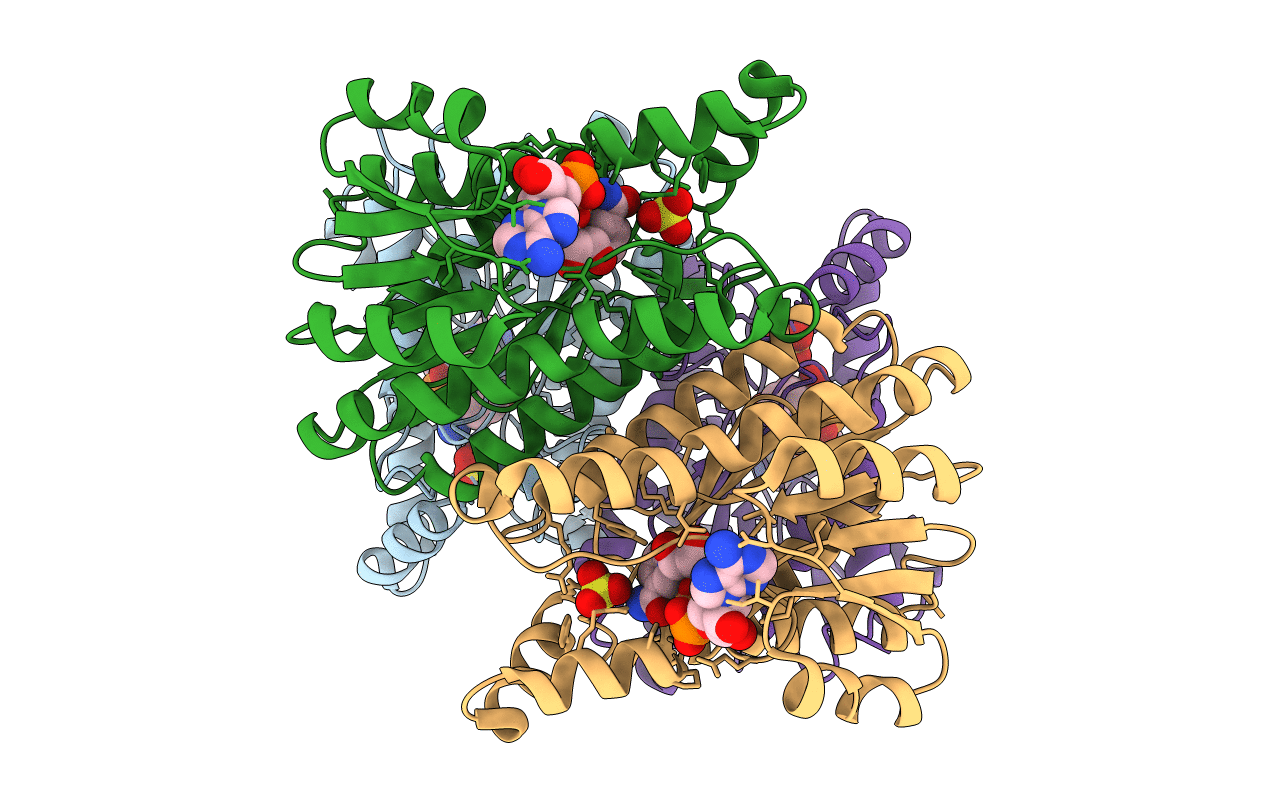
2AG5 image
Deposition Date 2005-07-26
Release Date 2005-08-09
Last Version Date 2024-03-13
Entry Detail
PDB ID:
2AG5
Keywords:
Title:
Crystal Structure of Human DHRS6
Biological Source:
Source Organism(s):
Homo sapiens (Taxon ID: 9606)
Expression System(s):
Method Details:
Experimental Method:
Resolution:
1.84 Å
R-Value Free:
0.22
R-Value Work:
0.16
R-Value Observed:
0.16
Space Group:
P 1

Macromolecular Entities
Structures with similar UniProt ID
Protein Blast
Polymer Type:polypeptide(L)
Molecule:dehydrogenase/reductase (SDR
Gene (Uniprot):BDH2
Chain IDs:A, B, C, D
Chain Length:246
Number of Molecules:4
Biological Source:Homo sapiens
Primary Citation
Characterization of human DHRS6, an orphan short chain dehydrogenase/reductase enzyme: a novel, cytosolic type 2 R-beta-hydroxybutyrate dehydrogenase
J. Biol. Chem. 281 10291 10297 (2006)
PMID: 16380372 DOI: 10.1074/jbc.M511346200

Abstact

Human DHRS6 is a previously uncharacterized member of the short chain dehydrogenases/reductase family and displays significant homologies to bacterial hydroxybutyrate dehydrogenases. Substrate screening reveals sole NAD(+)-dependent conversion of (R)-hydroxybutyrate to acetoacetate with K(m) values of about 10 mm, consistent with plasma levels of circulating ketone bodies in situations of starvation or ketoacidosis. The structure of human DHRS6 was determined at a resolution of 1.8 A in complex with NAD(H) and reveals a tetrameric organization with a short chain dehydrogenases/reductase-typical folding pattern. A highly conserved triad of Arg residues ("triple R" motif consisting of Arg(144), Arg(188), and Arg(205)) was found to bind a sulfate molecule at the active site. Docking analysis of R-beta-hydroxybutyrate into the active site reveals an experimentally consistent model of substrate carboxylate binding and catalytically competent orientation. GFP reporter gene analysis reveals a cytosolic localization upon transfection into mammalian cells. These data establish DHRS6 as a novel, cytosolic type 2 (R)-hydroxybutyrate dehydrogenase, distinct from its well characterized mitochondrial type 1 counterpart. The properties determined for DHRS6 suggest a possible physiological role in cytosolic ketone body utilization, either as a secondary system for energy supply in starvation or to generate precursors for lipid and sterol synthesis.

Legend

Protein

Chemical

Disease

Primary Citation of related structures
Feedback Form
Name
Email
Institute
Feedback