

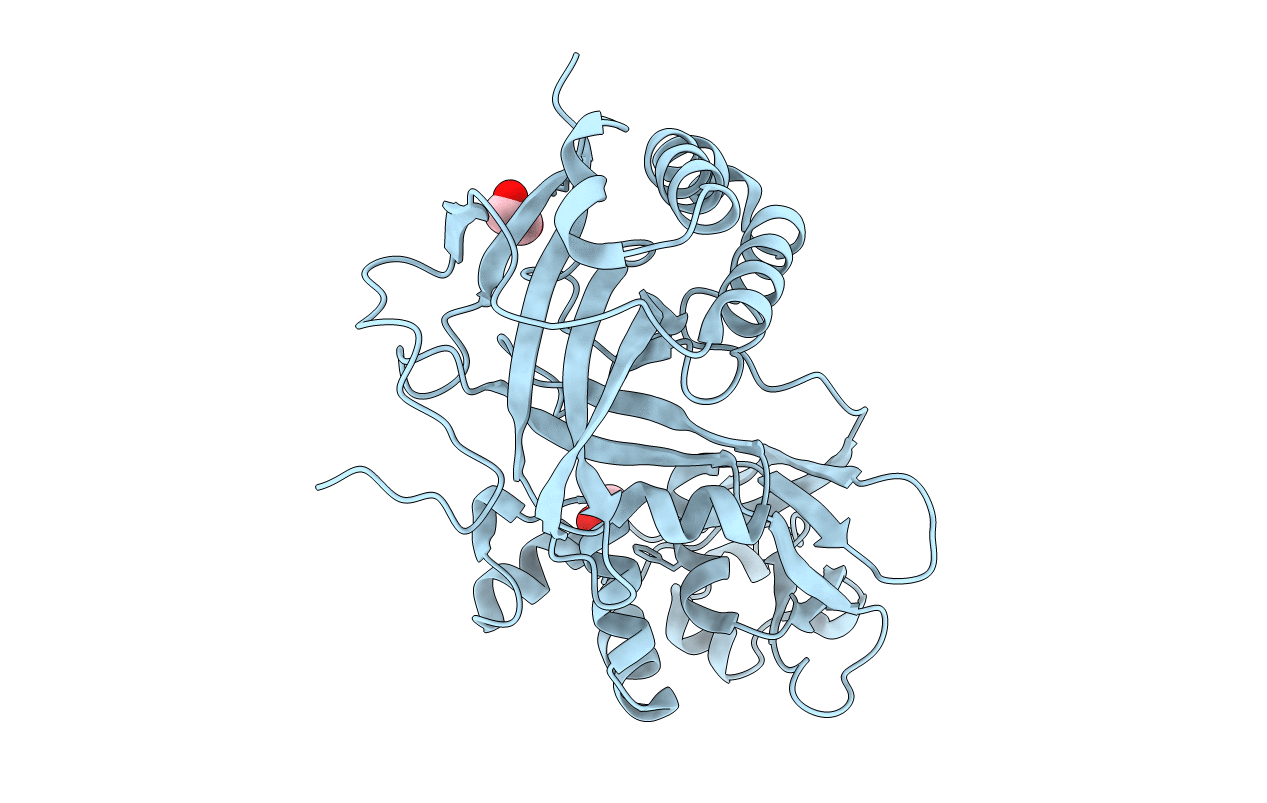
2AE0 image
Deposition Date 2005-07-21
Release Date 2005-10-04
Last Version Date 2024-03-13
Entry Detail
PDB ID:
2AE0
Keywords:
Title:
Crystal structure of MltA from Escherichia coli reveals a unique lytic transglycosylase fold
Biological Source:
Source Organism(s):
Escherichia coli (Taxon ID: 562)
Expression System(s):
Method Details:
Experimental Method:
Resolution:
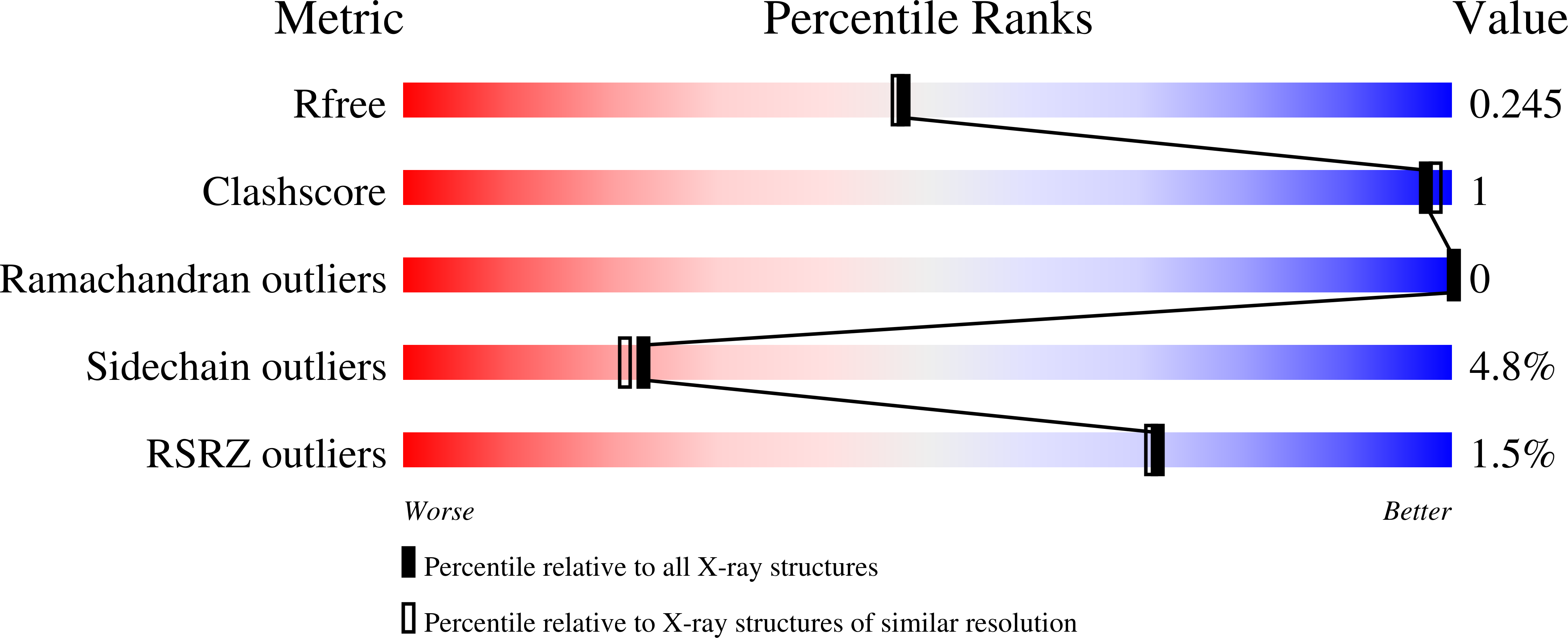
2.00 Å
R-Value Free:
0.23
R-Value Work:
0.20
R-Value Observed:
0.20
Space Group:
P 31 2 1
Macromolecular Entities
Polymer Type:polypeptide(L)
Molecule:Membrane-bound lytic murein t
Gene (Uniprot):mltA
Chain IDs:A (auth: X)
Chain Length:345
Number of Molecules:1
Biological Source:Escherichia coli
Primary Citation
Crystal Structure of MltA from Escherichia coli Reveals a Unique Lytic Transglycosylase Fold
J. Mol. Biol. 352 1068 1080 (2005)
PMID: 16139297 DOI: 10.1016/j.jmb.2005.07.067

Abstact

Lytic transglycosylases are bacterial enzymes involved in the maintenance and growth of the bacterial cell-wall peptidoglycan. They cleave the beta-(1,4)-glycosidic bonds in peptidoglycan forming non-reducing 1,6-anhydromuropeptides. The crystal structure of the lytic transglycosylase MltA from Escherichia coli without a membrane anchor was solved at 2.0A resolution. The enzyme has a fold completely different from those of the other known lytic transglycosylases. It contains two domains, the largest of which has a double-psi beta-barrel fold, similar to that of endoglucanase V from Humicola insolens. The smaller domain also has a beta-barrel fold topology, which is weakly related to that of the RNA-binding domain of ribosomal proteins L25 and TL5. A large groove separates the two domains, which can accommodate a glycan strand, as shown by molecular modelling. Several conserved residues, one of which is in a position equivalent to that of the catalytic acid of the H.insolens endoglucanase, flank this putative substrate-binding groove. Mutation of this residue, Asp308, abolished all activity of the enzyme, supporting the direct participation of this residue in catalysis.

Legend

Protein

Chemical

Disease

Primary Citation of related structures
Feedback Form
Name
Email
Institute
Feedback