

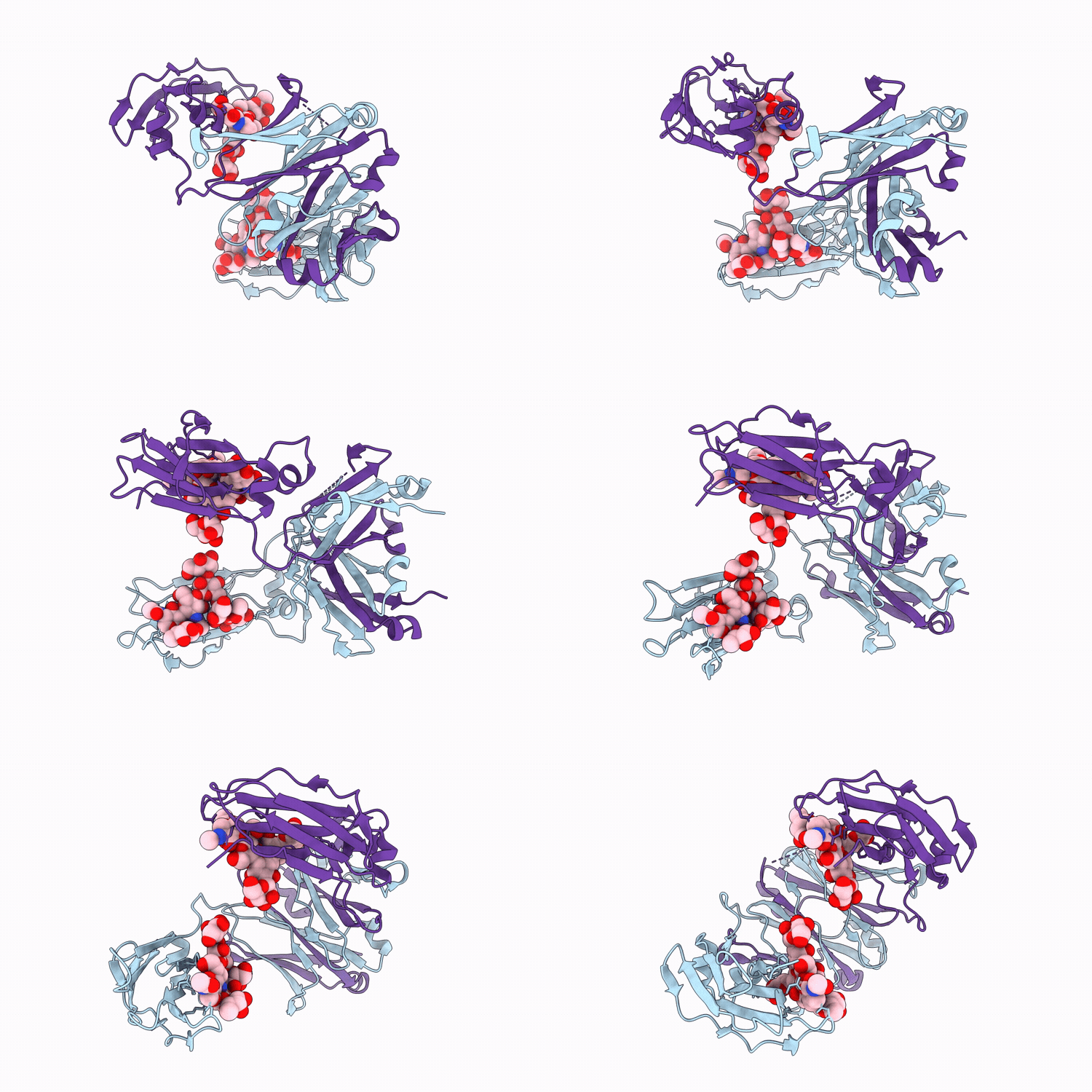
29ZV image
Deposition Date 2026-04-16
Release Date 2026-07-01
Last Version Date 2026-07-01
Entry Detail
PDB ID:
29ZV
Keywords:
Title:
Crystal structure of Fc heterodimer with StrandLock CH3 interface
Biological Source:
Source Organism(s):
Homo sapiens (Taxon ID: 9606)
Expression System(s):
Method Details:
Experimental Method:
Resolution:
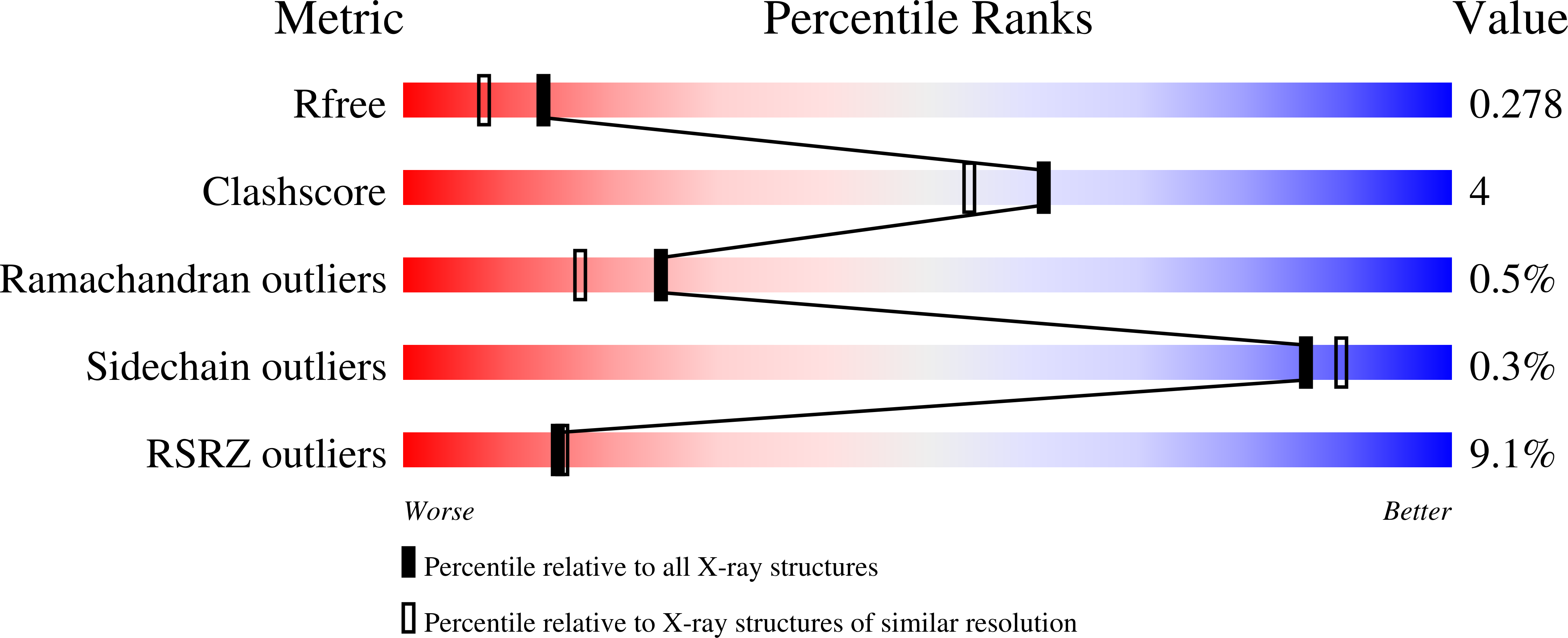
2.06 Å
R-Value Free:
0.27
R-Value Work:
0.22
R-Value Observed:
0.22
Space Group:
P 21 21 21
Macromolecular Entities
Protein Blast
Polymer Type:polypeptide(L)
Molecule:Fc_ChainA
Chain IDs:B (auth: A)
Chain Length:239
Number of Molecules:1
Biological Source:Homo sapiens
Protein Blast
Polymer Type:polypeptide(L)
Molecule:Fc_ChainB
Chain IDs:A (auth: B)
Chain Length:220
Number of Molecules:1
Biological Source:Homo sapiens
Primary Citation
Engineering Fc heterodimerization via asymmetric beta-strand reconfiguration for bispecific antibody assembly.
J Biol Eng ? ? ? (2026)
PMID: 42316245 DOI: 10.1186/s13036-026-00717-x

Abstact

Bispecific antibodies (bsAbs) have unlocked new therapeutic modalities by enabling dual antigen targeting, offering transformative potential in oncology and autoimmune diseases. However, the efficient production of full-length IgG-like bsAbs remains hindered by mispairing of heavy and light chains, yielding heterogeneous, low-purity products. Here, we present an Fc engineering strategy, termed StrandLock, that enables the controlled assembly of bsAbs through asymmetric beta-strand redistribution at the CH3 dimer interface, in which the beta-strand segment (residues N390-S400) is duplicated in one heavy chain and deleted from the partner. This structural asymmetry, combined with targeted point mutations, promotes obligate heterodimerization while suppressing homodimer formation. Importantly, these modifications enable the correct assembly of bsAbs with purities approaching 99% and allow streamlined manufacturing via a single-step affinity purification process comparable to that used for monoclonal antibodies. The engineered bsAbs retain key Fc effector functions and exhibit comparable in vivo pharmacokinetics to native IgG. Structural analysis confirms preservation of the CH3 fold and native-like interfacial packing. Despite a modest reduction in thermal stability, the molecules remain aggregation-resistant and functionally robust under accelerated stress conditions. We further demonstrate the versatility of the StrandLock design across multiple antibody pairs underscoring its utility as a strategy for bsAb production.

Legend

Protein

Chemical

Disease

Primary Citation of related structures
Feedback Form
Name
Email
Institute
Feedback