

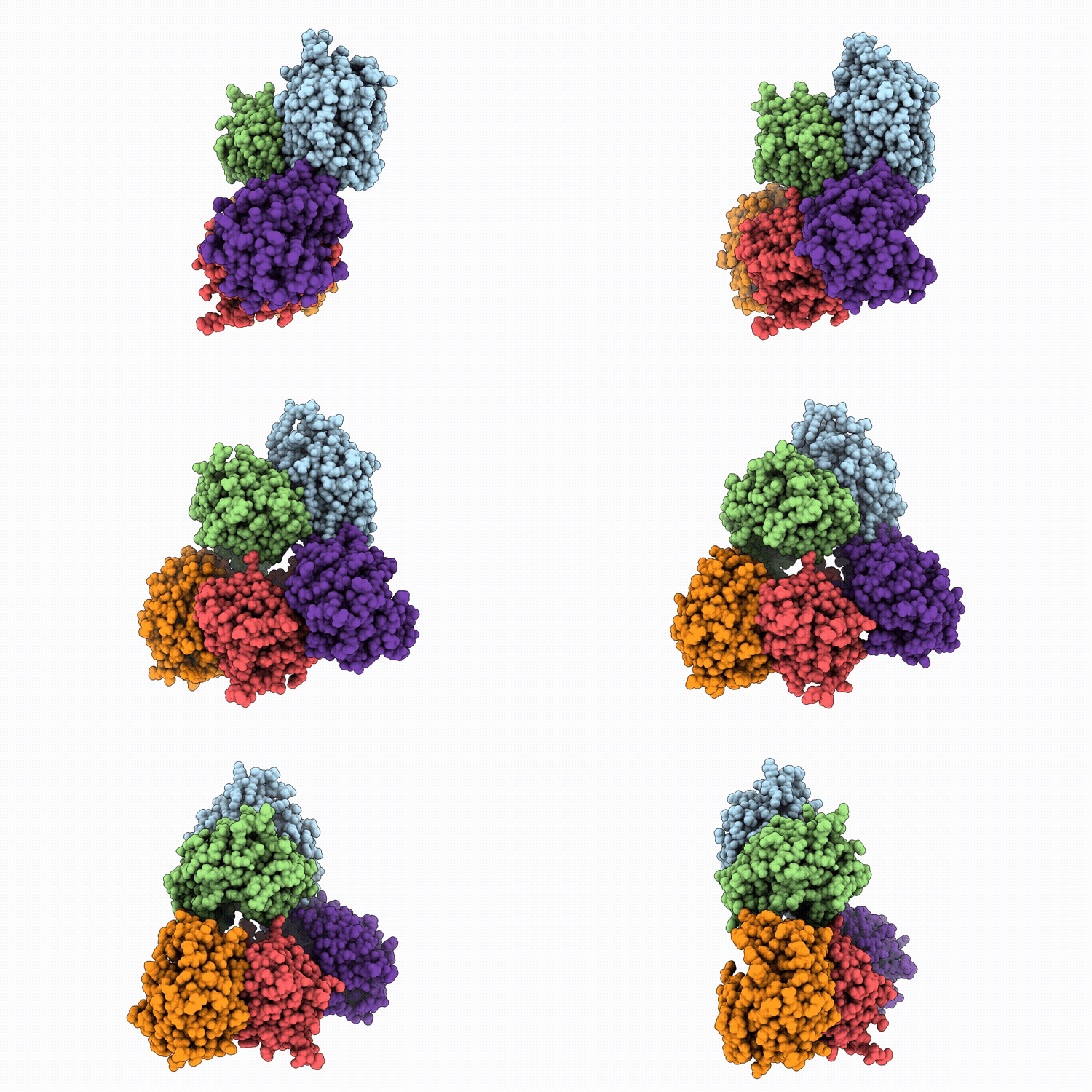
29ST image
Deposition Date 2026-04-07
Release Date 2026-08-05
Last Version Date 2026-08-05
Entry Detail
PDB ID:
29ST
Keywords:
Title:
Azetidine-1- carboxylic acid synthase AzeJ from Saccharotrix sp. NRRL B-16348
Biological Source:
Source Organism(s):
Expression System(s):
Method Details:
Experimental Method:
Resolution:
2.67 Å
R-Value Free:
0.23
R-Value Work:
0.21
R-Value Observed:
0.21
Space Group:
I 2 2 2

Macromolecular Entities
Polymer Type:polypeptide(L)
Molecule:Methyltransferase family prot
Chain IDs:A, B, C, D, E
Chain Length:247
Number of Molecules:5
Biological Source:Saccharothrix sp. NRRL B-16348
Primary Citation
S-Adenosyl-d-Methionine as a Non-Physiological Substrate for a Wide Range of SAM-Dependent Enzymes.
Chembiochem 27 e70467 e70467 (2026)
PMID: 42503187 DOI: 10.1002/cbic.70467

Abstact

The ability of SAM-dependent enzymes to accept S-adenosyl-d-methionine [d-SAM, (S(S),R(Calpha))-SAM] instead of the native cofactor S-adenosyl-l-methionine [l-SAM, (S(S),S(Calpha))-SAM] remains largely unexplored. Challenging the stereochemical preference of SAM-dependent enzymes, we investigated the ability of different enzyme classes to accept d-SAM. Contrary to common assumptions, the tested N- and O-methyltransferases (MTs), as well as one of the examined C-MTs accepted d-SAM. Docking studies suggest that acceptance of d-SAM by C-MTs may be influenced by the angle between the transferable methyl group of SAM and the nucleophilic carbon of the substrate, along with enzyme and substrate flexibility. In addition to conventional MTs, the radical SAM glutamine C-MT QCMT showed low but detectable methylation activity with d-SAM. Furthermore, the azetidine-2-carboxylic acid synthase AzeJ not only uses d-SAM but also incorporates the stereocentre of d-methionine into the cyclic amino acid product. The pyridoxal 5'-phosphate (PLP)-dependent enzyme 1-aminocyclopropyl-1-carboxylic acid synthase (ACCS) also showed detectable turnover with d-SAM. These findings broaden the understanding of enzyme stereoselectivity, provide an overview of d-SAM-utilising enzymes, and identify the first enzyme systems that may serve as starting points for engineering efforts aimed at shifting cofactor preference towards d-SAM.

Legend

Protein

Chemical

Disease

Primary Citation of related structures
Feedback Form
Name
Email
Institute
Feedback