

29OK image
Deposition Date 2026-03-26
Release Date 2026-06-24
Last Version Date 2026-06-24
Entry Detail
PDB ID:
29OK
Keywords:
Title:
PanDDA deposition -- Crystal Structure of SARS-CoV-2 main protease covalently bound to KL_C172
Biological Source:
Method Details:
Experimental Method:
Resolution:
1.93 Å
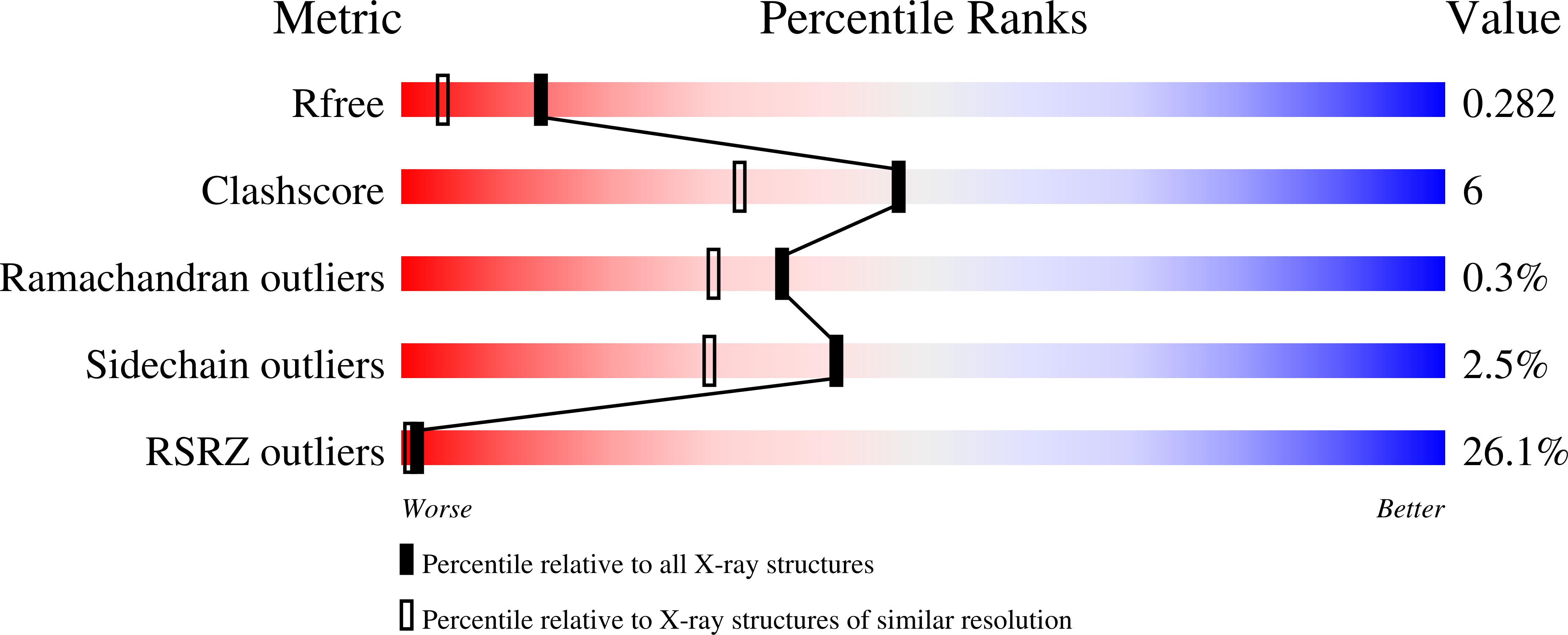
R-Value Free:
0.27
R-Value Work:
0.21
R-Value Observed:
0.22
Space Group:
P 21 21 21
Macromolecular Entities
Structures with similar UniProt ID
Protein Blast
Polymer Type:polypeptide(L)
Molecule:3C-like proteinase nsp5
Gene (Uniprot):rep
Mutagens:0
Chain IDs:A, B
Chain Length:305
Number of Molecules:2
Biological Source:Severe acute respiratory syndrome coronavirus 2
Primary Citation
Fragment-Based Design of Targeted Covalent Inhibitors: The Scope and Limitation of Linking Approaches.
Chemmedchem 21 e202501108 e202501108 (2026)
PMID: 42174747 DOI: 10.1002/cmdc.202501108

Abstact

Linking of fragments in neighboring binding sites is one of the optimization strategies in fragment-based drug discovery, where additive or even more substantial bioactivity improvements can be realized. However, such efforts present a considerable challenge when one fragment binds covalently to the target protein, as small modifications can influence the correct positioning of the covalent warhead toward the targeted nucleophilic residue. Here, we present a case study of fragment linking that yielded single-digit micromolar, covalent inhibitors of the SARS-CoV-2 main protease, starting from fragments that were inactive in the biochemical assay. Using structural information from a recent, high-throughput crystallographic fragment screen, we show that the success of fragment linking in the design of targeted covalent inhibitors is heavily impacted by several factors, including the warhead type, the labeling chemistry, and even subtle changes in the designed linker. Notably, we observe that induced fit effects might override the original fragment orientations in the linked molecule, highlighting the need for reliable structure verification, especially in consecutive rounds of fragment elaboration.

Legend

Protein

Chemical

Disease

Primary Citation of related structures
Feedback Form
Name
Email
Institute
Feedback