

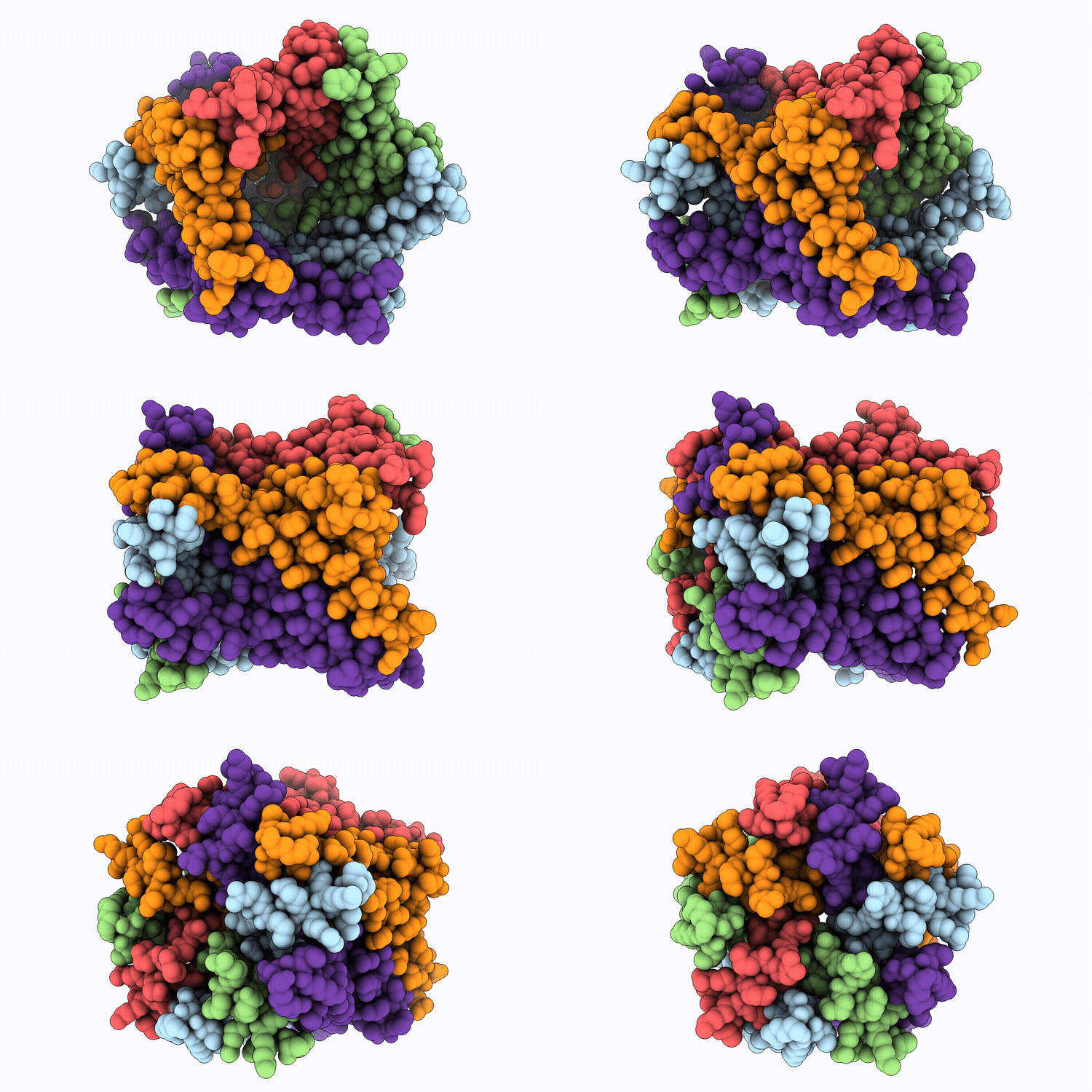
28YC image
Deposition Date 2026-02-27
Release Date 2026-08-26
Last Version Date 2026-08-26
Entry Detail
PDB ID:
28YC
Title:
pentameric MscL from Escherichia coli in nanodiscs
Biological Source:
Source Organism(s):
Escherichia coli (Taxon ID: 562)
Expression System(s):
Method Details:
Experimental Method:
Resolution:
3.12 Å
Aggregation State:
PARTICLE
Reconstruction Method:
SINGLE PARTICLE
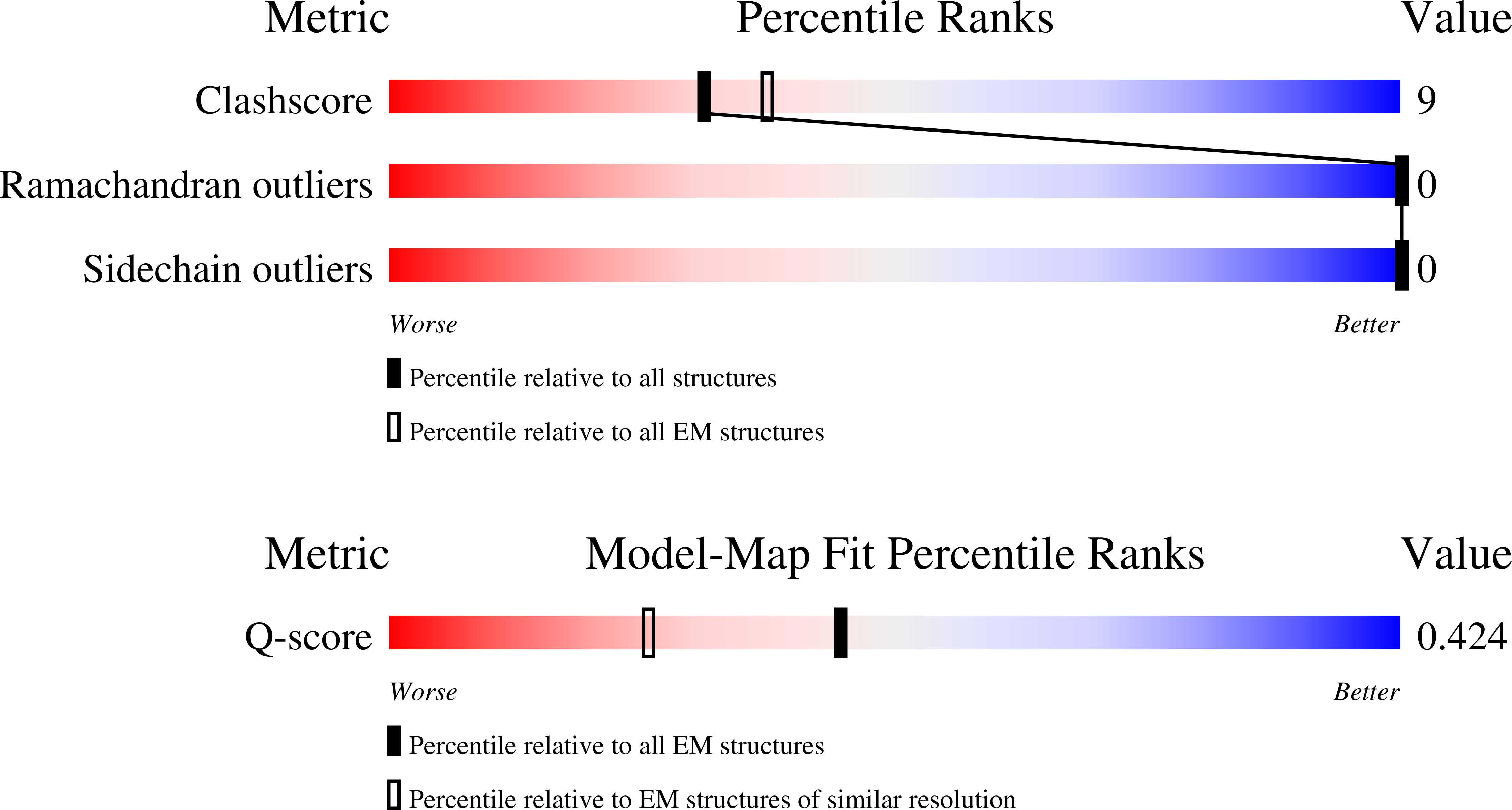
Macromolecular Entities
Polymer Type:polypeptide(L)
Molecule:Large-conductance mechanosens
Gene (Uniprot):mscL
Chain IDs:A, B, C, D, E
Chain Length:142
Number of Molecules:5
Biological Source:Escherichia coli
Ligand Molecules
Primary Citation
The Structure of Escherichia coli MscL and Its Dimer Formation in Nanodiscs.
J.Mol.Biol. 438 169967 169967 (2026)
PMID: 42551783 DOI: 10.1016/j.jmb.2026.169967

Abstact

Mechanosensitive channels of large conductance (MscL) are essential bacterial safety valves that prevent osmotic lysis by releasing solutes in response to membrane tension. Despite extensive functional studies on Escherichia coli MscL (EcMscL), its high-resolution structure remained unknown. Using cryo-electron microscopy, we present an experimental structure of EcMscL reconstituted in nanodiscs at 3.1 A resolution. The structure reveals a pentameric assembly with a narrow hydrophobic gate at the cytosolic side and a periplasmic cavity, consistent with the canonical MscL-fold. Differences to earlier published crystal structures of MscL from other organisms are in the less conserved periplasmic loop. We observe a previously unreported dimeric association of EcMscL pentamers, mediated by residues 61-63 in the periplasmic loop. This dimeric interface is located at the periplasmic side and provides a structural basis for the formation of higher-order clusters. The observed arrangement enables a fluid-like, mosaic packing of channels with centre-to-centre distances of 5.9-9 nm, consistent with biophysical and imaging data. These findings provide a structural framework for understanding cluster organisation of EcMscL that modulates its activity in cellular stress response.

Legend

Protein

Chemical

Disease

Primary Citation of related structures
Feedback Form
Name
Email
Institute
Feedback