

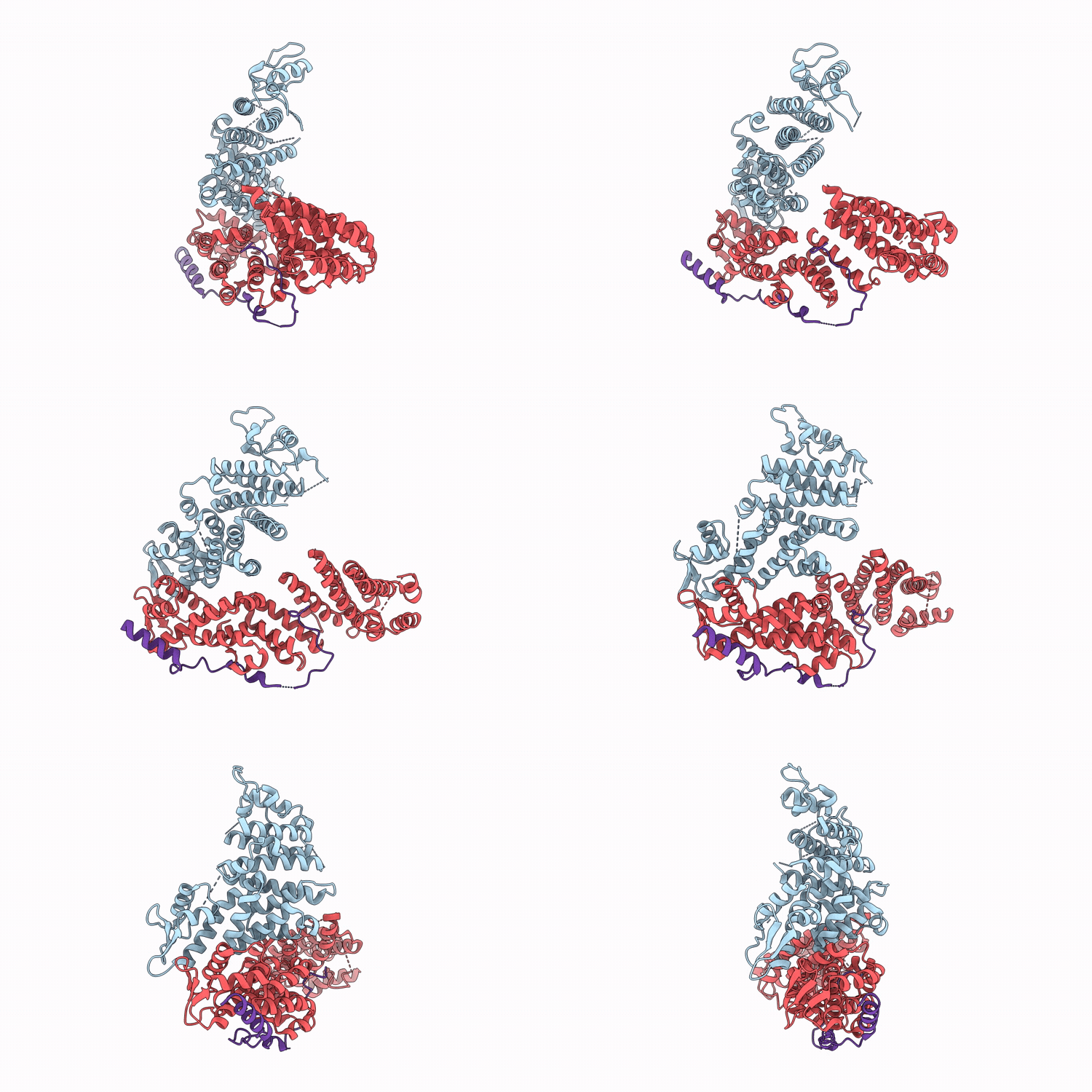
28WY image
Deposition Date 2026-02-25
Release Date 2026-06-24
Last Version Date 2026-08-05
Entry Detail
PDB ID:
28WY
Keywords:
Title:
Cryo-EM structure of the human SAC3D1-PCID2-SEM1 complex
Biological Source:
Source Organism(s):
Escherichia coli (Taxon ID: 562)
Homo sapiens (Taxon ID: 9606)
Expression System(s):
Method Details:
Experimental Method:
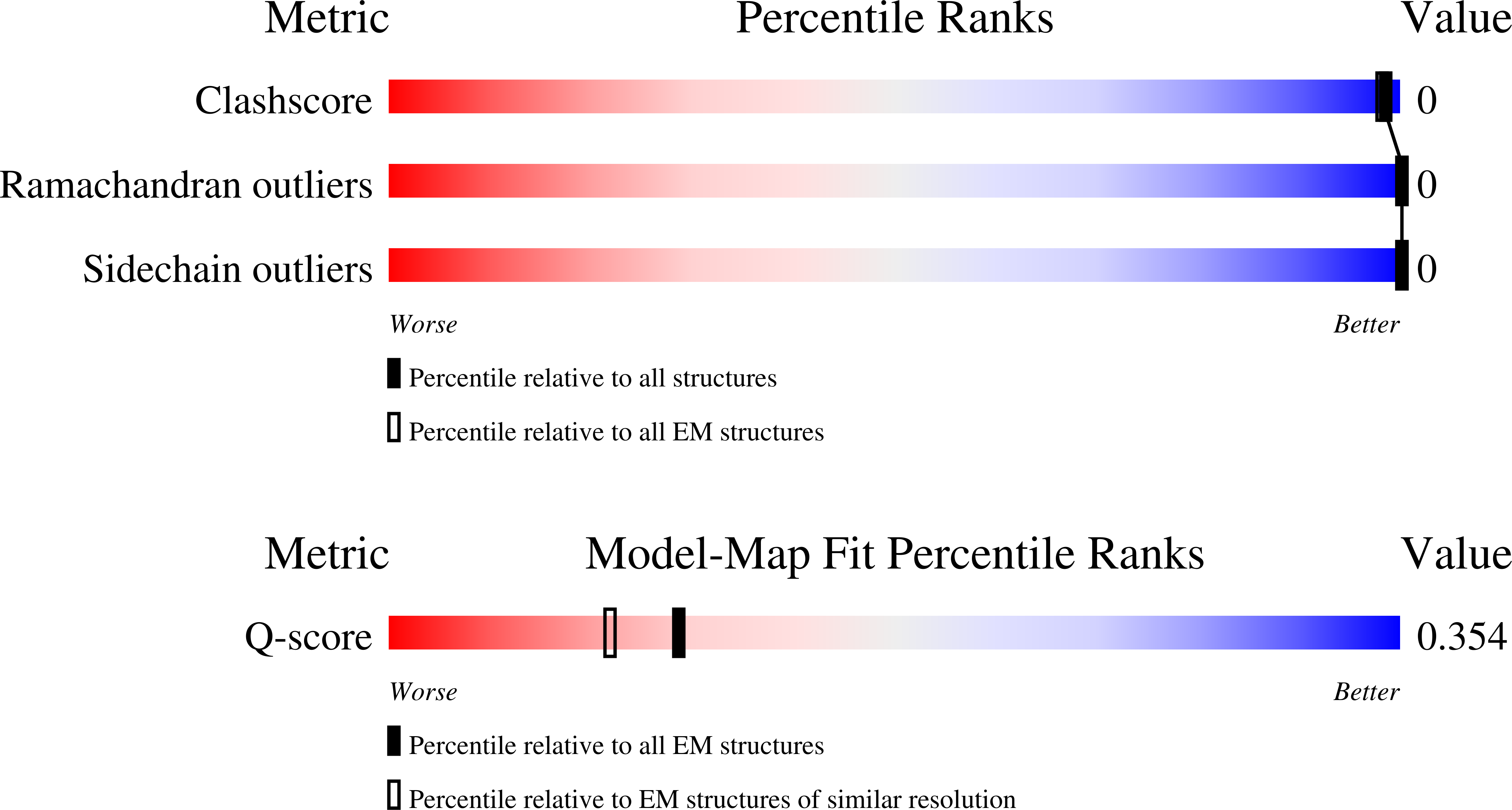
Resolution:
3.60 Å
Aggregation State:
PARTICLE
Reconstruction Method:
SINGLE PARTICLE
Macromolecular Entities
Structural Superimposition Protein Blast
Polymer Type:polypeptide(L)
Molecule:Maltose/maltodextrin-binding
Gene (Uniprot):SAC3D1, malE
Chain IDs:A
Chain Length:736
Number of Molecules:1
Biological Source:Escherichia coli, Homo sapiens
Polymer Type:polypeptide(L)
Molecule:PCI domain-containing protein
Gene (Uniprot):PCID2
Chain IDs:B
Chain Length:457
Number of Molecules:1
Biological Source:Homo sapiens
Polymer Type:polypeptide(L)
Molecule:26S proteasome complex subuni
Gene (Uniprot):SEM1
Chain IDs:C
Chain Length:70
Number of Molecules:1
Biological Source:Homo sapiens
Ligand Molecules
Primary Citation
Molecular basis of polyadenylated RNA fate determination in the nucleus.
Nature 655 1070 1078 (2026)
PMID: 42310446 DOI: 10.1038/s41586-026-10650-0

Abstact

Eukaryotic genomes generate a plethora of polyadenylated (pA(+)) RNAs(1,2), which are packaged into ribonucleoprotein particles (RNPs). To ensure faithful gene expression, functional pA(+) RNPs, including protein-coding RNPs, are exported to the cytoplasm, whereas transcripts within non-functional pA(+) RNPs are degraded in the nucleus(1-4). How cells distinguish these opposing fates remains unknown. The DExD-box ATPase UAP56 (also known as DDX39B) is a central component of functional pA(+) RNPs, and promotes their docking to the nuclear pore complex-anchored TREX-2(5,6), which triggers transcript release from UAP56 to facilitate export(7). Here we reveal that the poly(A) tail exosome targeting (PAXT) connection(8) binds a TREX-2-like module, which releases pA(+) RNAs from UAP56 for decay by the nuclear exosome. The core of this module consists of a LENG8-PCID2-SEM1 trimer, which we show is structurally and biochemically equivalent to the central GANP-PCID2-SEM1 trimer of TREX-2. Mutagenesis and transcriptomic data demonstrate that the nuclear fate of pA(+) RNPs is governed by the contending actions of nucleoplasmic PAXT and nuclear pore complex-associated TREX-2, which interpret RNA-bound UAP56 as a signal for RNA decay or export, respectively. As RNA targets of PAXT are generally short and intron-poor, we propose an overall model for pA(+) RNP fate determination whereby the distinct sub-nuclear localizations of PAXT and TREX-2 govern the degradation of short non-functional pA(+) RNAs while allowing export of their longer and functional counterparts.

Legend

Protein

Chemical

Disease

Primary Citation of related structures
Feedback Form
Name
Email
Institute
Feedback