

28WN image
Deposition Date 2026-02-24
Release Date 2026-06-03
Last Version Date 2026-06-10
Entry Detail
PDB ID:
28WN
Title:
Structure of apo-CdCpfC with 2Fe2S cluster
Biological Source:
Source Organism(s):
Expression System(s):
Method Details:
Experimental Method:
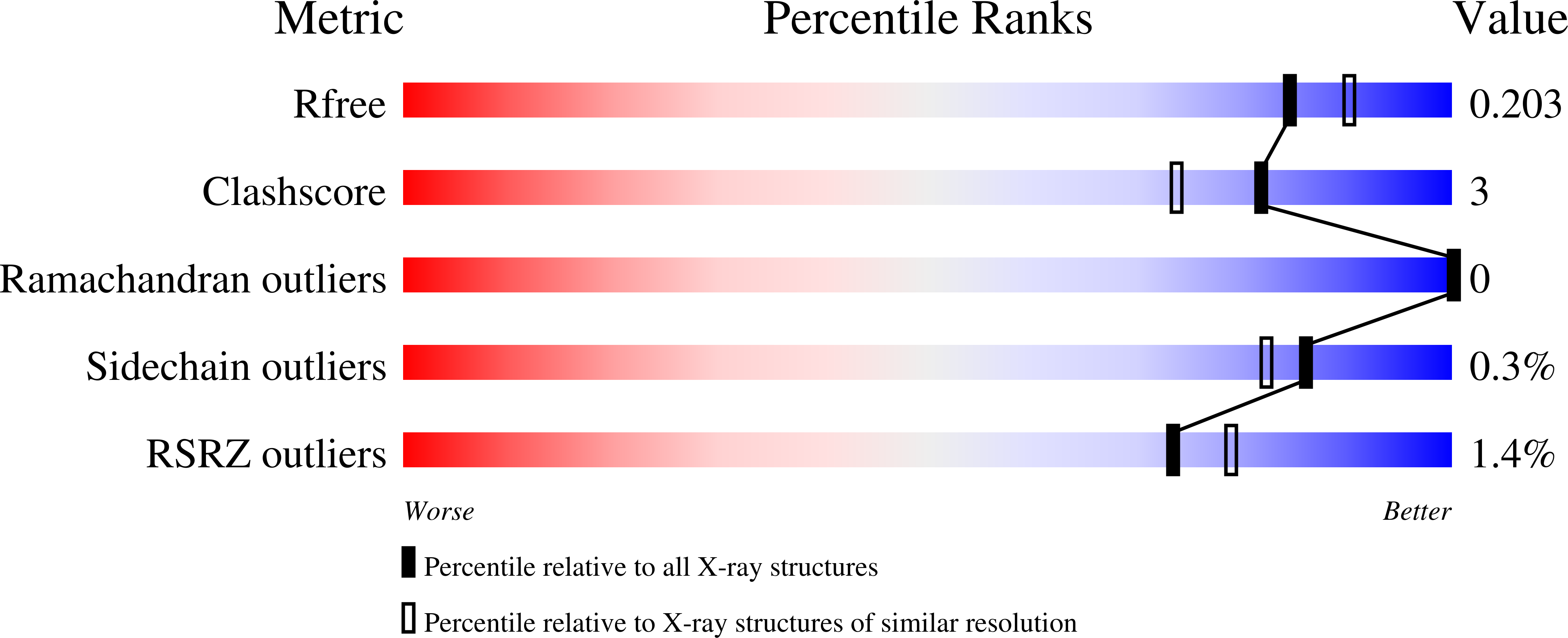
Resolution:
1.87 Å
R-Value Free:
0.20
R-Value Work:
0.17
R-Value Observed:
0.17
Space Group:
P 21 21 2
Macromolecular Entities
Structures with similar UniProt ID
Protein Blast
Polymer Type:polypeptide(L)
Molecule:Coproporphyrin III ferrochela
Gene (Uniprot):cpfC
Chain IDs:A
Chain Length:362
Number of Molecules:1
Biological Source:Corynebacterium diphtheriae NCTC 13129
Primary Citation
The [2Fe2S] cluster and active-site architecture of Corynebacterium diphtheriae coproporphyrin ferrochelatase: Structure, stability, and catalysis.
Int.J.Biol.Macromol. 369 152684 152684 (2026)
PMID: 42184855 DOI: 10.1016/j.ijbiomac.2026.152684

Abstact

Iron ferrochelatases (fCs) catalyse the insertion of ferrous iron into porphyrins. In the coproporphyrin-dependent heme biosynthesis pathway, utilized by Gram-positive bacteria, ferrochelatases are responsible for the penultimate step, yielding ferric iron coproporphyrin III (coproheme) starting from coproporphyrin III. Some representative fCs carry a [2Fe2S] cluster, like the coproporphyrin ferrochelatase (CpfC) from the actinobacterium Corynebacterium diphtheriae (Cd). The general role of the iron‑sulfur cluster, whether catalytic or else, is still unclear. Thus, we have studied (i) the structure of the protein and the [2Fe2S] cluster coordination in detail by UV-vis electronic absorption and resonance Raman spectroscopies as well as by solving the X-ray crystal structure of apoprotein (apo) - WT CdCpfC; (ii) active site variants to elucidate the role of a conserved distal histidine and glutamate pair for iron insertion and stabilization of the heme cavity. Our results show that the iron‑sulfur cluster is stably coordinated and that the type of the cluster, the nature of the ligands and the coordination motif are similar to those of human fC. The investigation of active site variants allows for a comprehensive comparison of the roles of conserved distal residues with those in previously studied coproporphyrin ferrochelatases from Firmicutes.

Legend

Protein

Chemical

Disease

Primary Citation of related structures
Feedback Form
Name
Email
Institute
Feedback