

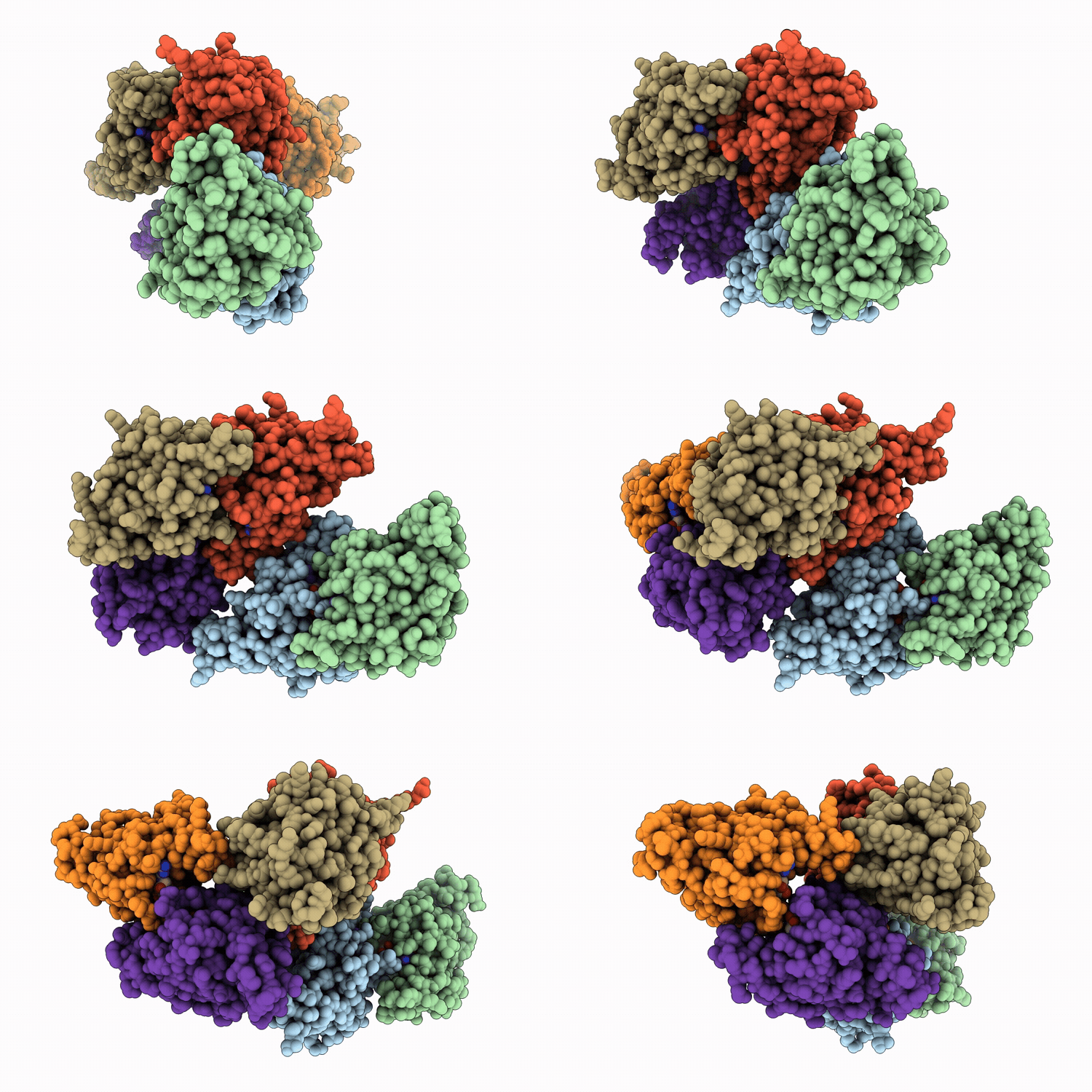
28NN image
Deposition Date 2026-02-10
Release Date 2026-03-18
Last Version Date 2026-06-03
Entry Detail
PDB ID:
28NN
Keywords:
Title:
RACB with GTPgS
Biological Source:
Source Organism(s):
Hordeum vulgare (Taxon ID: 4513)
Expression System(s):
Method Details:
Experimental Method:
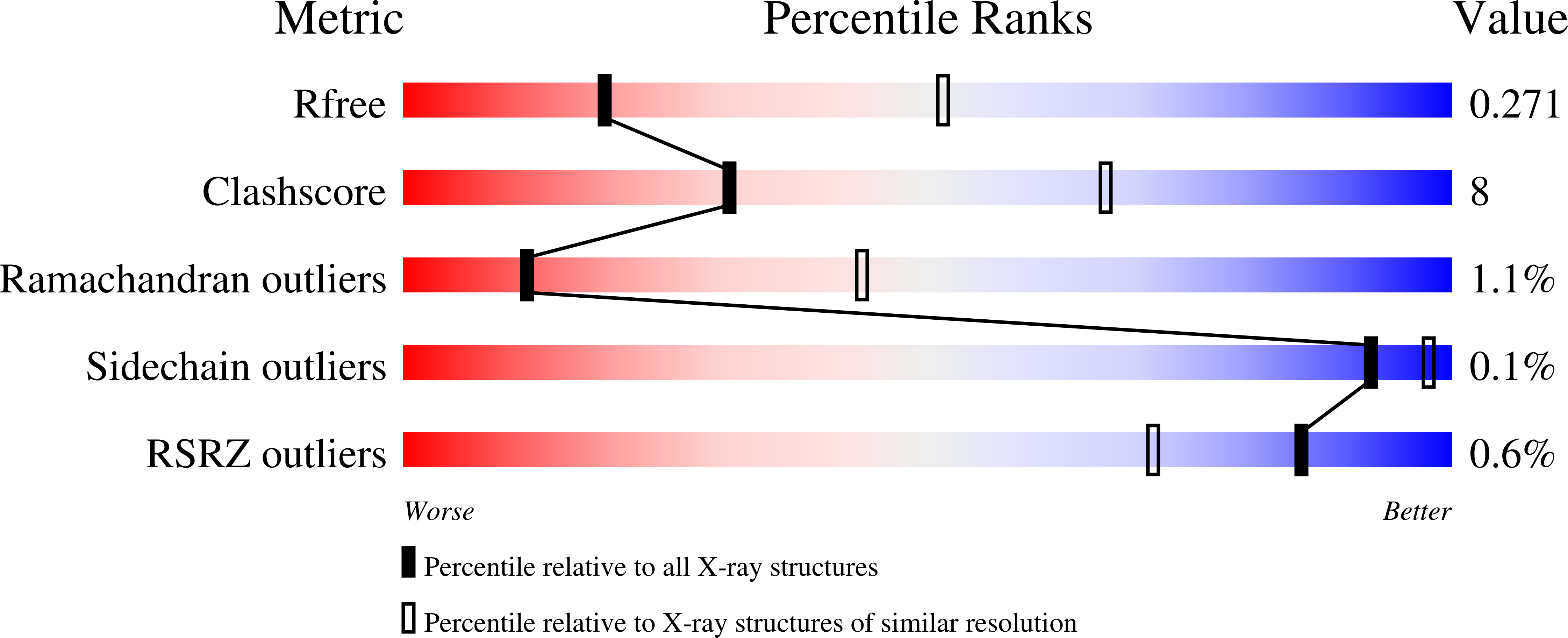
Resolution:
3.00 Å
R-Value Free:
0.27
R-Value Work:
0.21
R-Value Observed:
0.21
Space Group:
C 2 2 21
Macromolecular Entities
Structures with similar UniProt ID
Protein Blast
Polymer Type:polypeptide(L)
Molecule:RACB protein
Gene (Uniprot):pRacB
Chain IDs:A, B, C, D, E, F
Chain Length:200
Number of Molecules:6
Biological Source:Hordeum vulgare
Primary Citation
Nucleotide-dependent switching and RIPb effector recognition of the barley susceptibility factor RACB.
Commun Biol 9 ? ? (2026)
PMID: 42168353 DOI: 10.1038/s42003-026-10316-7

Abstact

ROP proteins are plant-specific members of the Rho family of small GTPases that orchestrate fundamental signaling pathways controlling cell polarity, directional growth, and immune responses. Although their biological importance is well established, the structural basis underlying their activation and interactions with downstream effectors has remained insufficiently understood. Here, we present an atomic-resolution structural analysis of RACB, a ROP GTPase from barley (Hordeum vulgare) that functions as a key susceptibility factor during fungal infection. Using an integrative approach combining X-ray crystallography, nuclear magnetic resonance spectroscopy, and hydrogen-deuterium exchange mass spectrometry, we capture high-resolution structural and dynamical snapshots of RACB in both its inactive and active conformations. This setup reveals the conformational flexibility and switching mechanism that are central to RACB function. Moreover, the structure of the complex between active RACB and its effector protein RIPb uncovers the fully activated state of RACB and identifies a conserved interaction motif within RIPb that mediates complex formation, providing mechanistic insights into how RIPb can link membrane-associated RACB to the microtubule cytoskeleton to facilitate membrane remodeling processes. These findings establish a detailed structural framework for plant Rho-type GTPase signaling and offer a molecular explanation for how pathogens exploit ROP-mediated pathways to promote infection in plants.

Legend

Protein

Chemical

Disease

Primary Citation of related structures
Feedback Form
Name
Email
Institute
Feedback