

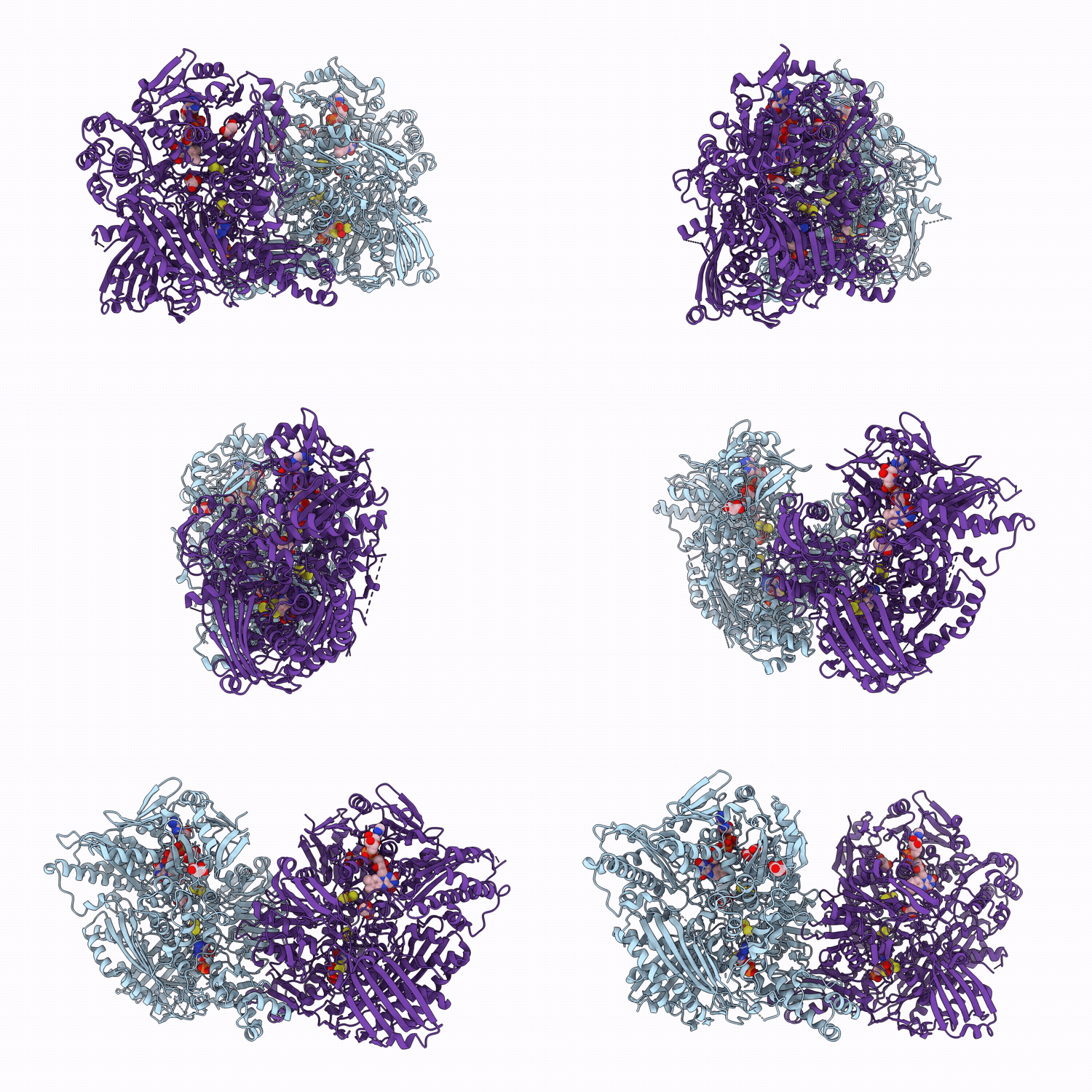
28MB image
Deposition Date 2026-02-06
Release Date 2026-07-29
Last Version Date 2026-08-19
Entry Detail
PDB ID:
28MB
Keywords:
Title:
Structure of Human Aldehyde oxidase under TCEP-reducing conditions
Biological Source:
Source Organism(s):
Homo sapiens (Taxon ID: 9606)
Expression System(s):
Method Details:
Experimental Method:
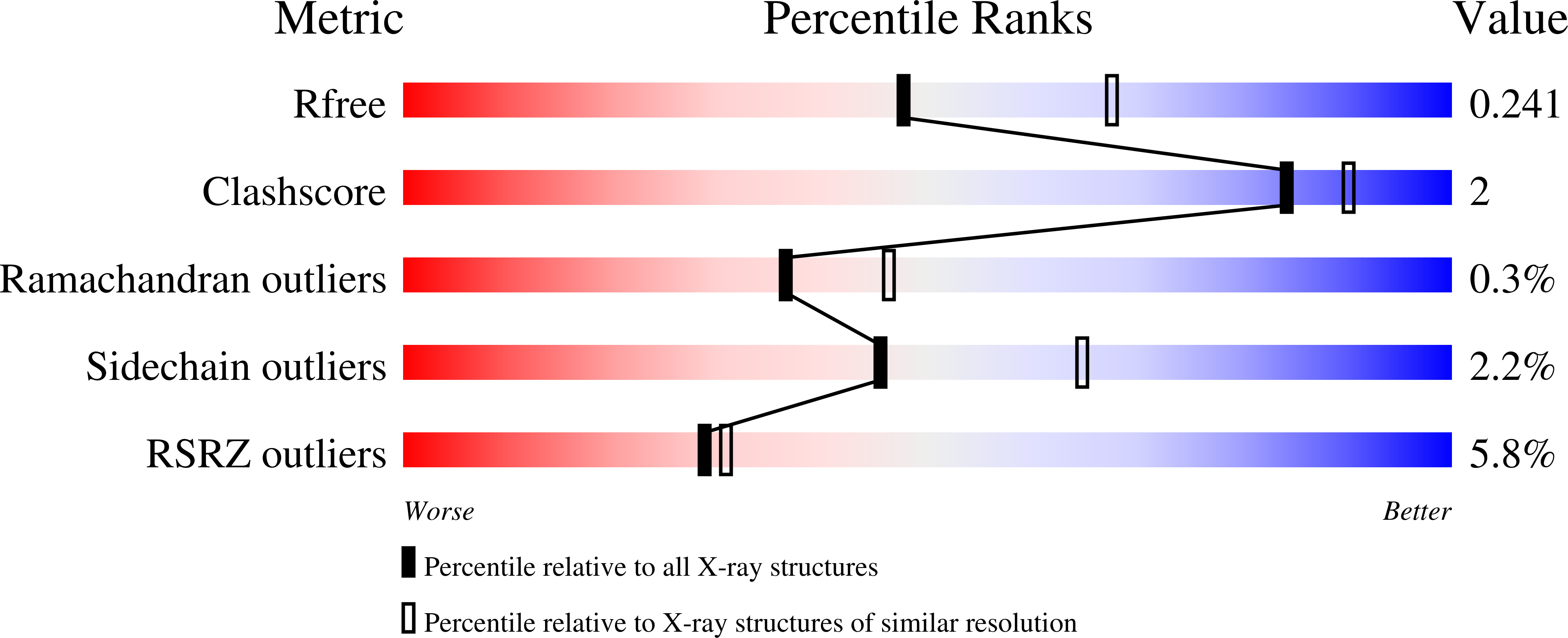
Resolution:
2.31 Å
R-Value Free:
0.24
R-Value Work:
0.20
Space Group:
P 21 21 2
Macromolecular Entities
Polymer Type:polypeptide(L)
Molecule:Aldehyde oxidase
Gene (Uniprot):AOX1
Mutagens:C161A,C165A,C170A,C171A,C179A,C180A
Chain IDs:A, B
Chain Length:1338
Number of Molecules:2
Biological Source:Homo sapiens
Primary Citation
Structure of human aldehyde oxidase under tris(2-carboxyethyl)phosphine reducing conditions.
Acta Crystallogr.,Sect.F 82 275 282 (2026)
PMID: 42504845 DOI: 10.1107/S2053230X26006904

Abstact

The importance of human aldehyde oxidase (hAOX1) has increased in recent decades due to its involvement in drug metabolism. Inhibition studies involving hAOX1 are extensive and a common reducing agent, dithiothreitol (DTT), was recently found to inactivate the enzyme. However, in previous crystallographic studies of hAOX1, DTT was found to be essential for crystallization. To surpass this concern, another reducing agent was used in crystallization trials. Using tris(2-carboxyethyl)phosphine (TCEP), a sulfur-free reducing agent, it was possible to obtain well ordered crystals of wild-type hAOX1 and a variant, hAOX1_6A, which diffracted beyond 2.3 A resolution. Instead of the typical star-shaped crystals of hAOX1, at pH 4.7 plates are obtained in the orthorhombic space group P2(1)2(1)2 with two molecules in the asymmetric unit. Activity assays with the enzyme incubated with both reducing agents show that in contrast to DTT, TCEP did not inactivate hAOX1. The replacement of DTT with TCEP in the crystallization of hAOX1 provides a strategy to circumvent enzyme inactivation during crystallographic studies, allowing future applications of new assays, such as time-resolved crystallography.

Legend

Protein

Chemical

Disease

Primary Citation of related structures
Feedback Form
Name
Email
Institute
Feedback