

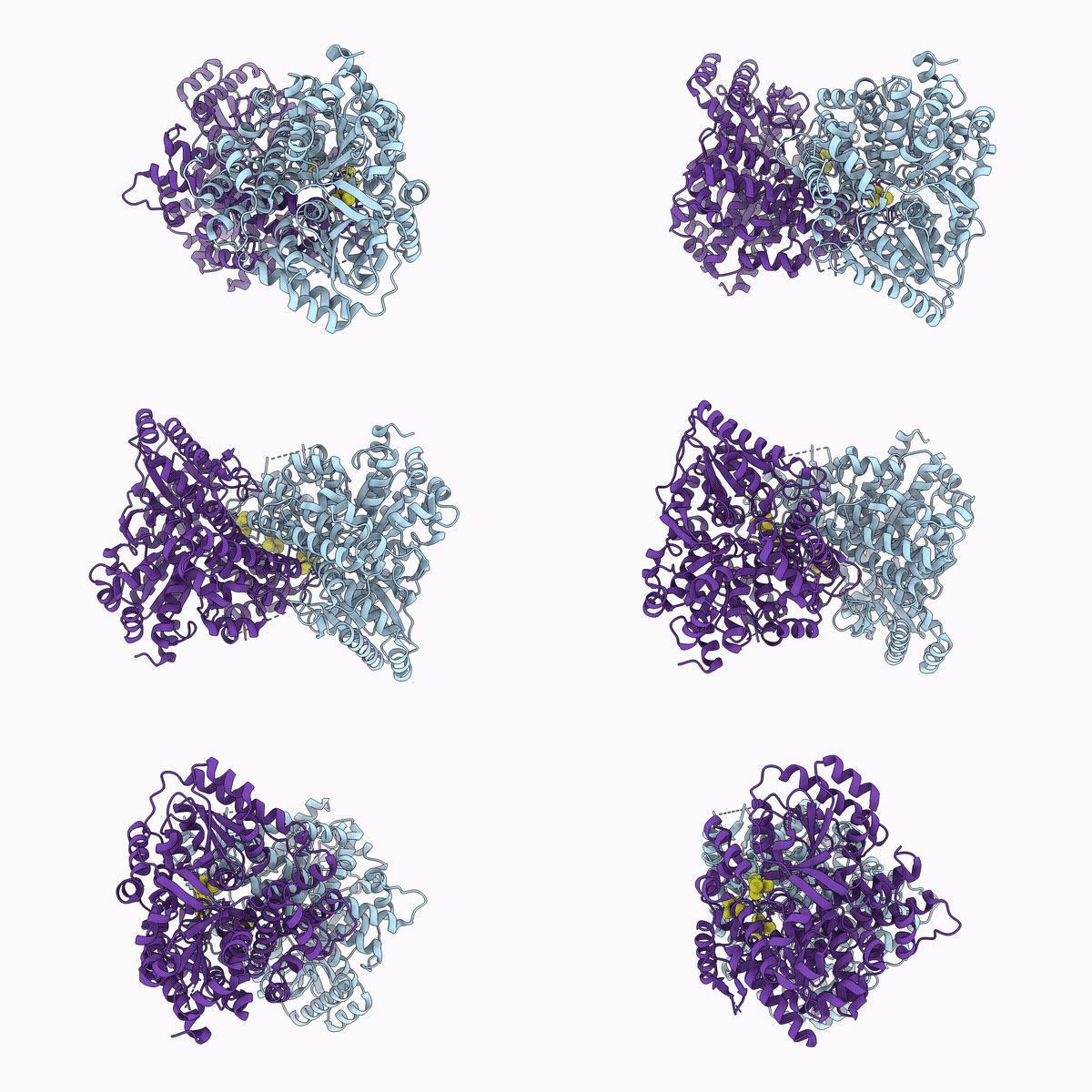
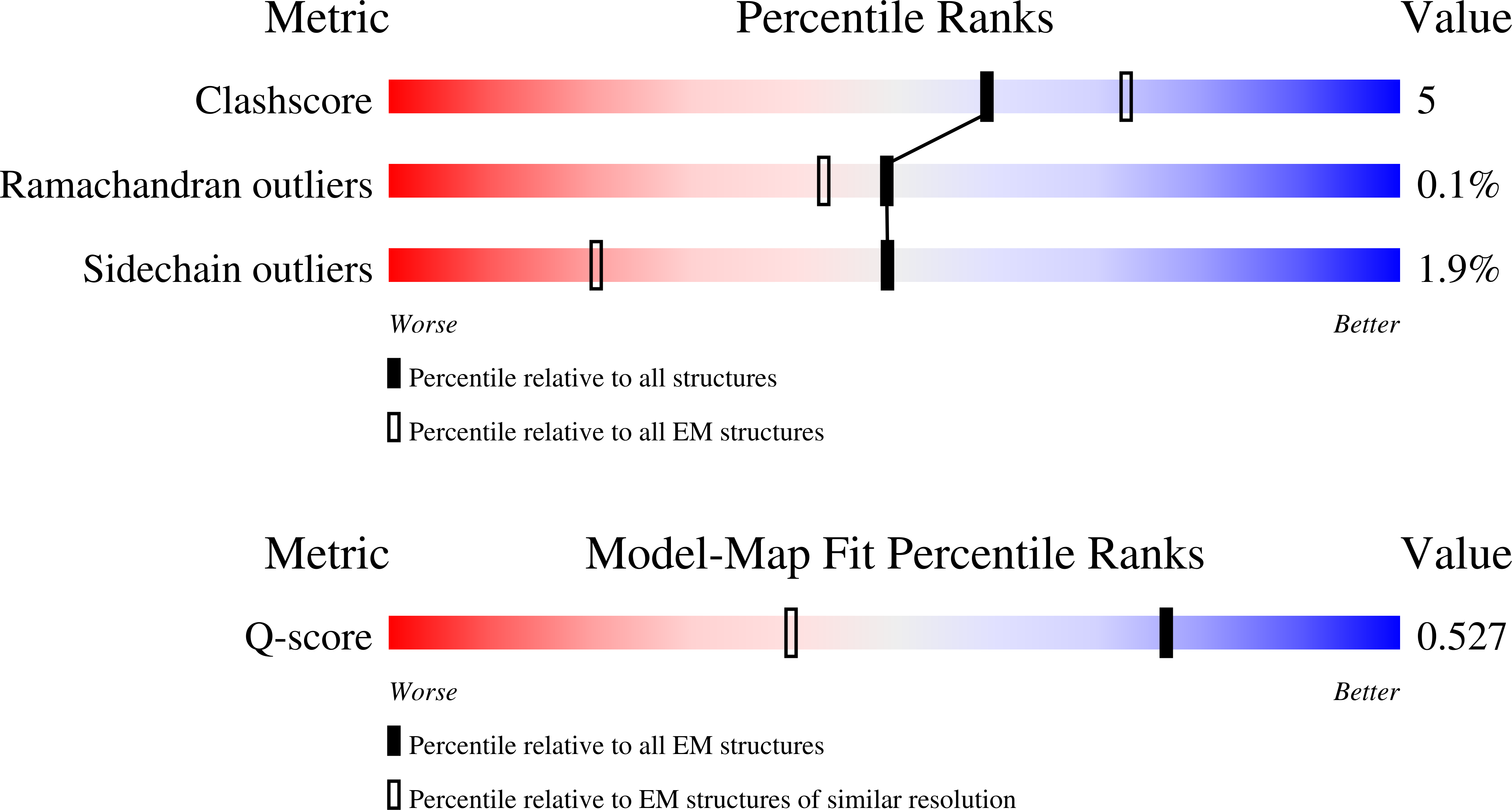
28LW image
Deposition Date 2026-02-06
Release Date 2026-09-23
Last Version Date 2026-09-23
Entry Detail
PDB ID:
28LW
Keywords:
Title:
CryoEM structure of carbon monoxide dehydrogenase from Ruminococcus flavefaciens
Biological Source:
Source Organism(s):
Expression System(s):
Method Details:
Experimental Method:
Resolution:
2.55 Å
Aggregation State:
PARTICLE
Reconstruction Method:
SINGLE PARTICLE
Macromolecular Entities
Polymer Type:polypeptide(L)
Molecule:anaerobic carbon-monoxide deh
Chain IDs:A, B
Chain Length:0
Number of Molecules:2
Biological Source:Ruminococcus flavefaciens ATCC 19208
Ligand Molecules
Primary Citation
Beyond Canonical CO Oxidation: Structural and Evolutionary Insights Into a Non-Canonical Carbon Monoxide Dehydrogenase.
Angew.Chem.Int.Ed.Engl. ? e1702233 e1702233 (2026)
PMID: 42495917 DOI: 10.1002/anie.1702233

Abstact

Carbon monoxide dehydrogenases (CODHs) catalyse the reversible oxidation of CO to CO(2) and play central roles in microbial carbon metabolism. While well-characterised CODHs from different phylogenetic backgrounds exhibit high bidirectional activity, the enigmatic clade B remains functionally uncharacterised. Here, we present the first structural and biochemical characterisation of a clade B CODH from Ruminococcus flavefaciens (RfCODH). It reveals striking divergence from canonical enzymes. A new anaerobic cryo-EM workflow was developed, carried out entirely under anoxic conditions by manual blotting and plunge freezing. It resulted in a 2.53 A RfCODH structure. The structure adopts the typical CODH fold, but exhibits blocked gas channels, a compromised proton transfer pathway and disrupted cofactor coordination. This provides a structural rationale for RfCODH's severely attenuated CO oxidation activity (13 mU/mg vs. 900 U/mg for the well-studied ChCODH-II). EPR spectroscopy reveals unique oxidised C-cluster states not previously characterised in CODHs. Mirror tree analysis hints to co-evolution between clade B CODHs and associated ABC transporter substrate-binding proteins, suggesting these enzymes function in metabolism of substrates imported via the ABC transporter module. All findings indicate evolutionary repurposing of the CODH scaffold for alternative physiological functions.

Legend

Protein

Chemical

Disease

Primary Citation of related structures
Feedback Form
Name
Email
Institute
Feedback