

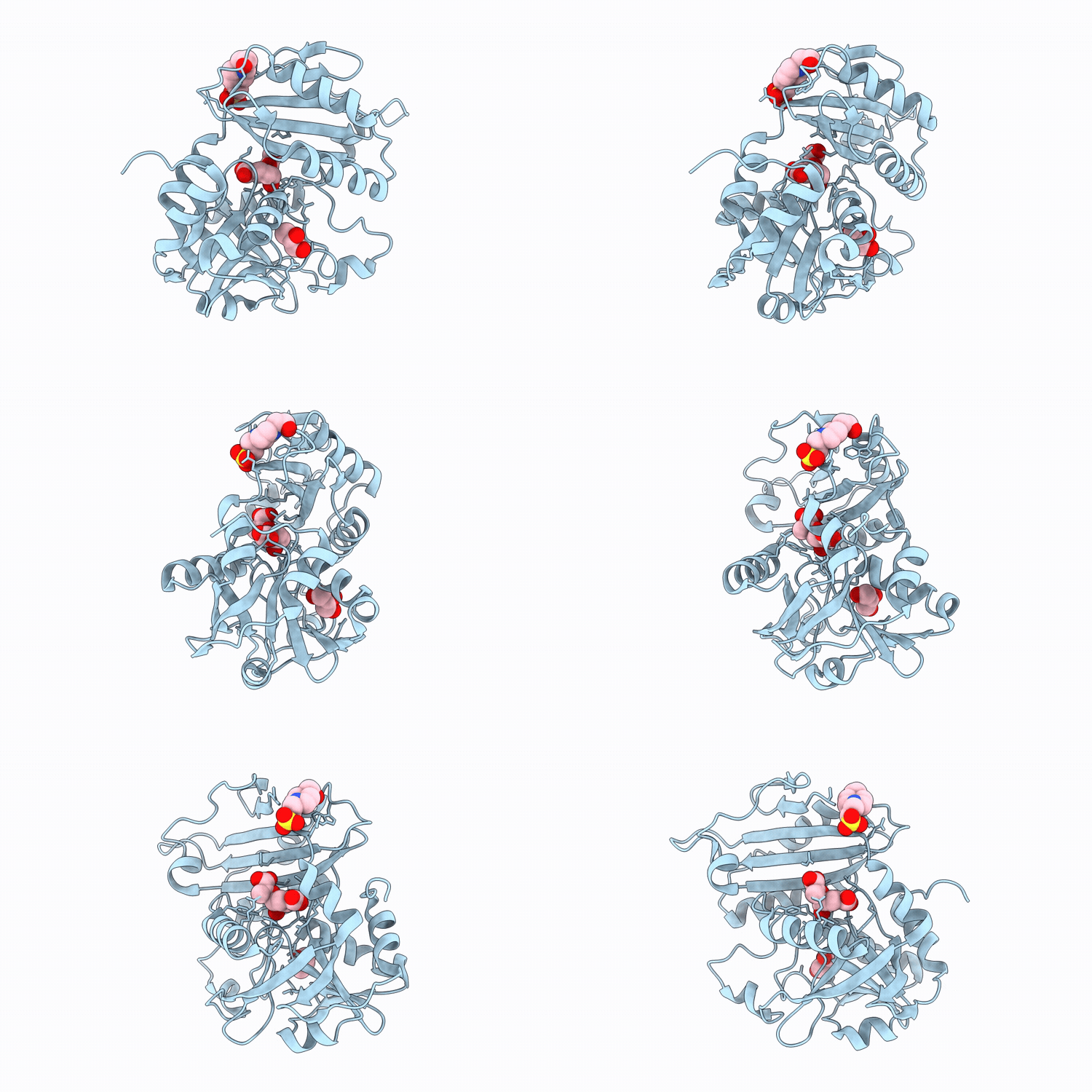
26TB image
Deposition Date 2026-05-14
Release Date 2026-05-27
Last Version Date 2026-10-21
Entry Detail
PDB ID:
26TB
Keywords:
Title:
Crystal structure of 4-Amino-4-deoxychorismate lyase from Micromonospora aurantiaca ATCC 27029 (holo form) in complex with chorismate
Biological Source:
Source Organism(s):
Expression System(s):
Method Details:
Experimental Method:
Resolution:
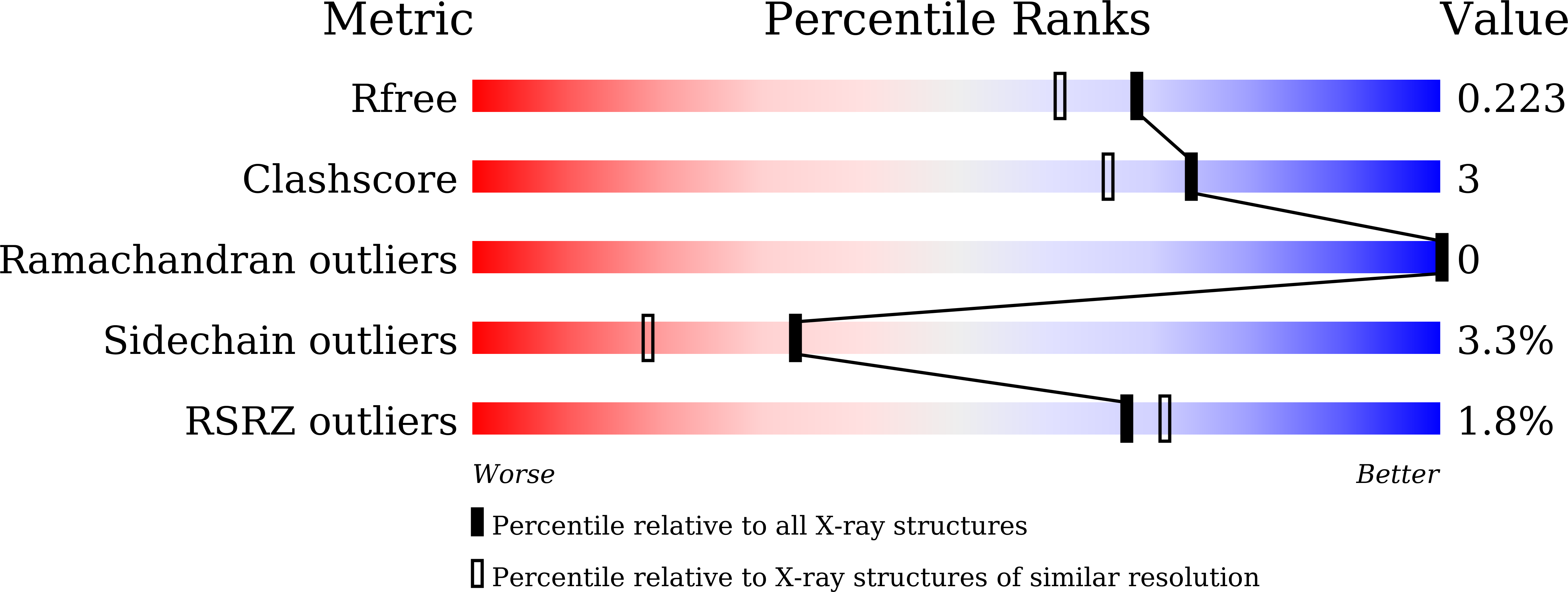
1.85 Å
R-Value Free:
0.21
R-Value Work:
0.16
R-Value Observed:
0.16
Space Group:
C 2 2 21
Macromolecular Entities
Polymer Type:polypeptide(L)
Molecule:4-Amino-4-deoxychorismate lya
Chain IDs:A
Chain Length:283
Number of Molecules:1
Biological Source:Micromonospora aurantiaca ATCC 27029
Primary Citation
Structural and mechanistic insights into catalytic promiscuity of PLP-dependent enzymes of fold type IV: A case study of aminodeoxychorismate lyase from Micromonospora aurantiaca.
Protein Sci. 35 e70813 e70813 (2026)
PMID: 42813584 DOI: 10.1002/pro.70813

Abstact

Pyridoxal-5'-phosphate (PLP)-dependent enzymes of fold type IV exhibit remarkable catalytic diversity, catalyzing either S- and R-selective transamination or beta-elimination within a highly conserved structural scaffold. Here, we report the identification, biochemical characterization, and structural analysis of PLP fold type IV 4-amino-4-deoxychorismate lyase (ADCL) from Micromonospora aurantiaca (Micau5708). Sequence-structural analysis revealed a hybrid architecture of the active site of Micau5708. It combines a D-amino acid transaminase (DATA) conserved phenylalanine (F30) and arginine (R87) residues with an ADCL-specific threonine residue (T32) and a (R)-selective amine transaminase-specific histidine residue (H25). While Micau5708 shows only ADCL activity, substitution H25R introduces transamination activity, preserving ADCL activity. The 1.85 A resolution crystal structure of Micau5708 in complex with substrate analog chorismate provides the first direct visualization of substrate binding in an ADCL active site. Site-directed mutagenesis, together with comparative analysis of DATAs of group II demonstrates that ADCL/DATA catalytic promiscuity is enabled by a specific amino acid combination in the active site: phenylalanine, threonine, and arginine residues (F30, T32, and R87), and arginine at position 25 with a flexible side chain. Furthermore, the Micau5708-chorismite complex structure has helped revise the catalytic mechanism of ADCLs, demonstrating the T32 assistance in protonation of the oxygen atom rather than the beta-methylene carbon of the leaving enol-pyruvate. Together, these findings provide new insights into the structural basis of reaction specificity, catalytic promiscuity, and evolutionary plasticity within the PLP fold type IV enzyme superfamily. They also highlight the limitations of sequence-based functional prediction.

Legend

Protein

Chemical

Disease

Primary Citation of related structures
Feedback Form
Name
Email
Institute
Feedback