

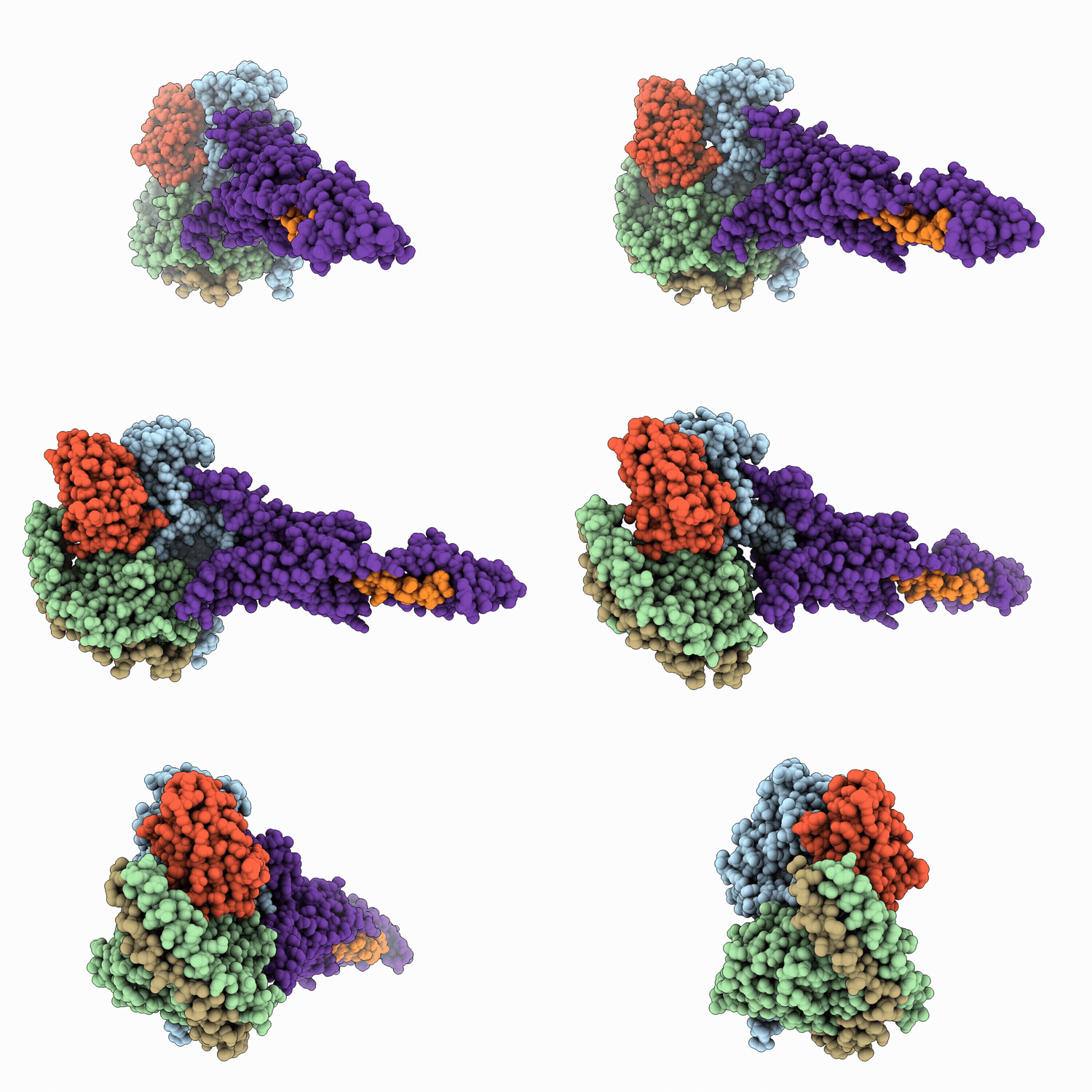
25NX image
Deposition Date 2026-04-10
Release Date 2026-06-03
Last Version Date 2026-06-17
Entry Detail
PDB ID:
25NX
Title:
A complex of PTH1R/Gs bound to a PTHrP analogue with three beta-amino acids
Biological Source:
Source Organism(s):
Homo sapiens (Taxon ID: 9606)
Lama glama (Taxon ID: 9844)
synthetic construct (Taxon ID: 32630)
Expression System(s):
Method Details:
Experimental Method:
Resolution:
2.86 Å
Aggregation State:
PARTICLE
Reconstruction Method:
SINGLE PARTICLE
Macromolecular Entities
Structures with similar UniProt ID
Protein Blast
Polymer Type:polypeptide(L)
Molecule:Guanine nucleotide-binding pr
Gene (Uniprot):GNAS
Chain IDs:A
Chain Length:394
Number of Molecules:1
Biological Source:Homo sapiens
Structures with similar UniProt ID
Protein Blast
Polymer Type:polypeptide(L)
Molecule:Guanine nucleotide-binding pr
Gene (Uniprot):GNB1
Chain IDs:B
Chain Length:340
Number of Molecules:1
Biological Source:Homo sapiens
Structures with similar UniProt ID
Protein Blast
Polymer Type:polypeptide(L)
Molecule:Guanine nucleotide-binding pr
Gene (Uniprot):GNG2
Chain IDs:C (auth: G)
Chain Length:58
Number of Molecules:1
Biological Source:Homo sapiens
Protein Blast
Polymer Type:polypeptide(L)
Molecule:Nanobody35
Chain IDs:D (auth: N)
Chain Length:156
Number of Molecules:1
Biological Source:Lama glama
Protein Blast
Polymer Type:polypeptide(L)
Molecule:Peptide 2 (PTHrP analogue)
Chain IDs:E (auth: P)
Chain Length:36
Number of Molecules:1
Biological Source:synthetic construct
Structures with similar UniProt ID
Protein Blast
Polymer Type:polypeptide(L)
Molecule:Parathyroid hormone/parathyro
Gene (Uniprot):PTH1R
Chain IDs:F (auth: R)
Chain Length:616
Number of Molecules:1
Biological Source:Homo sapiens
Ligand Molecules
Primary Citation
Altered Intracellular Trafficking as a Mechanism for Prolonged Duration of G Protein-Coupled Receptor Activation.
J.Am.Chem.Soc. 148 22045 22061 (2026)
PMID: 42159093 DOI: 10.1021/jacs.6c02192

Abstact

G protein-coupled receptors (GPCRs) mediate information transfer to cells from the surrounding environment. In most cases, signaling is initiated or amplified when the receptor binds to an agonist, an event that alters the conformational profile of the receptor. Signal transduction results from interaction between the agonist-receptor complex and cytosolic partners such as G proteins, GPCR kinases (GRKs), and beta-arrestins. Changes in agonist structure can lead to "signal bias", i.e., changes in the relative strength of signaling involving different partners. Some GPCRs, including those activated by long peptide hormones, continue to signal after internalization. In these cases, changes in agonist structure can lead to changes in the relative extent of signaling from different sites, e.g., cell surface vs endosomes ("location bias"). Many GPCRs are targets of approved drugs or drug candidates, and tuning signal bias and/or location bias is widely considered to be important for optimizing therapeutic profiles. Here we report another mechanism of modulating outcome via agonist modification: alteration of intracellular trafficking. The synthetic peptide agonist designated SPT, which contains five beta-amino acid residues, was previously shown to activate the parathyroid hormone receptor-1 (PTH1R) and cause prolonged signaling in mice by an unknown mechanism. The SPT-PTH1R complex continues to stimulate cAMP production after internalization. We now find that the SPT-PTH1R complex impairs the sorting of early endosomes into recycling endosomes relative to the receptor complexed to the drug teriparatide. These findings suggest that altering intracellular GPCR trafficking patterns represents an unappreciated strategy for achieving prolonged action in vivo.

Legend

Protein

Chemical

Disease

Primary Citation of related structures
Feedback Form
Name
Email
Institute
Feedback