

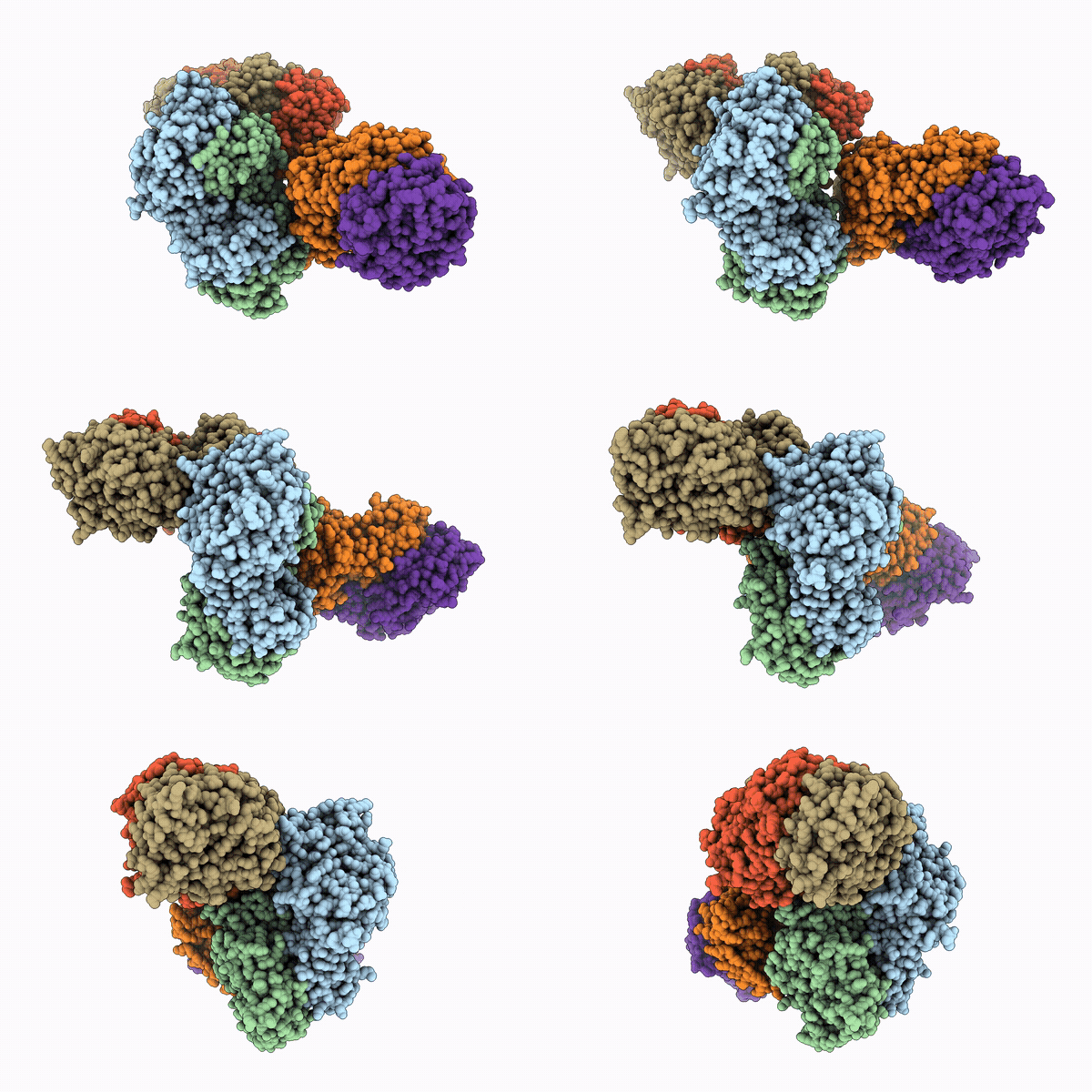
25MN image
Deposition Date 2026-04-09
Release Date 2026-10-07
Last Version Date 2026-10-14
Entry Detail
PDB ID:
25MN
Keywords:
Title:
Lysine racemase TM1597
Biological Source:
Source Organism(s):
Expression System(s):
Method Details:
Experimental Method:
Resolution:
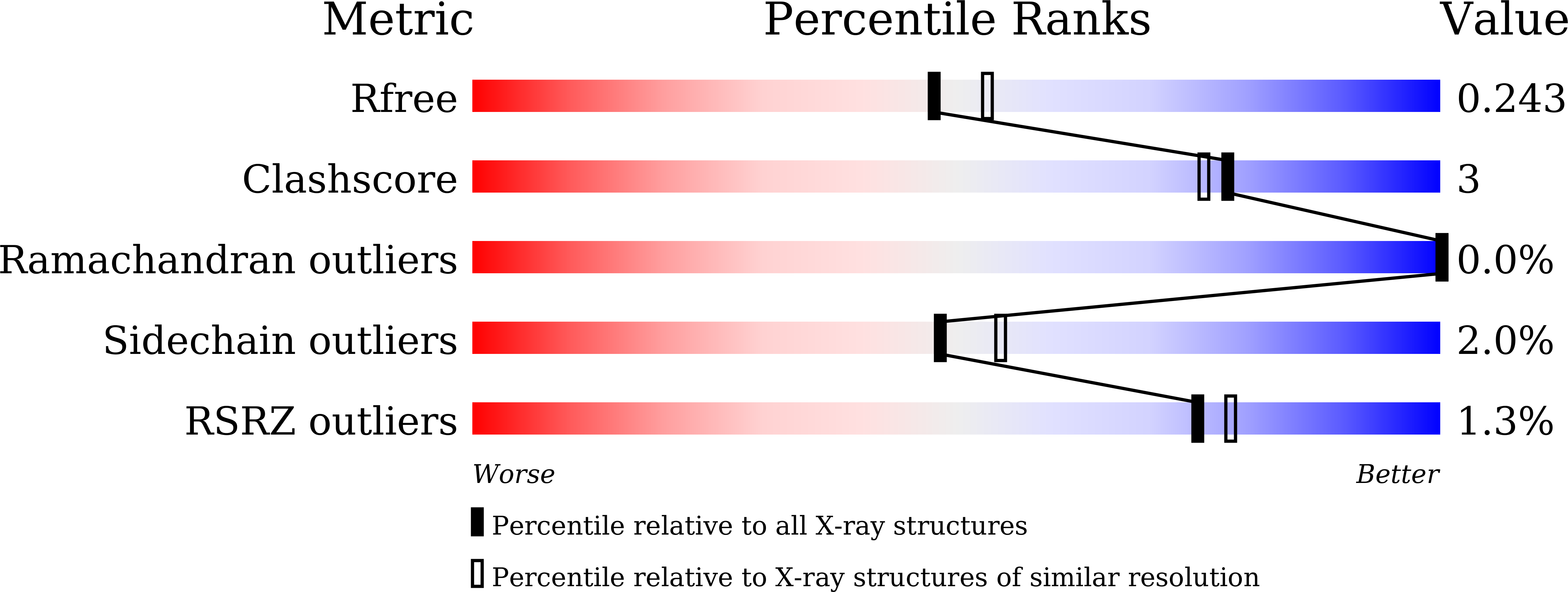
2.15 Å
R-Value Free:
0.23
R-Value Work:
0.17
R-Value Observed:
0.17
Space Group:
P 21 21 21
Macromolecular Entities
Polymer Type:polypeptide(L)
Molecule:Lysine racemase
Gene (Uniprot):TM_1597
Chain IDs:A, B (auth: C), C (auth: F), D, E, F (auth: B)
Chain Length:364
Number of Molecules:6
Biological Source:Thermotoga maritima MSB8
Modified Residue
Compound ID Chain ID Parent Comp ID Details 2D Image
LLP A, B, C, D, E, F LYS modified residue
Primary Citation
Elucidation of d-alanine biosynthetic pathways in the hyperthermophiles: Characterization of alanine racemase from Thermus thermophilus and the structure and dual physiological functions of lysine racemase from Thermotoga maritima.
Arch.Biochem.Biophys. 786 111010 111010 (2026)
PMID: 42767480 DOI: 10.1016/j.abb.2026.111010

Abstact

The hyperthermophilic bacterium Thermotoga maritima contains a peptidoglycan comprising d-alanine, d-glutamate, and d-lysine. We have previously identified the biosynthetic pathways of d-lysine and d-glutamate; however, the biosynthetic pathway of d-alanine is unclear in T. maritima. The present study elucidated the d-alanine biosynthetic pathway in T. maritima, following the characterization of the TTHA0062 activity, constructed a TTHA0062 (encoding alanine racemase)-deficient Thermus thermophilus (DeltaTTHA0062) strain. TTHA0062 exhibited the racemase activity toward 10 amino acids including Ala, and the catalytic efficiency of l-alanine was twofold higher than that of d-alanine. Regarding the T. maritima genes introduced into the genome of the DeltaTTHA0062 strain, TM1597 (lysine racemase) completely restored the growth, TM1270 (multifunctional enzyme) resulted in partial restoration, whereas TM0831 (d-amino acid aminotransferase) had no effect, suggesting that TM1597 and TM1270 are involved in d-alanine biosynthesis in T. maritima. Furthermore, we determined the crystal structure of TM1597 in the internal aldimine form, in which pyridoxal 5'-phosphate (PLP) forms a Schiff base linkage with the active site residue Lys36, and revealed the residues crucial for the catalytic reaction by TM1597 mutational analysis.

Legend

Protein

Chemical

Disease

Primary Citation of related structures
Feedback Form
Name
Email
Institute
Feedback