

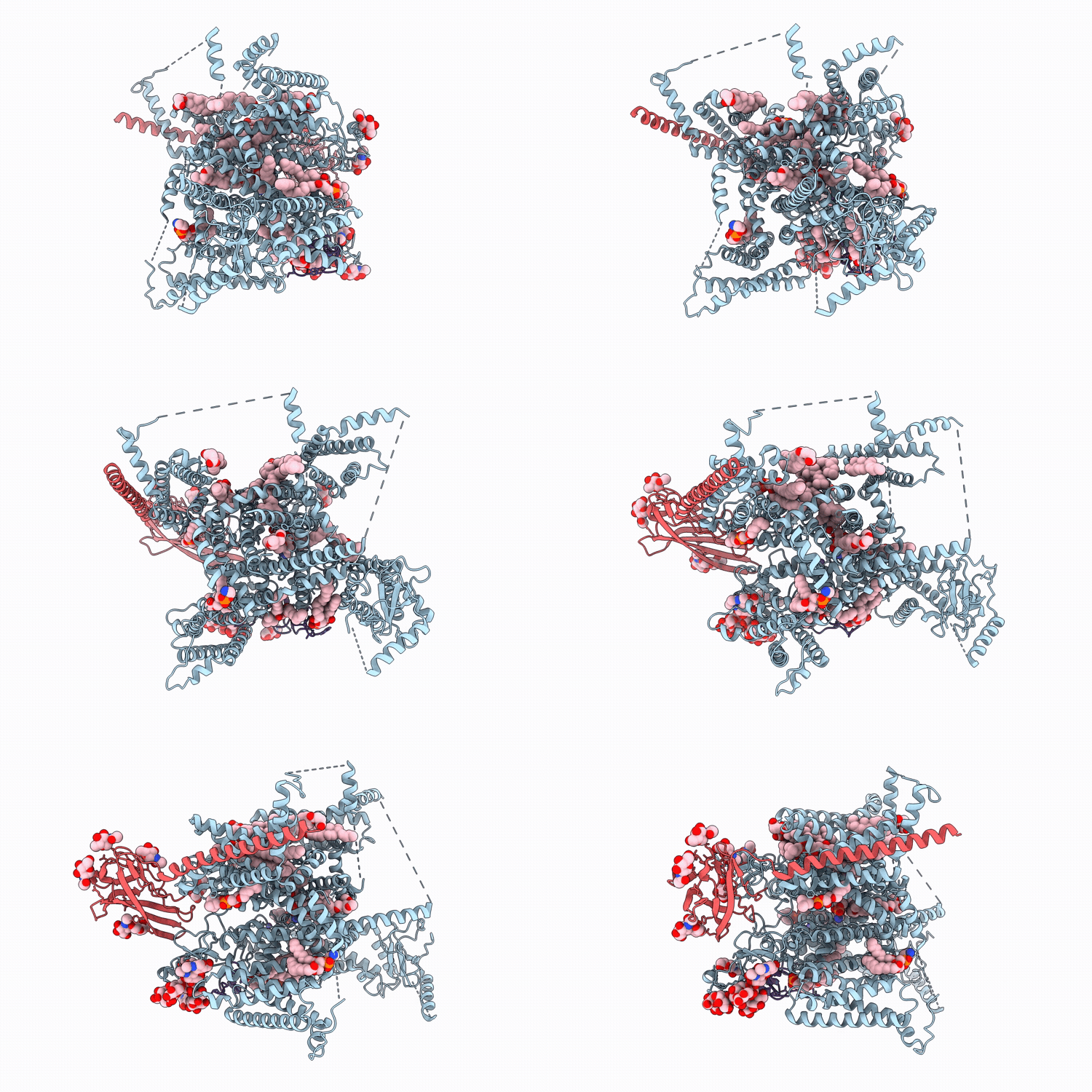
25II image
Deposition Date 2026-04-06
Release Date 2026-05-20
Last Version Date 2026-06-24
Entry Detail
PDB ID:
25II
Title:
Cryo-EM structure of human Nav1.6 in complex with Iota-Conotoxin RXIA
Biological Source:
Source Organism(s):
Homo sapiens (Taxon ID: 9606)
Conus radiatus (Taxon ID: 61198)
Expression System(s):
Method Details:
Experimental Method:
Resolution:
2.50 Å
Aggregation State:
PARTICLE
Reconstruction Method:
SINGLE PARTICLE
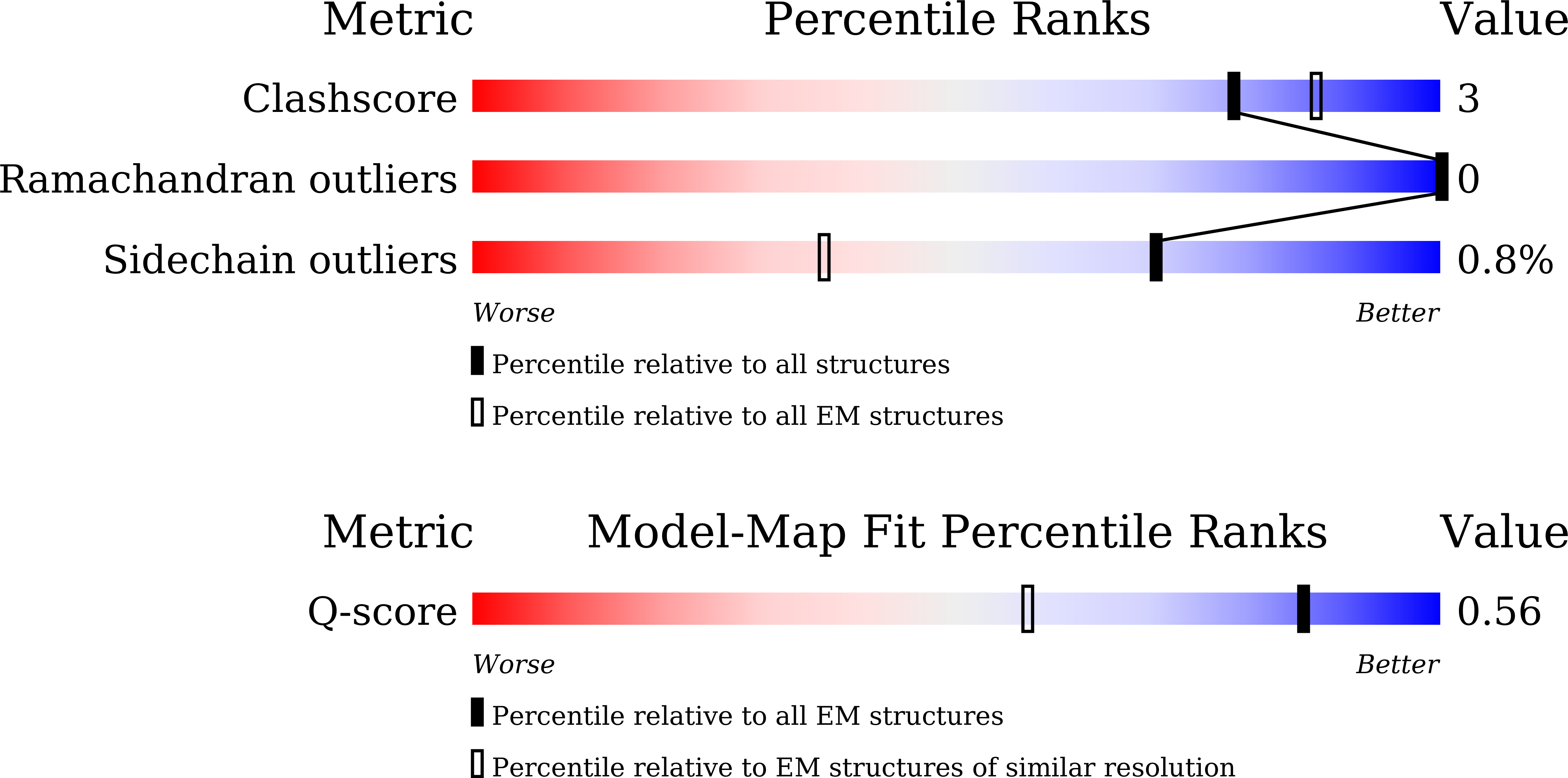
Macromolecular Entities
Polymer Type:polypeptide(L)
Molecule:Sodium channel protein type 8
Gene (Uniprot):SCN8A
Chain IDs:A
Chain Length:1980
Number of Molecules:1
Biological Source:Homo sapiens
Polymer Type:polypeptide(L)
Molecule:Sodium channel regulatory sub
Gene (Uniprot):SCN1B
Chain IDs:B (auth: C)
Chain Length:218
Number of Molecules:1
Biological Source:Homo sapiens
Polymer Type:polypeptide(L)
Molecule:Iota-conotoxin RXIA
Chain IDs:C (auth: D)
Chain Length:46
Number of Molecules:1
Biological Source:Conus radiatus
Modified Residue
Compound ID Chain ID Parent Comp ID Details 2D Image
HYP C PRO modified residue
Primary Citation
Diverse binding poses of agonistic neurotoxins on human Na v 1.6.
Nature ? ? ? (2026)
PMID: 42271061 DOI: 10.1038/s41586-026-10661-x

Abstact

Voltage-gated sodium (Na(v)) channels are key targets of various venomous toxins. Deciphering the binding poses and mechanisms of action of representative toxins will help to dissect the functional mechanism of the channels and facilitate therapeutic development targeting Na(v) channels(1,2). Here we present cryo-electron microscopy (cryo-EM) structures of distinct binding poses of three agonistic peptide toxins on the human Na(v)1.6-beta1 channel complex. The globular beta-scorpion toxin Cn2 nestles between the extracellular segment of voltage-sensing domain (VSD) in the second repeat of the Na(v)1.6 core alpha-unit (VSD(II)) and the pore extracellular loops in the third repeat of the Na(v)1.6 core alpha-unit (ECL(III)), where it is stabilized by interactions with both protein regions and the branched N1372-glycan. Cone snail iota-conotoxin RXIA adopts an elongated conformation, spanning VSD(I) and VSD(IV) to wrap around the shoulder of the pore domain (PD). The bullet ant-derived toxin delta-paraponeritoxin-Pc1a exists as a transmembrane helix that stands between VSD(II) and PD(III). Our findings, corroborated by functional characterizations, illustrate the diversity in peptide toxin binding poses and mechanisms of action, link stabilization of the up state of VSD(I) or VSD(II) to channel activation, and provide clues to the rational design of selective Na(v) channel modulators.

Legend

Protein

Chemical

Disease

Primary Citation of related structures
Feedback Form
Name
Email
Institute
Feedback