

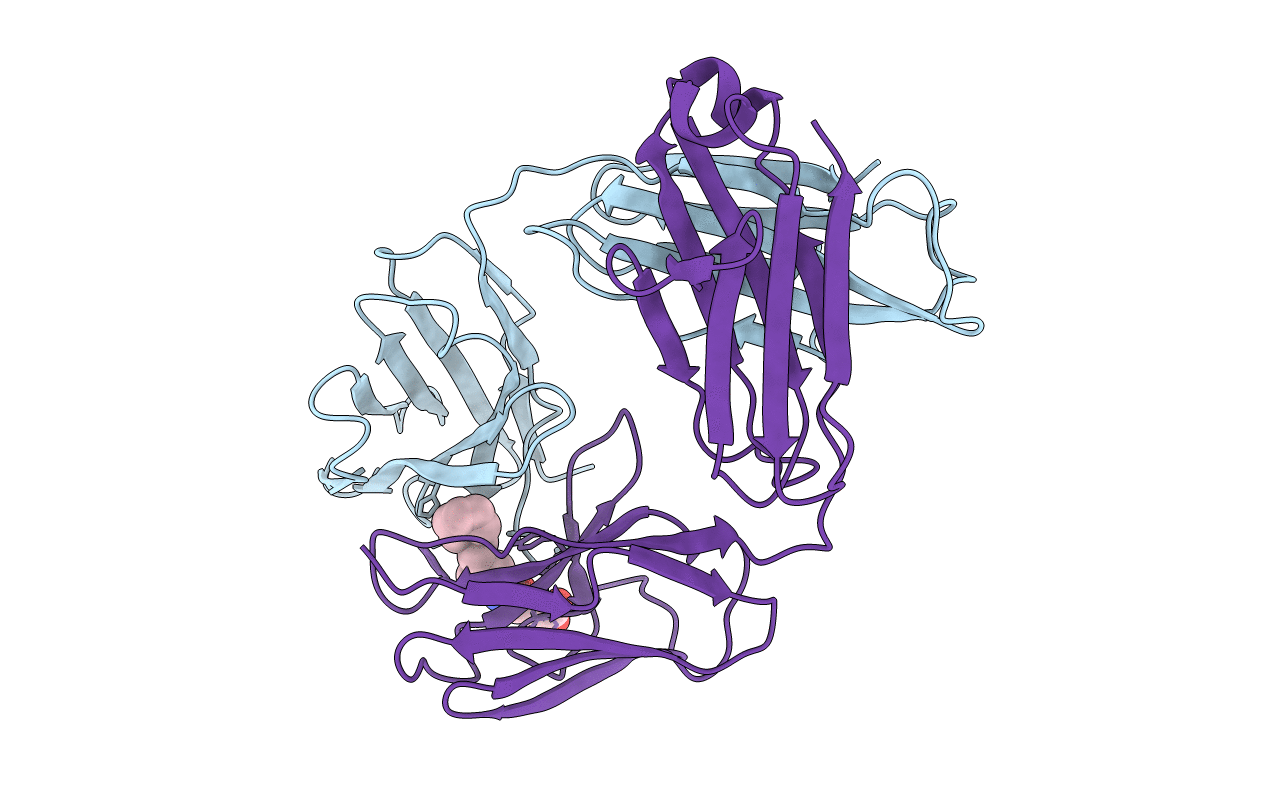
25C8 image
Deposition Date 1998-03-18
Release Date 1999-03-23
Last Version Date 2024-11-20
Entry Detail
PDB ID:
25C8
Title:
CATALYTIC ANTIBODY 5C8, FAB-HAPTEN COMPLEX
Biological Source:
Source Organism(s):
Mus musculus (Taxon ID: 10090)
Method Details:
Experimental Method:
Resolution:
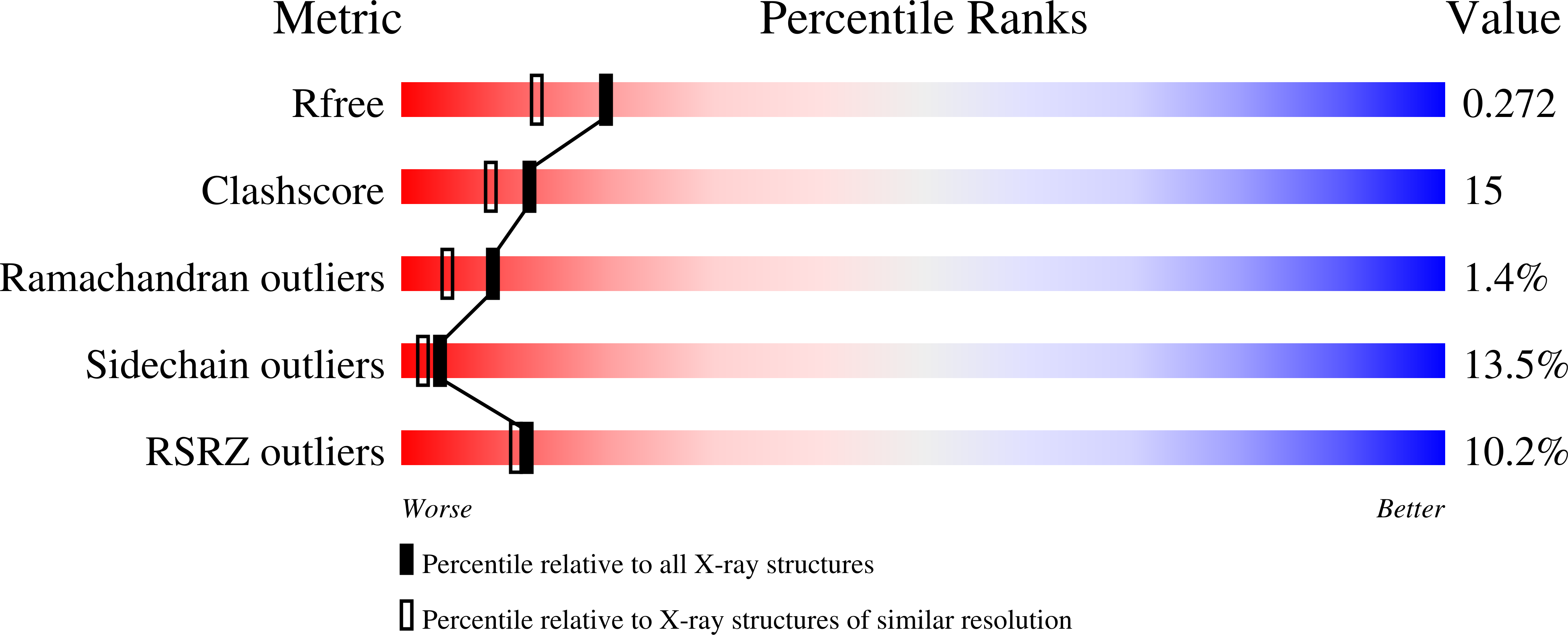
2.00 Å
R-Value Free:
0.29
R-Value Work:
0.22
R-Value Observed:
0.22
Space Group:
C 1 2 1
Macromolecular Entities
Polymer Type:polypeptide(L)
Molecule:IGG 5C8
Gene (Uniprot):Ighg1
Chain IDs:B (auth: H)
Chain Length:217
Number of Molecules:1
Biological Source:Mus musculus
Polymer Type:polypeptide(L)
Molecule:IGG 5C8
Gene (Uniprot):Igkc
Chain IDs:A (auth: L)
Chain Length:212
Number of Molecules:1
Biological Source:Mus musculus
Ligand Molecules
Primary Citation
Structural basis for antibody catalysis of a disfavored ring closure reaction.
Biochemistry 38 7062 7074 (1999)
PMID: 10353817 DOI: 10.1021/bi990210s

Abstact

The catalysis of disfavored chemical reactions, especially those with no known natural enzyme counterparts, is one of the most promising achievements of catalytic antibody research. Antibodies 5C8, 14B9, 17F6, and 26D9, elicited by two different transition-state analogues, catalyze disfavored endo-tet cyclization reactions of trans-epoxy alcohols, in formal violation of Baldwin's rules for ring closure. Thus far, neither chemical nor enzyme catalysis has been capable of emulating the extraordinary activity and specificity of these antibodies. X-ray structures of two complexes of Fab 5C8 with the original hapten and with an inhibitor have been determined to 2.0 A resolution. The Fab structure has an active site that contains a putative catalytic diad, consisting of AspH95 and HisL89, capable of general acid/base catalysis. The stabilization of a positive charge that develops along the reaction coordinate appears to be an important factor for rate enhancement and for directing the reaction along the otherwise disfavored pathway. Sequence analysis of the four catalytic antibodies, as well as four inactive antibodies that strongly bind the transition-state analogues, suggests a conserved catalytic mechanism. The occurrence of the putative base HisL89 in all active antibodies, its absence in three out of the four analyzed inactive antibodies, and the rarity of a histidine at this position in immunoglobulins support an important catalytic role for this residue.

Legend

Protein

Chemical

Disease

Primary Citation of related structures
Feedback Form
Name
Email
Institute
Feedback