

24XN image
Deposition Date 2026-03-23
Release Date 2026-05-06
Last Version Date 2026-05-13
Entry Detail
PDB ID:
24XN
Keywords:
Title:
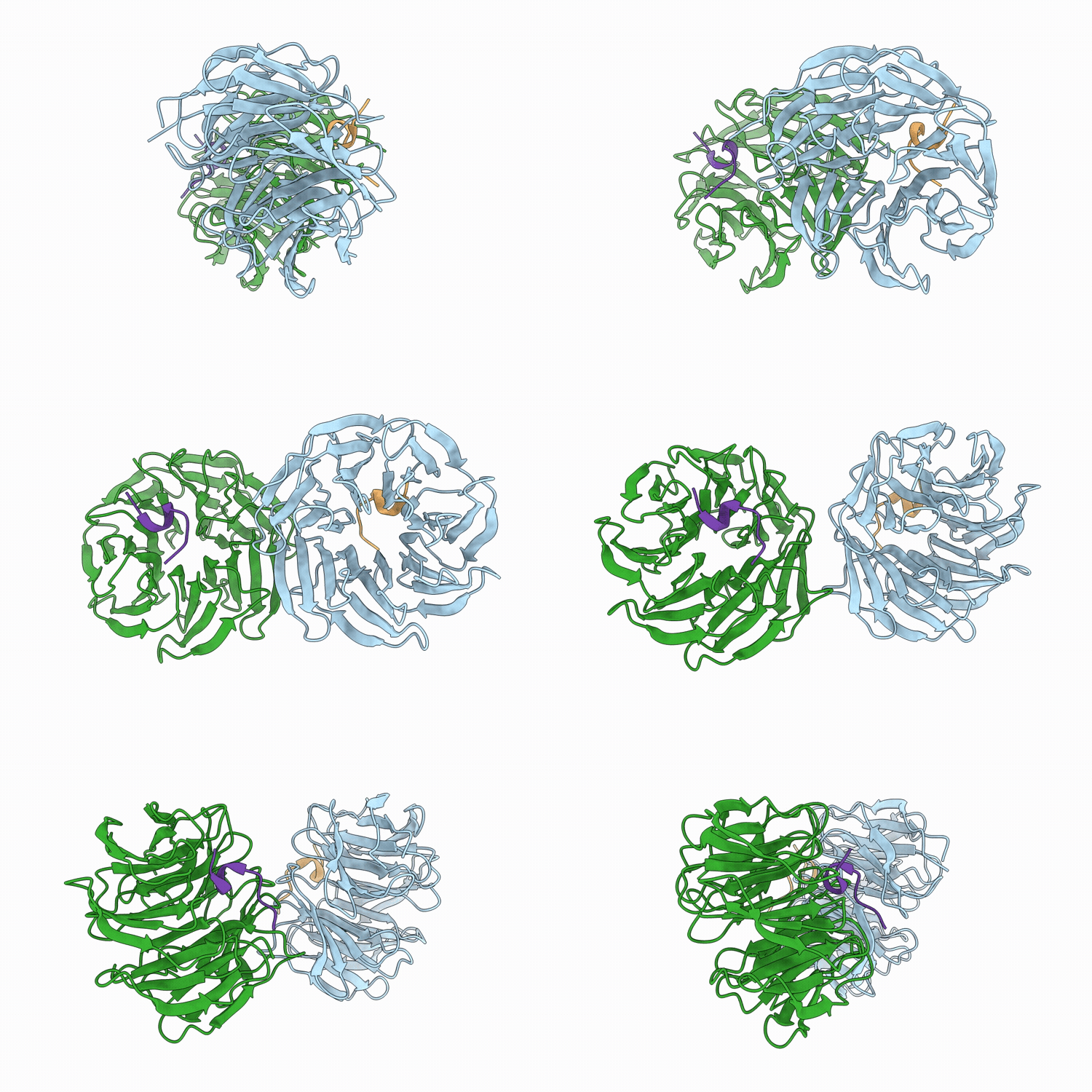
Structure of WDR5 F263A variant in complex with MBD3C
Biological Source:
Source Organism(s):
Homo sapiens (Taxon ID: 9606)
Mus musculus (Taxon ID: 10090)
Method Details:
Experimental Method:
Resolution:
1.57 Å
R-Value Free:
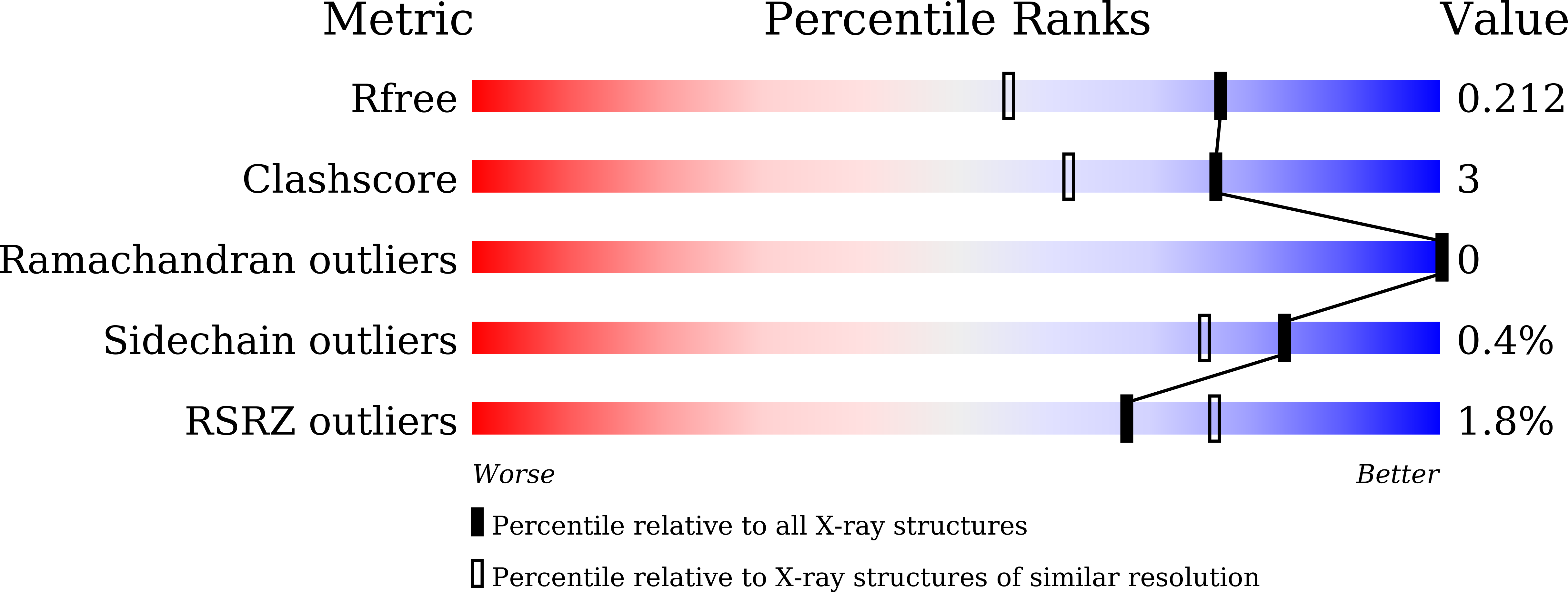
0.21
R-Value Work:
0.19
R-Value Observed:
0.19
Space Group:
P 1 21 1
Macromolecular Entities
Structures with similar UniProt ID
Protein Blast
Polymer Type:polypeptide(L)
Molecule:WD repeat-containing protein
Gene (Uniprot):WDR5
Chain IDs:A, C (auth: B)
Chain Length:315
Number of Molecules:2
Biological Source:Homo sapiens
Protein Blast
Polymer Type:polypeptide(L)
Molecule:Methyl-CpG-binding domain pro
Chain IDs:B (auth: C), D
Chain Length:12
Number of Molecules:2
Biological Source:Mus musculus
Primary Citation
Water-mediated compensation preserves WIN motif binding in WDR5 aromatic mutants.
Biochem.Biophys.Res.Commun. 819 153842 153842 (2026)
PMID: 42048953 DOI: 10.1016/j.bbrc.2026.153842

Abstact

WD repeat-containing protein 5 (WDR5) recognizes canonical arginine-containing WDR5-interacting (WIN) motifs through a highly conserved binding pocket, in which WDR5 Phe133 and Phe263 are thought to stabilize the central arginine via cation-pi interactions. Here, we re-evaluate the contribution of these residues using the MBD3C WIN peptide, which exhibits dual-site engagement with the WIN and B pockets. Isothermal titration calorimetry reveals that WDR5 F133A and F263A variants retain robust binding affinity to MBD3C, with only an approximately twofold reduction in affinity for F133A and a modest increase for F263A compared to wild-type WDR5. Crystal structures of both variant complexes at 1.30 A and 1.57 A resolution reveal that the peptide adopts a canonical binding mode despite disruption of the aromatic cage. The cavities created by phenylalanine-to-alanine substitutions are occupied by newly recruited, well-ordered water molecules that integrate into the conserved hydration network and form compensatory hydrogen-bonding interactions with the arginine side chain. These results indicate that Phe133 and Phe263 are not strictly required for WIN motif recognition in this context and demonstrate that solvent-mediated interactions can stabilize ligand binding in the absence of canonical cation-pi contacts. Together, these findings highlight the adaptability of the WDR5 WIN binding pocket and provide a refined framework for understanding ligand recognition.

Legend

Protein

Chemical

Disease

Primary Citation of related structures
Feedback Form
Name
Email
Institute
Feedback