

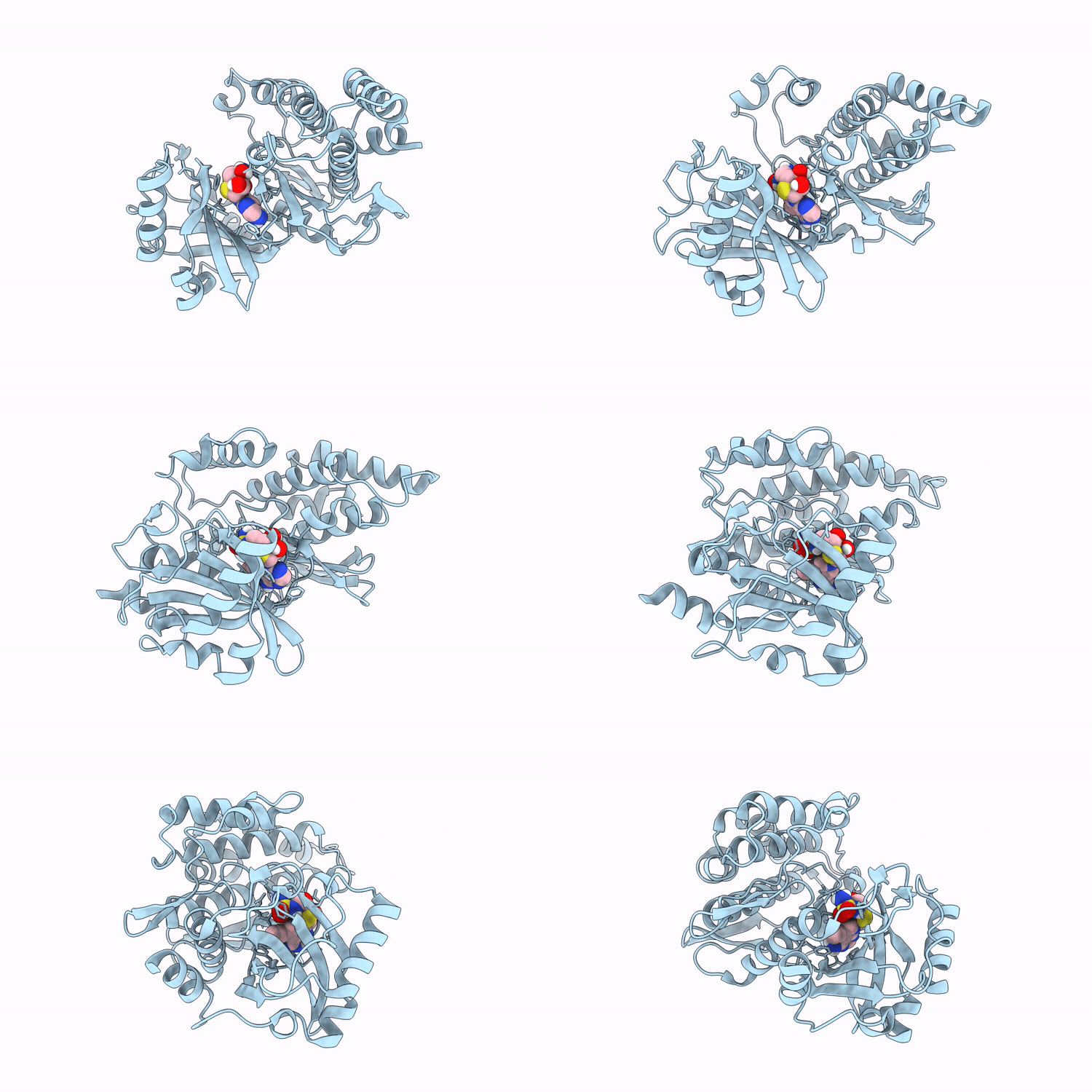
24WC image
Deposition Date 2026-03-23
Release Date 2026-06-24
Last Version Date 2026-06-24
Entry Detail
PDB ID:
24WC
Keywords:
Title:
Crystal structure of Haspin (GSG2) with an ATP-mimicking inhibitor LJ-5242
Biological Source:
Source Organism(s):
Homo sapiens (Taxon ID: 9606)
Expression System(s):
Method Details:
Experimental Method:
Resolution:
1.88 Å
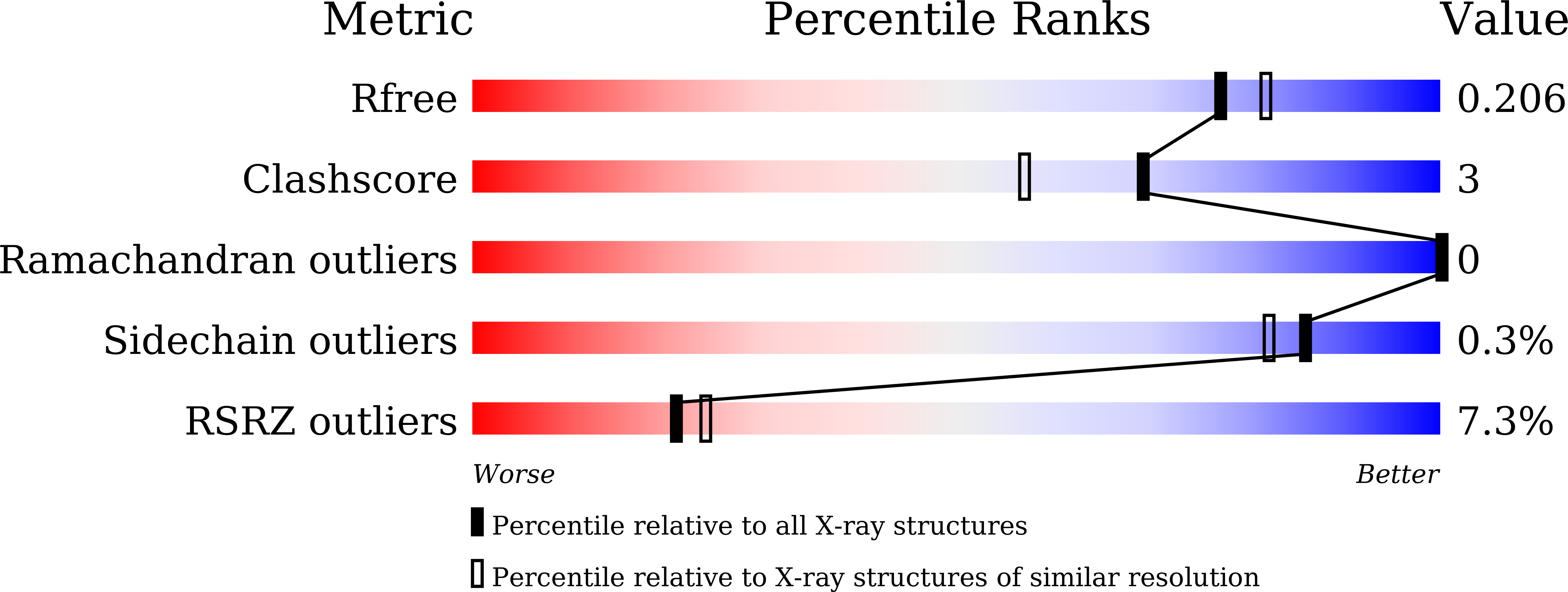
R-Value Free:
0.20
R-Value Work:
0.17
R-Value Observed:
0.17
Space Group:
P 21 21 21
Macromolecular Entities
Structures with similar UniProt ID
Protein Blast
Polymer Type:polypeptide(L)
Molecule:Serine/threonine-protein kina
Gene (Uniprot):HASPIN
Chain IDs:A
Chain Length:342
Number of Molecules:1
Biological Source:Homo sapiens
Ligand Molecules
Primary Citation
Structural insights into selective recognition of ATP-mimicking inhibitors by the atypical kinase HASPIN.
Sci Rep ? ? ? (2026)
PMID: 42289584 DOI: 10.1038/s41598-026-57282-y

Abstact

Achieving selectivity among ATP-competitive kinase inhibitors remains a major challenge due to the high conservation of the ATP-binding pocket across the kinome. Although most kinase inhibitors target the ATP-binding site, ATP-mimicking compounds remain relatively uncommon due to concerns regarding selectivity. Here, we report the structural and biophysical characterization of the atypical serine/threonine kinase haploid germ cell-specific nuclear protein kinase (HASPIN) with two ATP-mimicking inhibitors, LJ-5157 and LJ-5242. Crystal structures of HASPIN in complex with LJ-5157 and with LJ-5242 were determined at resolutions of 1.74 A and 1.88 A, respectively, revealing ATP-like binding modes within the catalytic pocket. Structural analysis showed that the regulatory and catalytic spines of HASPIN are preorganized through extensive hydrophobic packing, particularly within the N-lobe, stabilizing the alphaC helix independently of nucleotide binding. Despite similar binding modes, microscale thermophoresis measurements demonstrated that LJ-5242 binds ~ 10-fold more tightly than LJ-5157. LJ-5157 and LJ-5242 exhibited selective HASPIN inhibition, with LJ-5242 showing ~ 10-fold and ~ 100-fold higher potency and selectivity in kinase inhibition and antiproliferative activity assays, respectively. These findings demonstrate that the distinctive architecture of the HASPIN ATP-binding pocket enables selective recognition of ATP-mimicking inhibitors and provides a framework for designing kinase inhibitors that retain ATP-like scaffolds while achieving selectivity.

Legend

Protein

Chemical

Disease

Primary Citation of related structures
Feedback Form
Name
Email
Institute
Feedback