

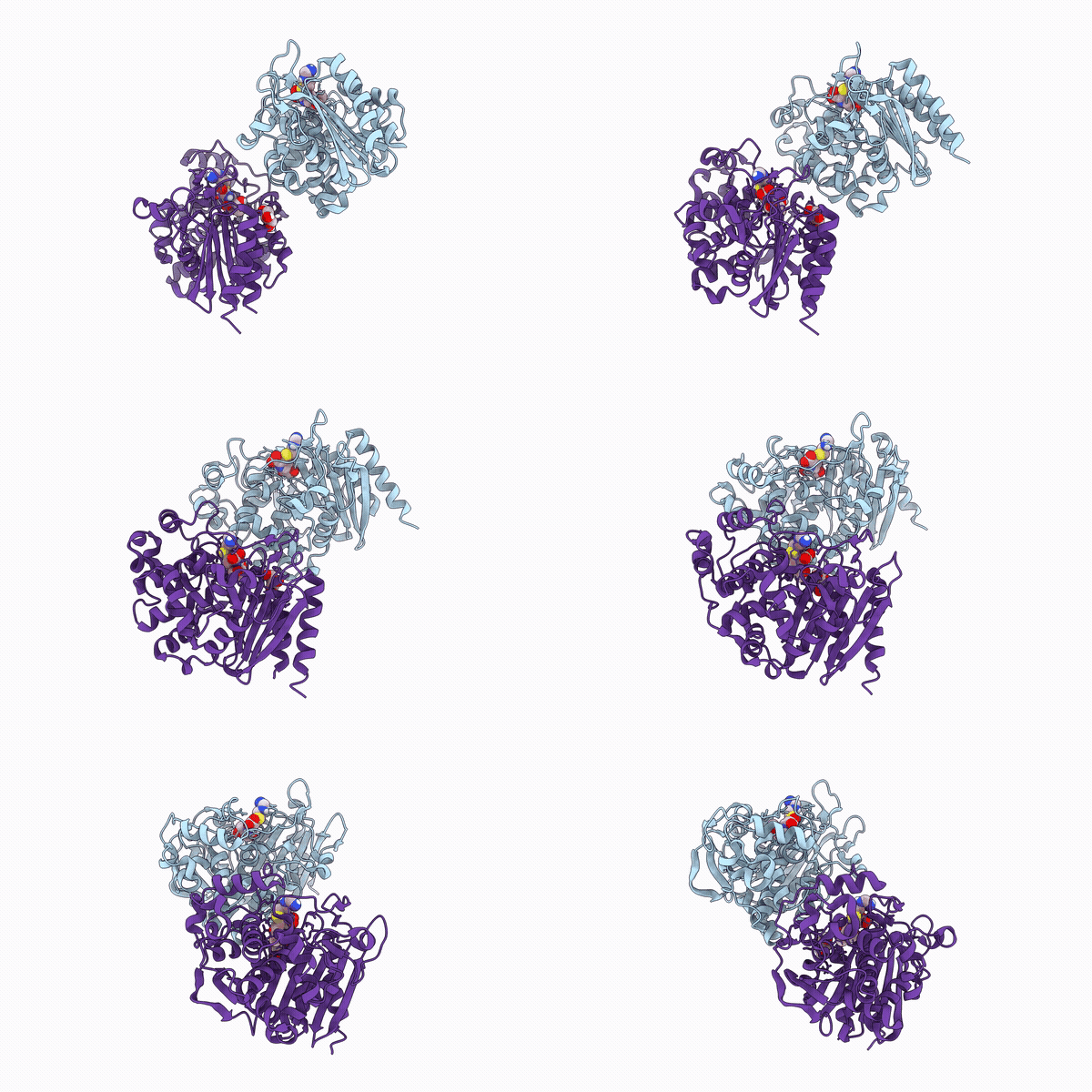
24TN image
Deposition Date 2026-03-19
Release Date 2026-10-07
Last Version Date 2026-10-14
Entry Detail
PDB ID:
24TN
Keywords:
Title:
Crystal structure of class C beta-lactamase PDC-16 in complex with imipenem
Biological Source:
Source Organism(s):
Expression System(s):
Method Details:
Experimental Method:
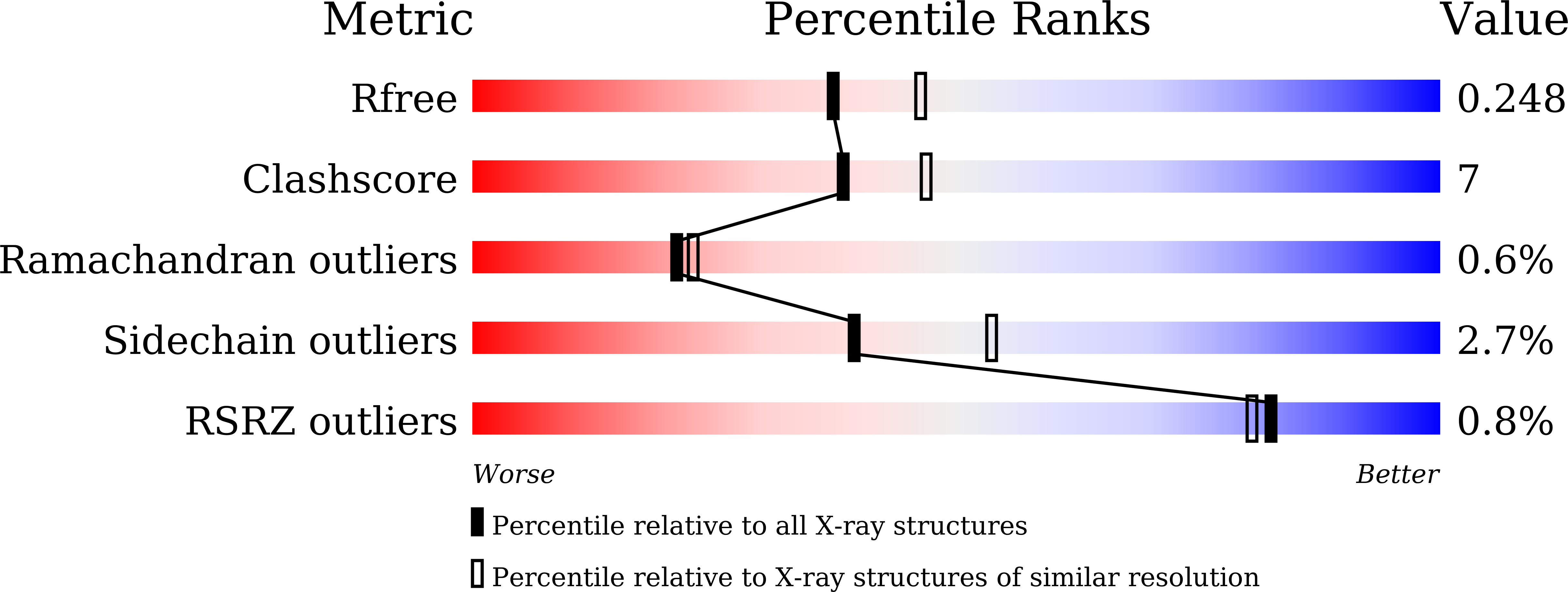
Resolution:
2.20 Å
R-Value Free:
0.24
R-Value Work:
0.18
Space Group:
P 21 21 21
Macromolecular Entities
Polymer Type:polypeptide(L)
Molecule:Beta-lactamase
Gene (Uniprot):blaPDC
Chain IDs:A (auth: B), B (auth: A)
Chain Length:359
Number of Molecules:2
Biological Source:Pseudomonas aeruginosa
Primary Citation
Structural and functional characterization of PDC-16 beta-lactamase reveals a constrained active-site architecture associated with altered catalysis.
Int.J.Biol.Macromol. 383 154709 154709 (2026)
PMID: 42815669 DOI: 10.1016/j.ijbiomac.2026.154709

Abstact

The emergence of beta-lactam resistance in Pseudomonas aeruginosa is driven in part by diversification of Pseudomonas-derived cephalosporinases (PDCs), particularly extended-spectrum AmpC variants that typically acquire broader substrate profiles through active-site expansion. Here, we report the structural and functional characterization of the PDC-16 variant of Pseudomonas aeruginosa beta-lactamase through high-resolution crystal structures of its apo form (2.30 A) and imipenem-bound complex (2.20 A), complemented by kinetic and computational analyses. Contrary to the established paradigms of active-site expansion, PDC-16 exhibits a reduced active-site cavity volume (351.22 A(3)) and decreased polarity, compared to the wild-type PDC-1 (371.74 A(3)) and cavity expanded PDC-3 (405.43 A(3)), arising from subtle repositioning of cavity-lining residues (Met266, Asn288, and Thr320) and Omega-loop (~S152-Y200)-mediated conformational constraints. The imipenem-bound structure captures a covalent acyl-enzyme intermediate with Ser64 and shows a conformational rearrangement of the Y200-R212 region, which adopts beta3-beta4 strand-like geometry in the ligand-bound crystallographic state. This observation is consistent with ligand-associated remodeling of the active-site architecture, although the crystal structures alone do not establish the dynamic mechanism underlying this transition. Consistent with these structural features, kinetic analyses revealed reduced catalytic efficiency toward ampicillin and carbapenems, while activity toward cefotaxime was comparatively preserved, indicating substrate-dependent effects associated with the constrained active-site architecture. Biochemical assays showed that avibactam produced substantially greater inhibition of PDC-16 than representative phenazine-derived compounds, underscoring that favorable computational binding does not necessarily translate into inhibitory efficacy. Together, these findings support an association between the remodeled active-site architecture and substrate-dependent catalytic behavior in PDC-16.

Legend

Protein

Chemical

Disease

Primary Citation of related structures
Feedback Form
Name
Email
Institute
Feedback