

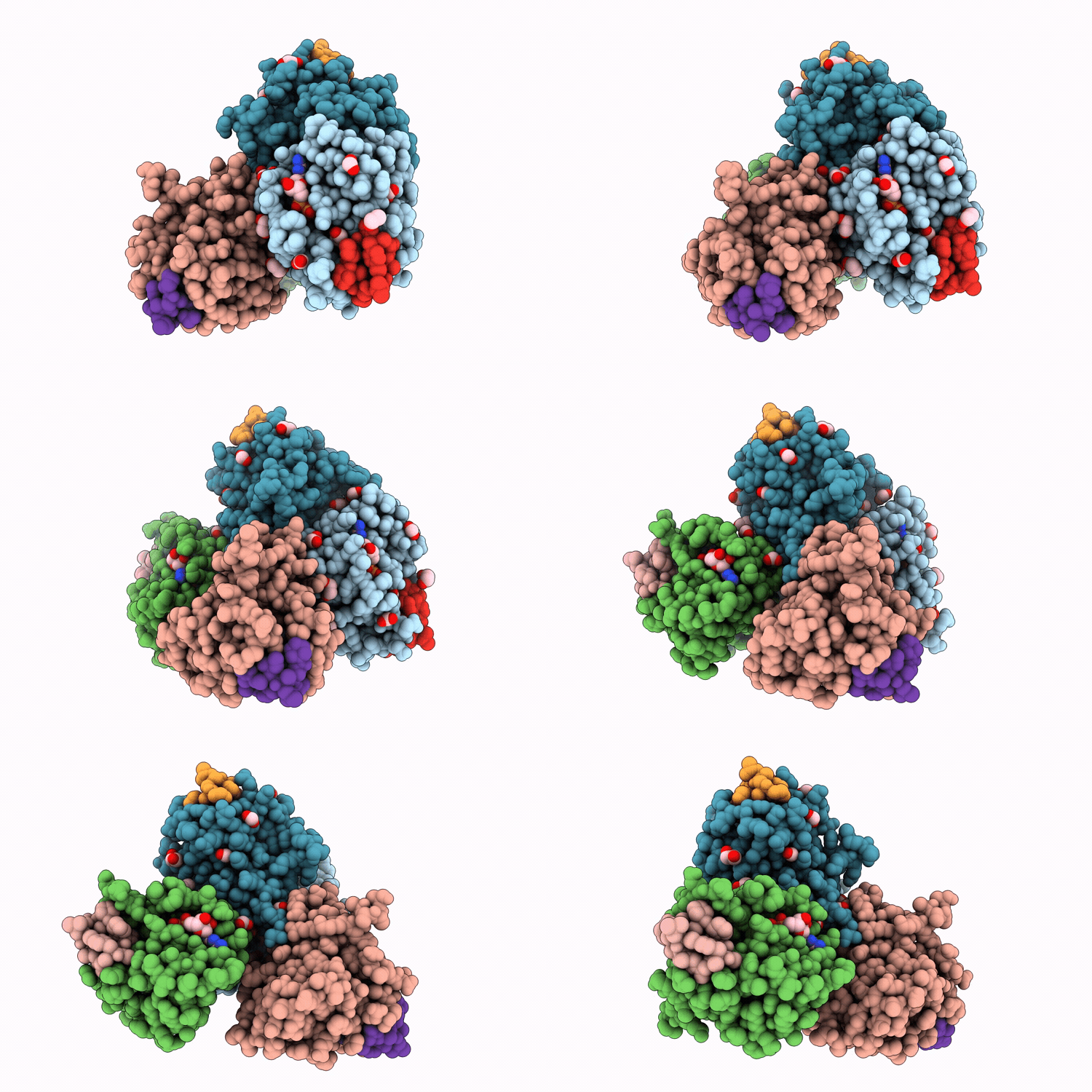
24HR image
Deposition Date 2026-03-04
Release Date 2026-05-27
Last Version Date 2026-07-01
Entry Detail
PDB ID:
24HR
Title:
Human KRAS G12D (GDP-bound) in complex with macrocyclic peptide inhibitor AP6252
Biological Source:
Source Organism(s):
Expression System(s):
Method Details:
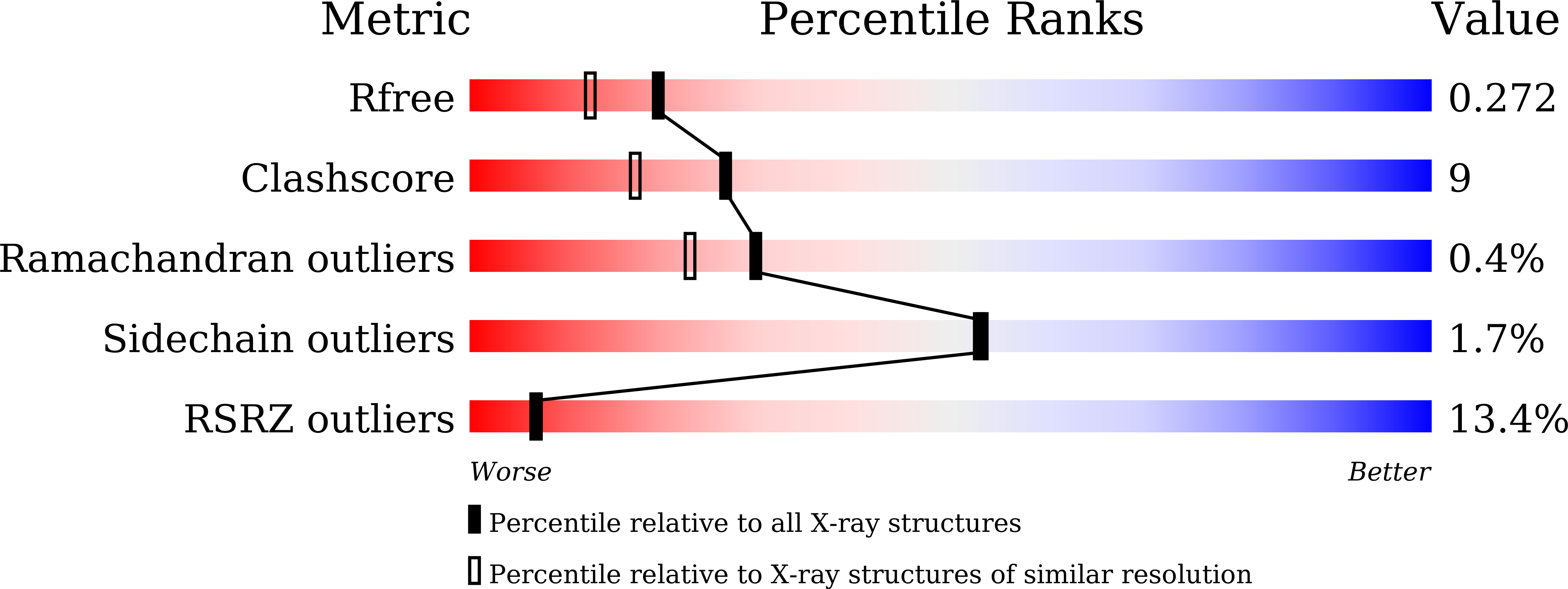
Experimental Method:
Resolution:
2.07 Å
R-Value Free:
0.27
R-Value Work:
0.22
R-Value Observed:
0.23
Space Group:
P 43 21 2
Macromolecular Entities
Polymer Type:polypeptide(L)
Molecule:Isoform 2B of GTPase KRas
Gene (Uniprot):KRAS
Mutagens:G12D
Chain IDs:A, B, C, D
Chain Length:179
Number of Molecules:4
Biological Source:Homo sapiens
Structural Superimposition Protein Blast
Polymer Type:polypeptide(L)
Molecule:AP6252
Chain IDs:E (auth: I), F (auth: J), G (auth: K), H (auth: L)
Chain Length:12
Number of Molecules:4
Biological Source:synthetic construct
Primary Citation
Structure-Activity Relationship Analysis of Macrocyclic Peptide RAS Inhibitors: Spotlight on the Solvent-Exposed Region.
Acs Med.Chem.Lett. 17 1310 1315 (2026)
PMID: 42305191 DOI: 10.1021/acsmedchemlett.6c00122

Abstact

As ligand molecular weight increases, strategic structural optimization becomes increasingly important because larger ligands contain more modifiable atoms, making comprehensive exploration impractical. We present the structure-activity relationship (SAR) analysis of LUNA18 (paluratide, an 11-mer macrocyclic peptide RAS inhibitor) focusing on the amino acid side chains at position 5 in the solvent-exposed region. The analysis revealed that the contribution of position 5 to inhibitory activity depends on its local environment. Structural analysis identified two structural features: peptides forming a ''cavity'', which possess the hydrophobic interaction network among positions 1, 8, and 9, exhibited minimal changes upon position 5 modification, whereas those forming a ''groove'', lacking this interaction network, showed significant differences. These findings provide practical guidelines for optimizing macrocyclic peptides: evaluate the contributions of solvent-exposed side chain at key points and interpret SARs in the context of spatially proximal side chains.

Legend

Protein

Chemical

Disease

Primary Citation of related structures
Feedback Form
Name
Email
Institute
Feedback