

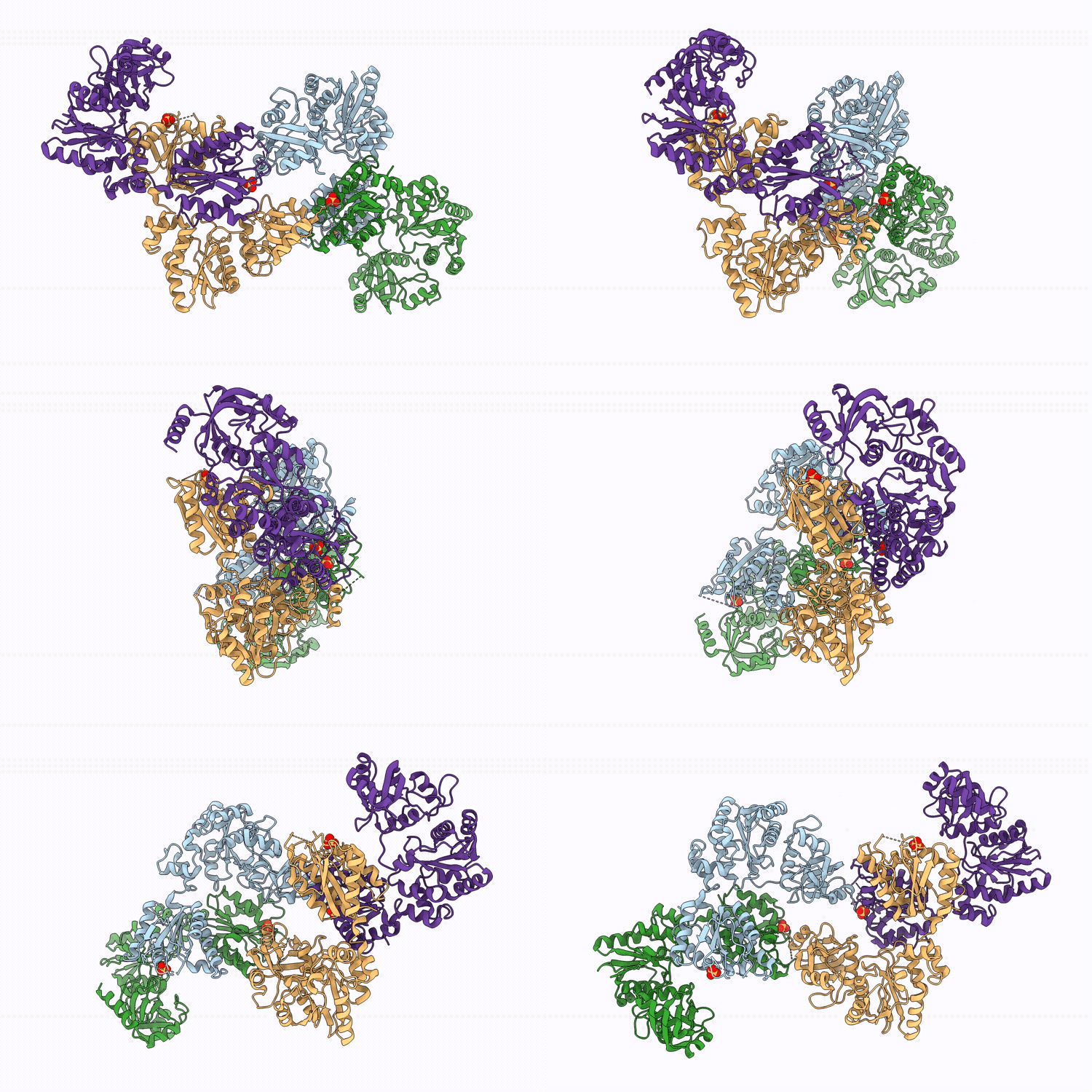
23VK image
Deposition Date 2026-02-20
Release Date 2026-06-03
Last Version Date 2026-06-10
Entry Detail
PDB ID:
23VK
Keywords:
Title:
Crystal structure of full-length of APS kinase from Entamoeba histolytica
Biological Source:
Source Organism(s):
Expression System(s):
Method Details:
Experimental Method:
Resolution:
2.60 Å
R-Value Free:
0.26
R-Value Work:
0.22
Space Group:
C 2 2 21

Macromolecular Entities
Polymer Type:polypeptide(L)
Molecule:adenylyl-sulfate kinase
Gene (Uniprot):CL6EHI_179080
Chain IDs:A, B, C, D
Chain Length:500
Number of Molecules:4
Biological Source:Entamoeba histolytica
Ligand Molecules
Primary Citation
Structural insights into interdomain interactions in Entamoeba histolytica APS kinase.
J Struct Biol X 13 100147 100147 (2026)
PMID: 42212241 DOI: 10.1016/j.yjsbx.2026.100147

Abstact

The biosynthetic pathway of 3'-phosphoadenosine-5'-phosphosulfate (PAPS) is a universal and essential metabolic process in many organisms, providing the activated sulfate donor required for the synthesis of diverse sulfated metabolites. However, this pathway has undergone substantial evolutionary diversification among species. In Entamoeba histolytica, PAPS biosynthesis occurs within the mitosomes, mitochondrion-related organelles (MROs), representing a distinctive example of lineage-specific evolutionary adaptation. PAPS synthesis proceeds through a conserved two-step process, which is sequentially catalyzed by ATP sulfurylase (AS) and adenosine 5'-phosphosulfate (APS) kinase (APSK). In this study, we focused on E. histolytica APSK (EhAPSK). EhAPSK contains an additional AS-like domain (SLD), although its functional role remains unclear. Here, we determined the crystal structure of full-length EhAPSK at 2.60 A resolution and the structure of the truncated EhAPSK lacking APS kinase domain (KD) (EhAPSK(DeltaKD)) at 2.10 A resolution. Structural analyses revealed that the SLD engages in dynamic contacts with the KD. Furthermore, deletion of the domain and mutational analyses indicated that the SLD significantly influences the catalytic activity of the KD. Based on these findings, we propose a new regulatory mechanism in which transient interdomain interactions modulate APS kinase activity, representing an unique evolutionary adaptation of E. histolytica.

Legend

Protein

Chemical

Disease

Primary Citation of related structures
Feedback Form
Name
Email
Institute
Feedback