

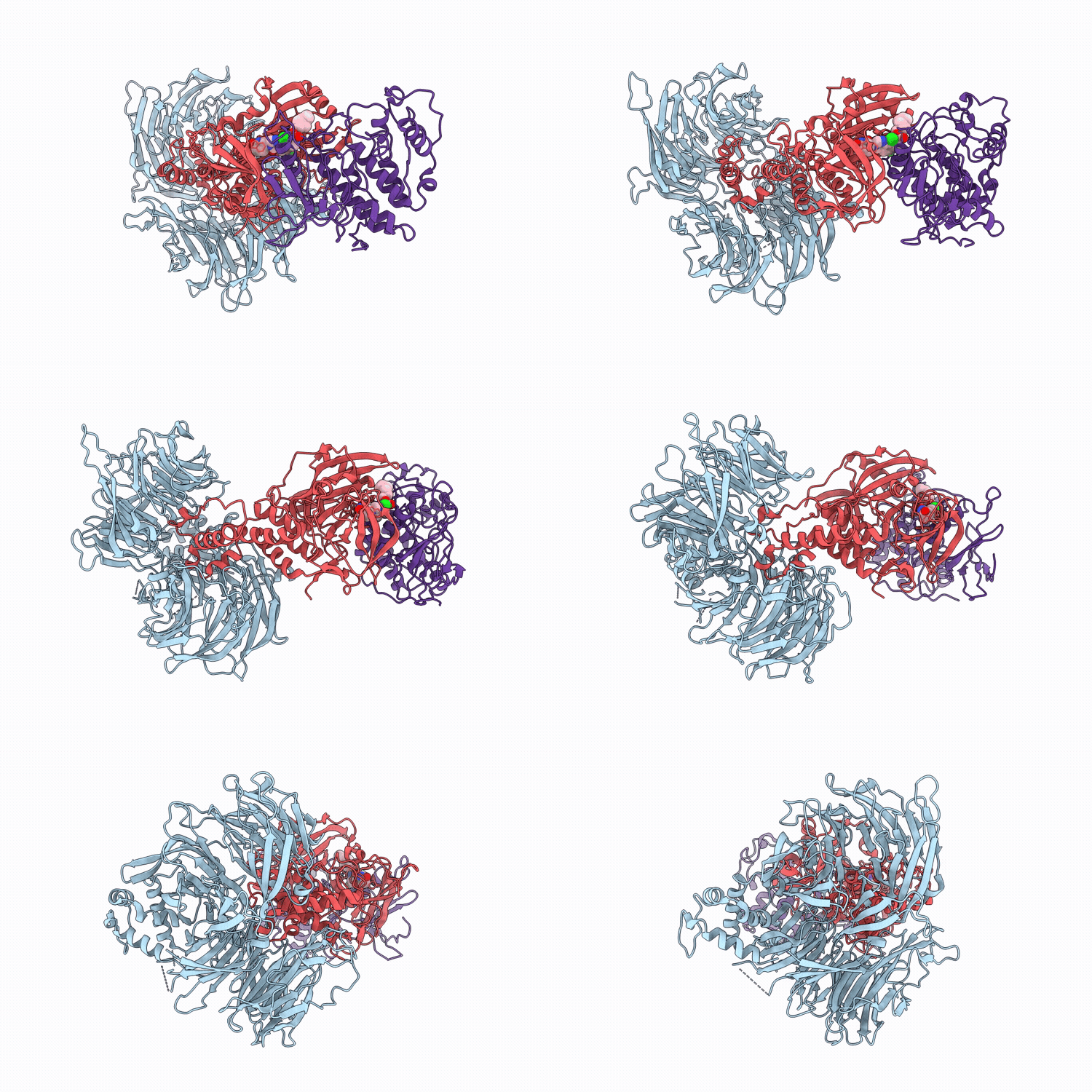
23SR image
Deposition Date 2026-02-16
Release Date 2026-07-01
Last Version Date 2026-07-01
Entry Detail
PDB ID:
23SR
Keywords:
Title:
Cryo-EM structure of CDK2 in complex with CRBN/DDB1 and B11
Biological Source:
Source Organism(s):
Expression System(s):
Method Details:
Experimental Method:
Resolution:
2.85 Å
Aggregation State:
PARTICLE
Reconstruction Method:
SINGLE PARTICLE
Macromolecular Entities
Protein Blast
Polymer Type:polypeptide(L)
Molecule:DNA damage-binding protein 1
Chain IDs:C (auth: A)
Chain Length:836
Number of Molecules:1
Biological Source:Homo sapiens
Structures with similar UniProt ID
Protein Blast
Polymer Type:polypeptide(L)
Molecule:Protein cereblon
Gene (Uniprot):CRBN
Chain IDs:A (auth: B)
Chain Length:477
Number of Molecules:1
Biological Source:Homo sapiens
Structures with similar UniProt ID
Protein Blast
Polymer Type:polypeptide(L)
Molecule:Oplophorus-luciferin 2-monoox
Gene (Uniprot):CDK2
Chain IDs:B (auth: C)
Chain Length:729
Number of Molecules:1
Biological Source:synthetic construct, Homo sapiens
Ligand Molecules
Primary Citation
Selective CDK2 Degradation via Noncanonical Recruitment.
J.Med.Chem. ? ? ? (2026)
PMID: 42334090 DOI: 10.1021/acs.jmedchem.6c01264

Abstact

Cyclin-dependent kinase 2 (CDK2) represents a critical therapeutic target in tumors resistant to CDK4/6 inhibitors or with CCNE1 amplification. However, selective inhibition of CDK2 remains challenging owing to the high structural homology among CDKs. In this study, we identify B10 and B12 as cereblon (CRBN)-based molecular glue degraders that selectively degrade CDK2. Ternary complex structures reveal a noncanonical recruitment mode centered on CDK2 Glu57, which bypasses the canonical G-loop/beta-hairpin and kinase glycine-rich loop interactions and is stabilized by an extended CRBN-CDK2 interface. Mechanistically, these degraders inhibit retinoblastoma (Rb) phosphorylation and induce G1/S-phase arrest, suppressing CDK2-dependent cell proliferation. B12 further exhibits improved pharmacokinetics, measurable oral bioavailability, and in vivo target engagement, achieving intratumoral CDK2 degradation following intraperitoneal administration. Collectively, this study provides a structural blueprint for designing selective kinase degraders and establishes B12 as a chemically tractable probe for targeting CDK2-driven malignancies.

Legend

Protein

Chemical

Disease

Primary Citation of related structures
Feedback Form
Name
Email
Institute
Feedback