

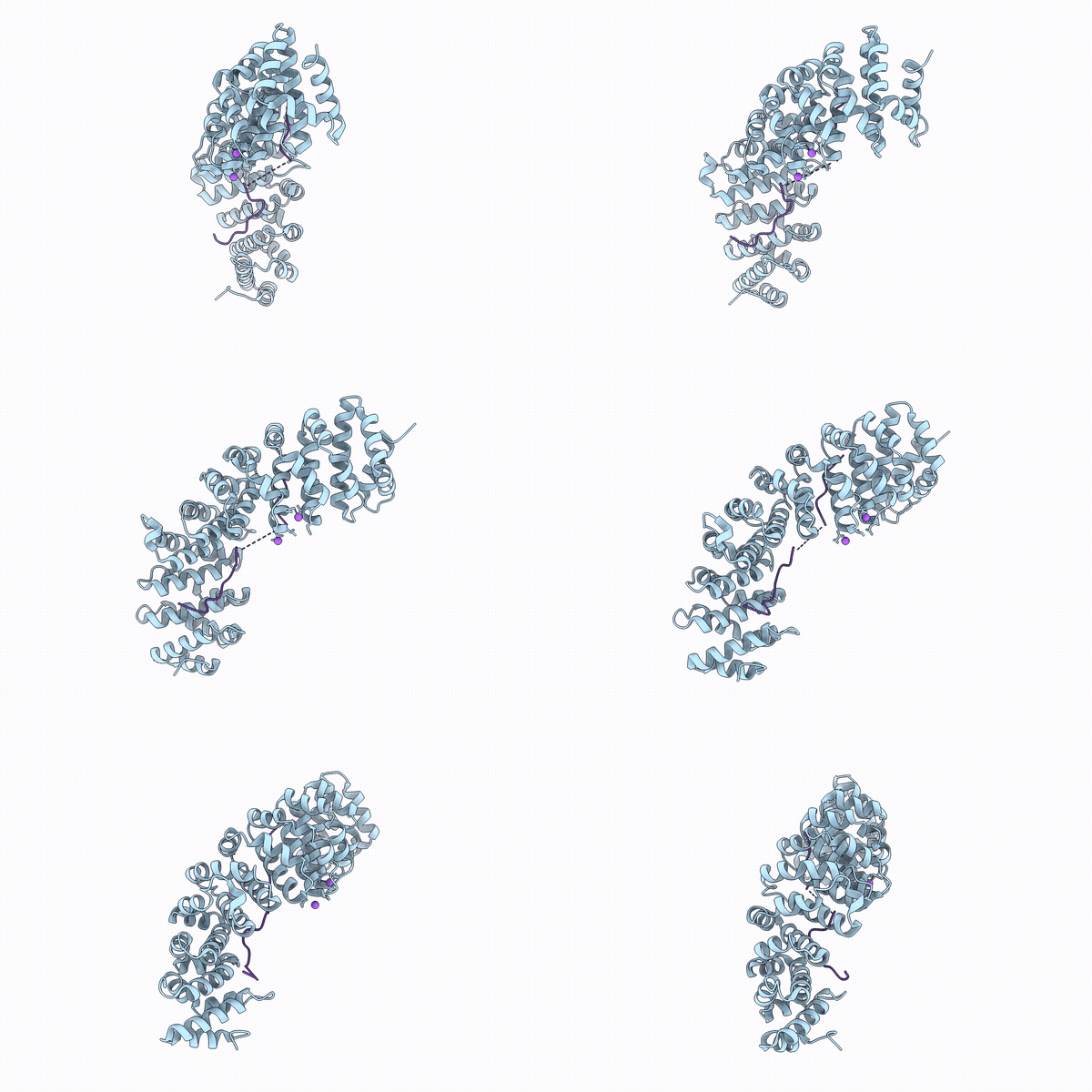
23QF image
Deposition Date 2026-02-13
Release Date 2026-10-14
Last Version Date 2026-10-14
Entry Detail
PDB ID:
23QF
Title:
Adeno-associated virus serotype 2 VP1 basic region BR3 mutant in complex with importin alpha 2
Biological Source:
Source Organism(s):
Expression System(s):
Method Details:
Experimental Method:
Resolution:
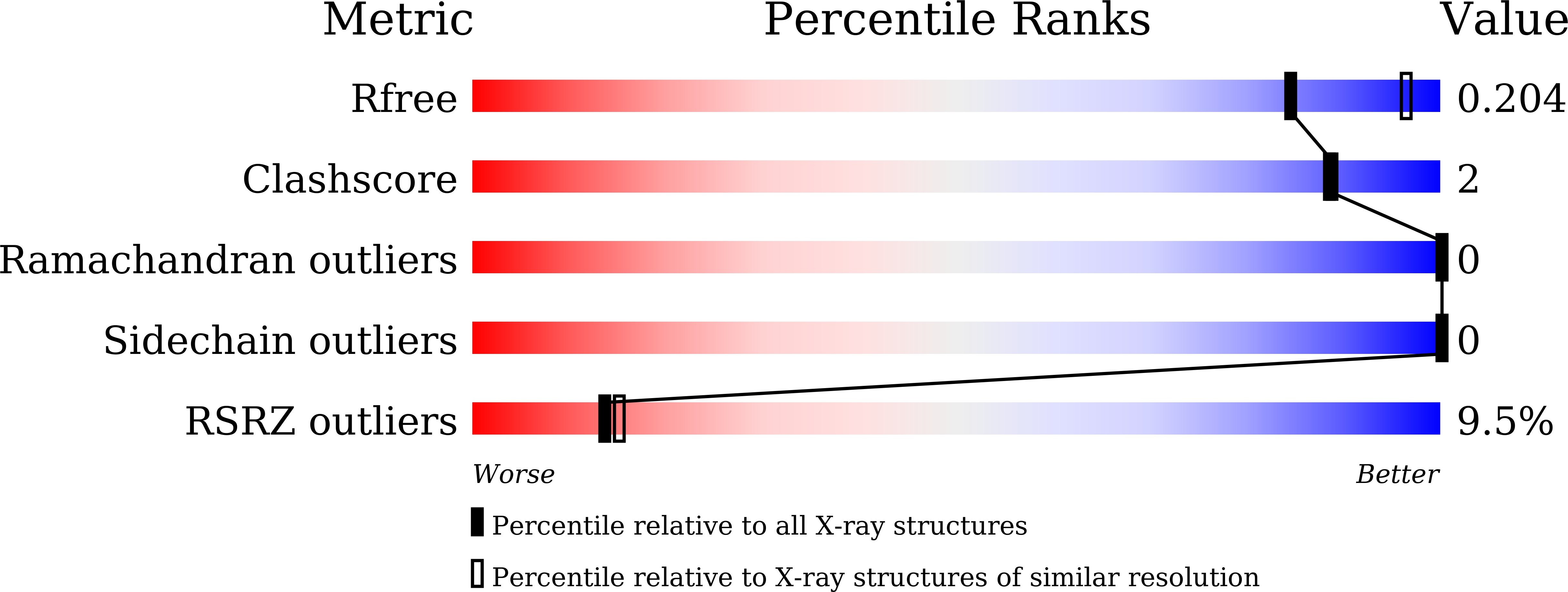
2.15 Å
R-Value Free:
0.20
R-Value Work:
0.17
R-Value Observed:
0.17
Space Group:
P 21 21 21
Macromolecular Entities
Polymer Type:polypeptide(L)
Molecule:Importin subunit alpha-1
Gene (Uniprot):Kpna2
Chain IDs:A
Chain Length:510
Number of Molecules:1
Biological Source:Mus musculus
Polymer Type:polypeptide(L)
Molecule:Capsid protein VP1
Gene (Uniprot):VP1
Mutagens:R168A, K169A, R170A
Chain IDs:B
Chain Length:61
Number of Molecules:1
Biological Source:Adeno-associated virus 2 Srivastava/1982
Ligand Molecules
Primary Citation
Alternative bipartite arrangements of VP1 BR1-3 drive efficient nuclear import of AAV2 capsids.
J.Biol.Chem. ? 113562 113562 (2026)
PMID: 42749258 DOI: 10.1016/j.jbc.2026.113562

Abstact

Adeno-associated viruses (AAVs) are among the most extensively studied viral gene-therapy vectors, yet the mechanisms governing their nuclear entry remain incompletely understood. Efficient transduction requires that the AAV capsid, or its structural subunit VP1, traverse the nuclear envelope to deliver the therapeutic genome. The N-terminal region of VP1 contains three clustered basic regions (BR1-3) proposed to function as nuclear localization signals. Here, we combine cellular, biophysical, structural, and computational modelling approaches to define the nuclear import mechanism of AAV2 VP1 at molecular resolution. We show that VP1 engages the classical importin-alpha/beta1 (IMPalpha/beta1) pathway and binds multiple IMPalpha paralogs with distinct affinities. Crystallographic and mutational analyses reveal that two intact BRs are required to simultaneously occupy the major and minor binding pockets of IMPalpha in a bipartite configuration. Structural data indicate that mouse IMPalpha2 preferentially accommodates BR1 and BR3 at these sites, however, functional studies demonstrate that mutation of individual BRs does not abolish IMP binding or nuclear accumulation. This robustness arises from the ability of BR2 to flexibly engage both binding pockets, enabling the formation of alternative bipartite arrangements (BR1-BR2, BR2-BR3, or BR1-BR3). Together, these findings reveal an unexpected versatility in how AAV2 VP1 exploits the IMPalpha binding sites, providing a structural basis for efficient capsid nuclear import. The flexibility of BR1-3 expands the current paradigm of viral nuclear localization signal organization and suggests new strategies to fine-tune nuclear targeting AAV-based gene-therapy vectors.

Legend

Protein

Chemical

Disease

Primary Citation of related structures
Feedback Form
Name
Email
Institute
Feedback