

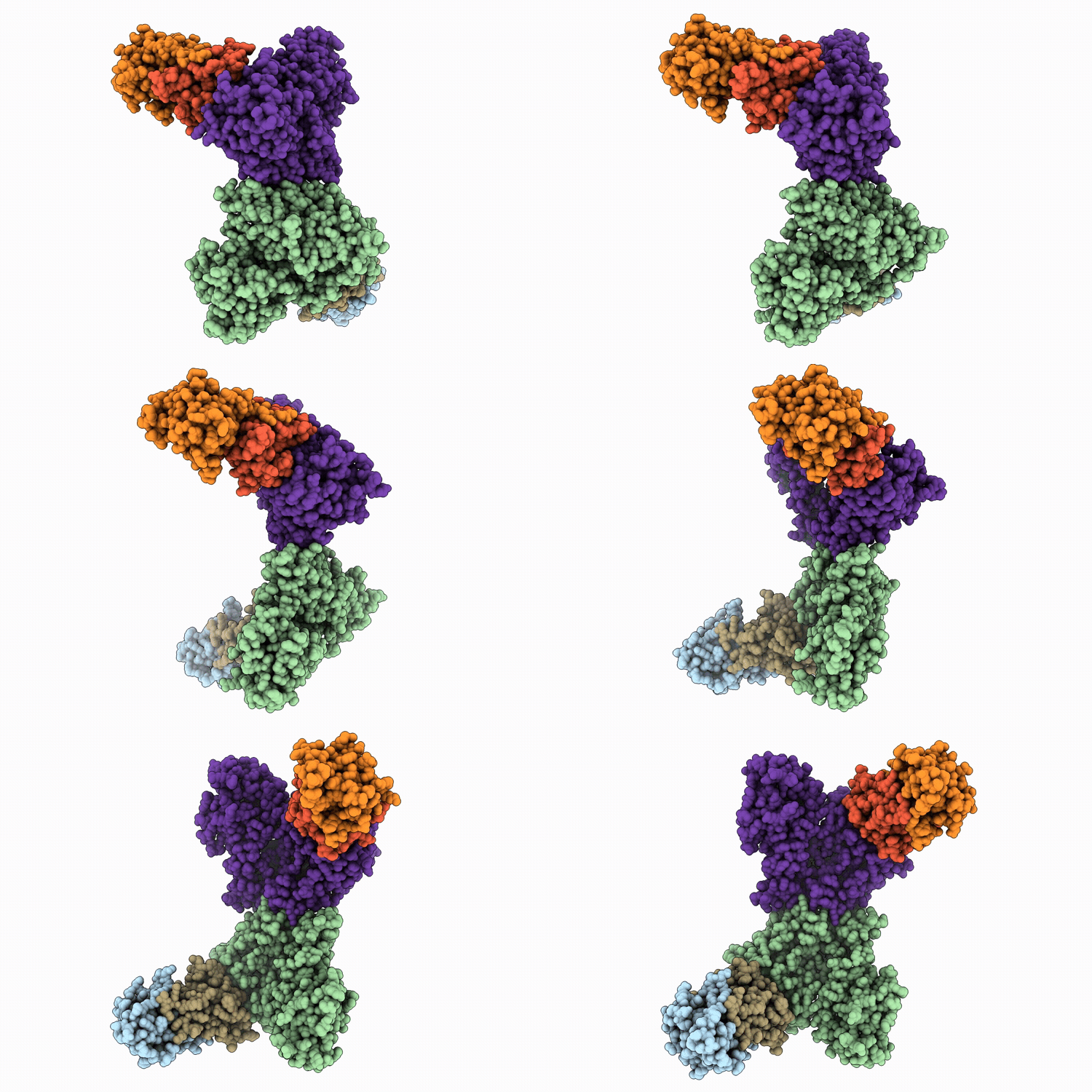
23NX image
Deposition Date 2026-02-11
Release Date 2026-08-19
Last Version Date 2026-08-19
Entry Detail
PDB ID:
23NX
Keywords:
Title:
Structure of mouse DNMT3A-TCL1A complex
Biological Source:
Source Organism(s):
Mus musculus (Taxon ID: 10090)
Expression System(s):
Method Details:
Experimental Method:
Resolution:
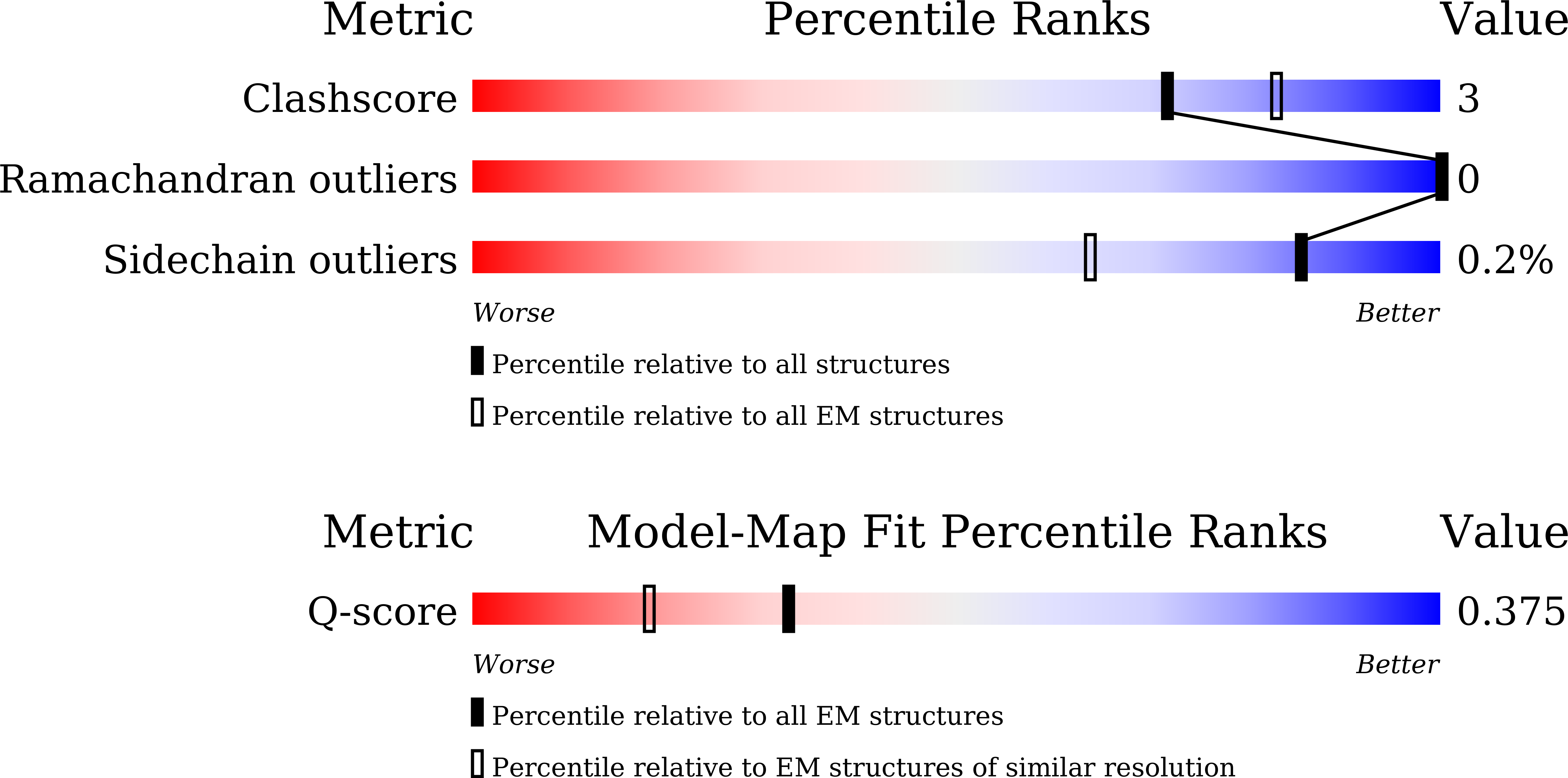
3.32 Å
Aggregation State:
PARTICLE
Reconstruction Method:
SINGLE PARTICLE
Macromolecular Entities
Polymer Type:polypeptide(L)
Molecule:T-cell leukemia/lymphoma prot
Gene (Uniprot):Tcl1a
Chain IDs:A, B (auth: C), C (auth: D), D (auth: E)
Chain Length:116
Number of Molecules:4
Biological Source:Mus musculus
Polymer Type:polypeptide(L)
Molecule:DNA (cytosine-5)-methyltransf
Gene (Uniprot):Dnmt3a
Chain IDs:E (auth: B), F
Chain Length:835
Number of Molecules:2
Biological Source:Mus musculus
Ligand Molecules
Primary Citation
Cryo-EM structure of the murine DNMT3A-TCL1A complex.
J.Struct.Biol. 218 108352 108352 (2026)
PMID: 42546996 DOI: 10.1016/j.jsb.2026.108352

Abstact

DNA methyltransferase DNMT3A is a key enzyme responsible for establishing DNA methylation patterns during mammalian development. T-cell leukemia/lymphoma 1 A (TCL1A) is a proto-oncogene expressed mainly in embryonic and fetal tissues, as well as in specific lymphocyte populations. In this study, we determined the structure of the murine DNMT3A-TCL1A complex using single-particle cryo-electron microscopy. The complex adopts a linear conformation, with two TCL1A dimers bound to the catalytic domain of DNMT3A to form a heterohexamer. TCL1A competitively binds to the same structural interface on DNMT3A as DNMT3L, but produces an inhibitory-rather than an activating-effect on the catalytic activity of DNMT3A. Furthermore, comparative analysis with previously reported assembly modes of murine TCL1A revealed that the TCL1A dimer complex we resolved adopts distinct molecular conformations and interaction mechanisms. Our findings elucidate the allosteric mechanism by which murine TCL1A inhibits DNMT3A activity, providing a structural basis for understanding mammalian epigenetic reprogramming.

Legend

Protein

Chemical

Disease

Primary Citation of related structures
Feedback Form
Name
Email
Institute
Feedback